Part 13 of 20The Future of Trading
@AbePublished 5 min read
On this page
National currencies on new payment rails
The rupee, dollar and euro are likely to remain familiar. The way they move is being rebuilt. Money is becoming more programmable, more immediate and more available around the clock; the contest is over who operates those payment systems.
Key takeaway. The unit of money may stay national while its infrastructure changes. Watch payment speed, collateral movement and who controls access to the system.
What money is for
Economists give money three jobs. It is a means of payment, a store of value and a unit of account, the yardstick in which prices and debts are written.
Most debate about the future of money mixes these up. Bitcoin is argued over as a store of value. Stablecoins and instant payment systems compete as means of payment. Almost nothing has challenged national currencies as the unit of account, and that is the job that confers power.
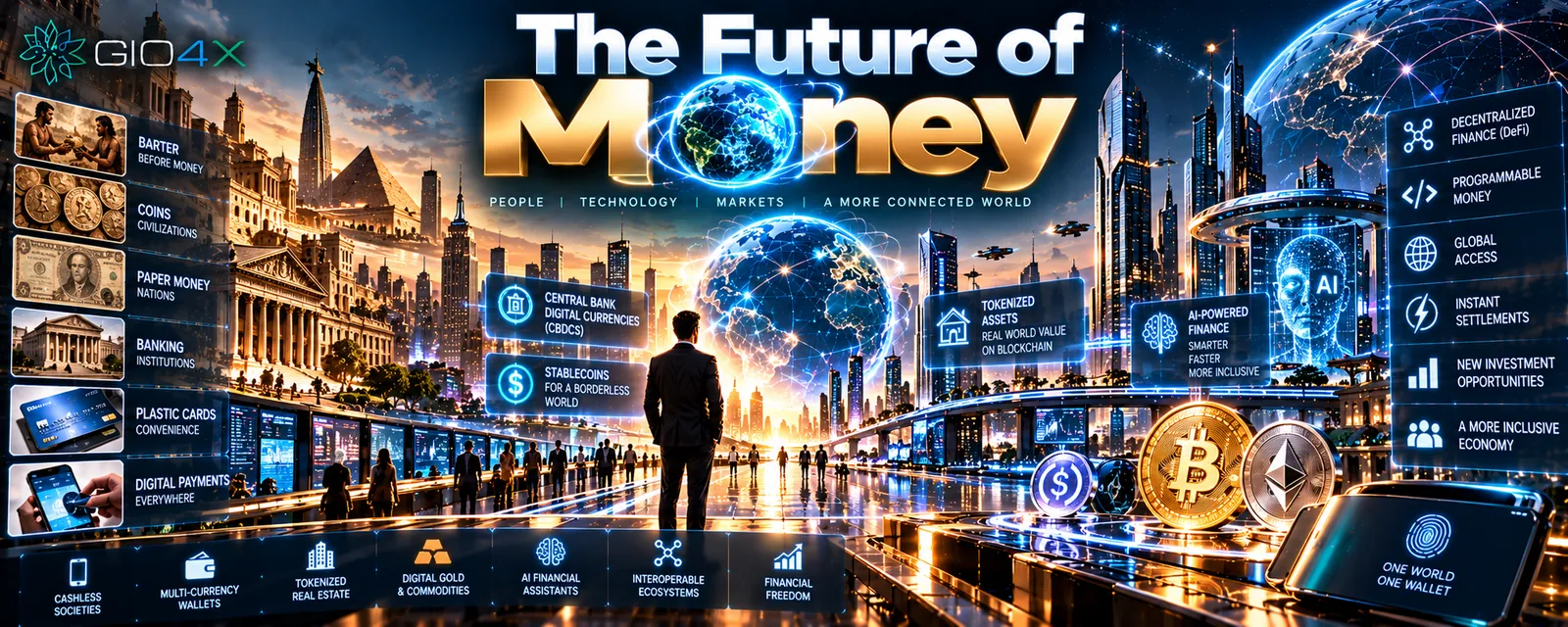
Money has always been technology
Coins replaced weighed metal. Paper notes replaced coins, first as receipts for gold and then, after the United States ended dollar convertibility in 1971, as pure promises.
Most money today is already digital. It exists as entries in commercial bank ledgers. Physical cash is a small share of the total in every developed economy.
So "digital money" is not new. What is new is money that moves instantly, at any hour, between any two parties, and that software can instruct directly.
Instant payment systems
The most successful monetary innovation of the last decade came from central banks and public bodies. India's UPI, launched in 2016, now handles around 20 billion transactions a month. Brazil's Pix reached most of the adult population within a few years of its 2020 launch.
These systems move ordinary bank money. They are free or nearly free to users, they work on a phone, and they settle in seconds. For daily payments inside a country, they have already delivered what crypto promised.
Stablecoins
A stablecoin is a privately issued token designed to hold a fixed value, usually one US dollar, backed by reserves such as Treasury bills. Total value outstanding is around $310 billion, almost all of it in dollars (Coinpaprika).
The United States gave them a legal framework in 2025, requiring full reserves and regular disclosure. Their natural use is across borders and inside digital asset markets, where bank transfers are slow and costly.
For people in countries with weak currencies, a dollar stablecoin on a phone is an accessible dollar account. That worries central banks in those countries, with reason.
Central bank digital currencies
Related posts
 AnalysisEducationCBDCs versus CryptoCBDCs put the central bank in charge of the ledger. Cryptocurrencies such as Bitcoin distribute that role across a network. In 2026, neither has displaced the other—and dollar stablecoins have become a serious competitor to both.@Abe5 min read
 AnalysisEducation