Part 6 of 15Institutional Trading
@AbePublished 5 min read


Fetching the page
Education · Analysis
A valid setup starts with predefined conditions. A forced trade starts with the desire to be in the market, then searches for evidence to justify it. Both can look convincing on the same chart.
Part 6 of 15Institutional Trading
@AbePublished 5 min read
How to recognise a valid setup and avoid forcing a trade
A valid setup starts with predefined conditions. A forced trade starts with the desire to be in the market, then searches for evidence to justify it. Both can look convincing on the same chart.
Desk insight. Write the reason and invalidation before the order. If the case keeps changing, pause.
The two can sit on the same chart and use the same indicator. The difference is the direction of the reasoning. In a found trade, the evidence leads to the position. In a manufactured trade, the wish for a position leads to the evidence.
It rarely feels like a mistake at the time. It feels like analysis.
The trader sits down with a need. Perhaps the morning was quiet, the week is behind target, or the last trade lost. The market offers nothing clean. So the standard is lowered, a little at a time.
The timeframe is changed until a pattern shows up. A second indicator is added because the first one disagreed. A level that is “close enough” is accepted. Twenty minutes later there is a fully argued case for a trade that did not exist when the session began.
Boredom. Screens are designed to hold attention, and attention wants action. Many of the worst trades are placed simply to have something to watch.
Targets. A daily or weekly profit goal turns the market into an employer that owes wages. The market has no such agreement with anyone.
Revenge. After a loss, the next trade is often about the previous one. Size goes up and standards go down in the same moment.
Sunk time. Three hours of analysis feels as if it deserves a position. The time is already spent, whatever the conclusion.
Fear of missing out. A fast move without you feels like a loss. Chasing it turns an imagined loss into a real one.
Several warning signs together justify a pause. This is a practical diagnostic, not a validated scoring model.
A found trade matches a description written before the session started. The conditions are present without squinting. Entry, stop and target can be said in one breath.
A valid entry may feel uncomfortable, but discomfort is not evidence of quality. Judge it against the written setup, price, risk and available reward, rather than how reassuring the chart looks.
It also arrives on the market’s schedule. Some days produce three. Some weeks produce none. That unevenness is a sign the filter is working.
It is not that institutional traders have more character. The structure around them does a lot of the work.
A portfolio manager often has to write a trade rationale before the order is approved. A written case exposes weak logic quickly. Risk limits cap the damage of an impulsive day. Colleagues ask awkward questions.
There is also less pressure to act. A fund with patient capital can hold cash for weeks. A proprietary trader has a daily loss limit that ends the session before revenge trading starts.
Professionals still force trades. Ask anyone who has worked on a desk at the end of a poor quarter. The honest difference is that their mistakes run into a wall sooner.
A solo trader has to create the structure a firm provides.
The journal makes the question testable. Compare planned and improvised trades after costs instead of assuming which group is responsible for the damage.
A day without a trade is not a wasted day. The filter was applied and nothing passed. That is the system working.
It helps to give those days a task. Review old trades, update levels, read. The aim is to make sitting out feel like work, because it is.
Ask one question before any entry: “If I had no position and no need for one, would I have noticed this?”
A clear yes supports the case that the setup was noticed independently of the urge to trade. Hesitation is a reason to revisit the checklist, not proof that a trade must fail.
Key takeaway. Markets hand out a limited number of good opportunities, on their own timetable. Everything else is activity.
The skill is to recognise a setup without relaxing its conditions simply to create activity.
Part 6 of 15 in the series Institutional Trading. Next: How Prop Desks Decide When NOT to Trade.
Independent educational commentary, not investment advice. References to firms do not imply affiliation or endorsement. Figures in examples illustrate a method, not a recommended allocation or a promised outcome. Trading leveraged products carries a high risk of loss.
 AnalysisEducationTrade Like a Desk, Not Like a GamblerThe same entry can belong to a disciplined trading business or an impulsive bet. The difference sits around the order: a mandate, a repeatable setup, a risk budget and an honest review.@Abe5 min read
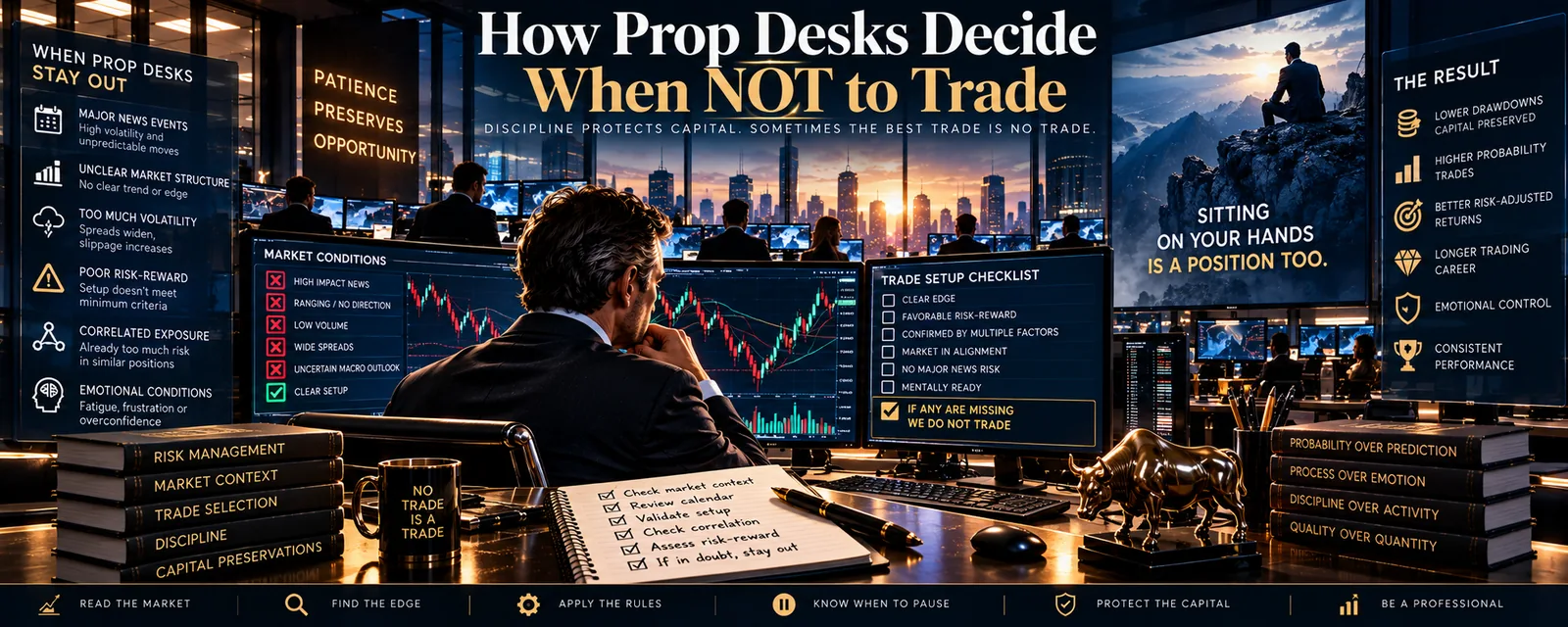 AnalysisEducationHow Prop Desks Decide When NOT to TradeA no-trade rule is a risk decision made before pressure arrives. Well-controlled prop desks define when losses, poor conditions or a trader's state require a pause or a reduction in size.@Abe5 min read
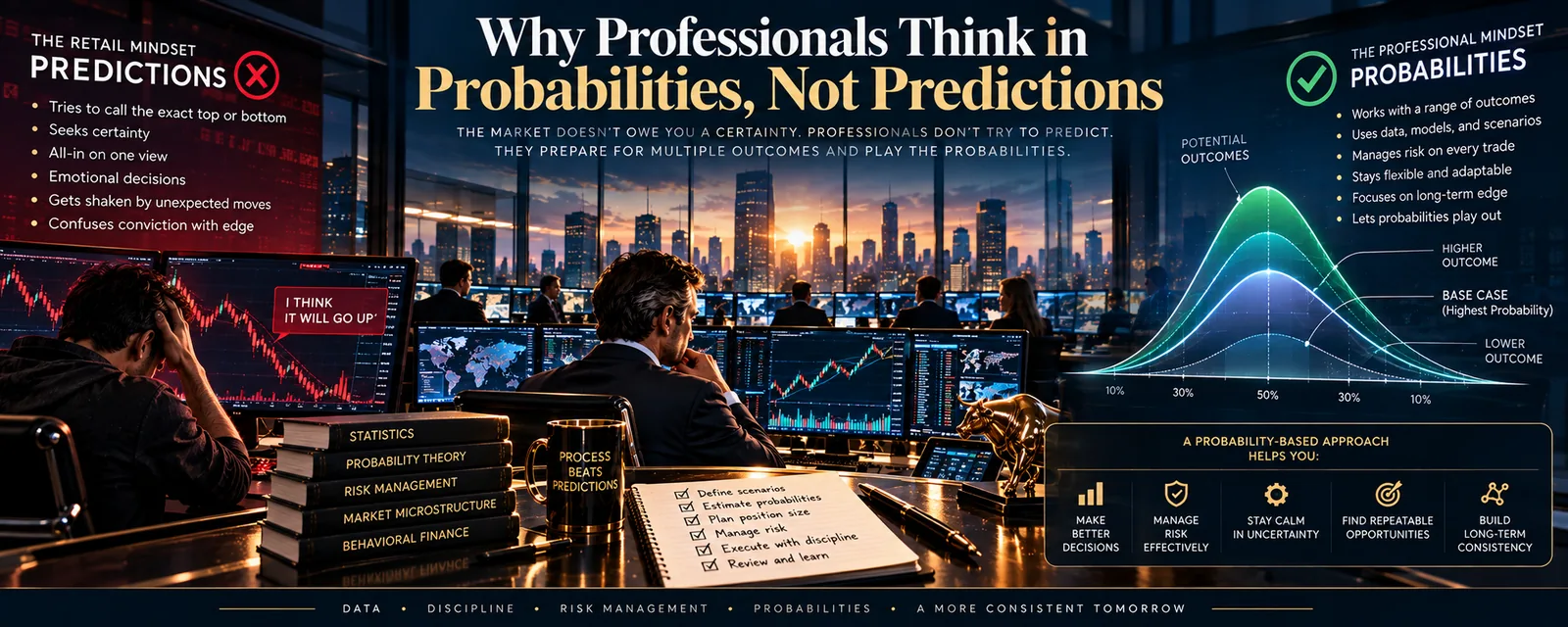 AnalysisEducationWhy Professionals Think in Probabilities, Not PredictionsA trade does not need to win most of the time to have positive expected value. It needs a payoff that compensates for its probability of loss, and position sizing that can withstand an unfavourable run.@Abe6 min read