Part 17 of 20The Future of Trading
@AbePublished 4 min read
On this page
Convenient questions require careful orders
Asking a system for a price is one thing. Telling it to move money is another. Voice is becoming an effective way to query a trading account, but order placement still depends on precise read-back, secure confirmation and deliberate limits.
Key takeaway. Use voice freely for information and cautiously for execution. Orders need read-back, explicit confirmation, strong authentication and limits.
Trading started as voice
For most of market history, every trade was spoken. Brokers shouted in pits, backed by hand signals. Dealers quoted prices by phone, and "my word is my bond" was a working rule.
Voice trading has not vanished. Large bond, swap and block trades are still negotiated by phone or chat because they need discussion. Regulatory recording requirements apply to those calls.
So the question is narrower than it sounds. Can a person speak to a machine and have it trade correctly on their behalf?
Why earlier attempts disappointed
Brokers launched voice features on smart speakers in the late 2010s. You could ask for a quote or your balance, and a few allowed orders.
Usage was low. The assistants understood fixed phrases only, misheard ticker symbols and could not handle a follow-up question. Asking "what is Apple trading at?" worked. Anything harder did not.
What has changed
Speech models built on the same technology as large language models now converse in real time. They cope with accents, interruptions and vague phrasing, and they remember what was said a moment ago.
That makes a different kind of exchange possible:
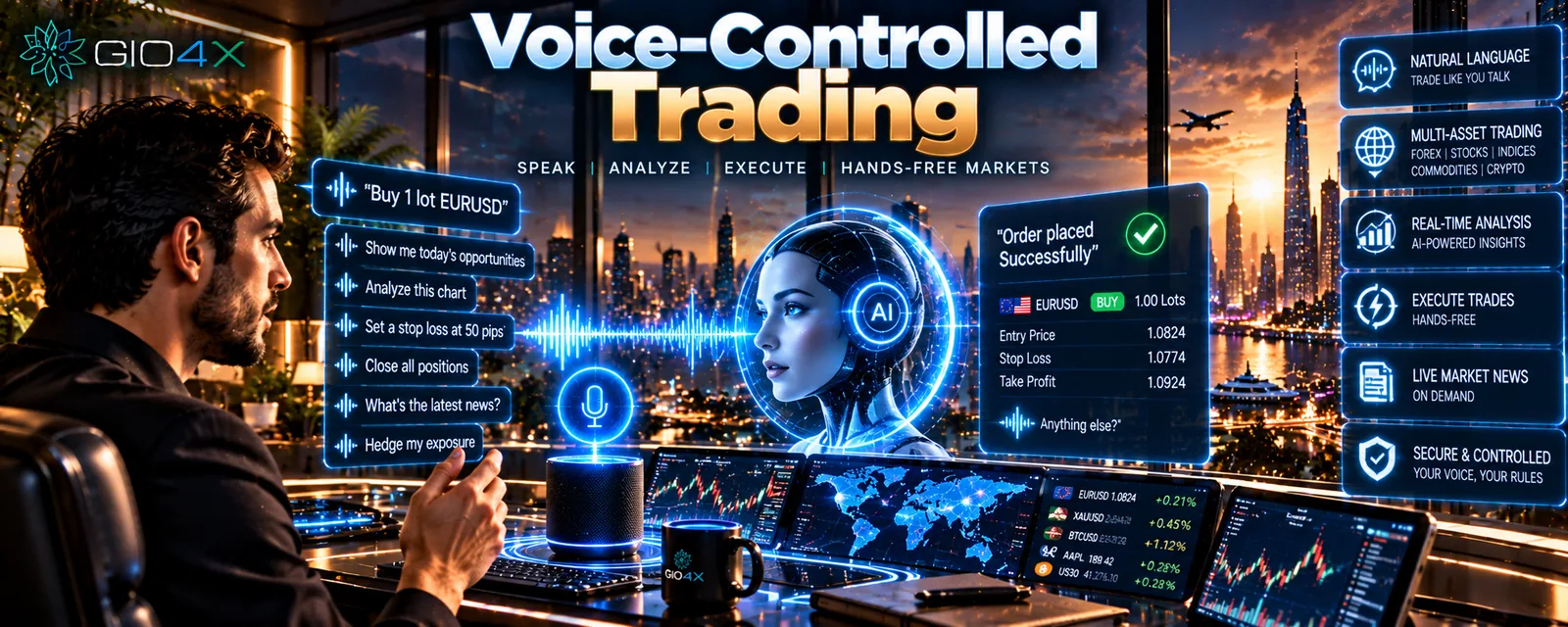
Trader How are my positions doing?
Assistant You are up 1.2 percent today. Your euro trade is 30 pips from its stop.
Trader Move that stop to breakeven.
Assistant Moving the EUR/USD stop to 1.0850, your entry price. Confirm?
Trader Yes.
The system understood intent, resolved "that stop" correctly and read the order back before acting.
Where voice helps
Queries. Asking for a price, a position, a calendar event or a summary of the morning's news is faster by voice than by menu.
Hands-busy moments. Driving, cooking or walking, a spoken briefing fits where a screen does not.
Accessibility. For traders with impaired vision or limited hand movement, a capable voice interface opens markets that screens make difficult.
Expert shortcuts. A professional at a desk can keep eyes on a chart while speaking a command to adjust an order.
Related posts
 AnalysisEducationWhat Comes After Smartphones for Trading?The smartphone’s successor may be software that follows you from one device to another. Glasses, earbuds and watches become ways to reach an AI agent that knows your account and rules. The phone can stay in your pocket while you look at it less.@Abe4 min read
 AnalysisEducation