Part 10 of 20The Future of Trading
@AbePublished 4 min read


Fetching the page
Education · Analysis
US stock markets are moving towards 23-hour weekdays. True 24/7 trading depends on the clearing, payments and support systems catching up. For traders, the practical question is sharper: when does extra access help, and when does it simply invite another bad trade?
Part 10 of 20The Future of Trading
@AbePublished 4 min read
Longer market hours and the cost of constant access
US stock markets are moving towards 23-hour weekdays. True 24/7 trading depends on the clearing, payments and support systems catching up. For traders, the practical question is sharper: when does extra access help, and when does it simply invite another bad trade?
Key takeaway. Longer hours expand access, not necessarily liquidity. Use limit orders, review overnight stops and set your own trading hours.
The SEC approved Nasdaq's plan to extend trading to 23 hours a day, five days a week, on 10 April 2026. NYSE Arca and the newer exchange 24X hold similar approvals. Nasdaq and NYSE are both targeting 6 December 2026 for launch, subject to industry readiness (Jones Day, Arnold & Porter).
Under Nasdaq's schedule, the week opens at 9 p.m. Eastern on Sunday and ends at 8 p.m. on Friday. A one-hour pause from 8 p.m. to 9 p.m. each day allows processing and the move to the next trade date (Nasdaq FAQ).
So the accurate description is 23/5. Weekends remain closed.
Foreign exchange has traded around the clock on weekdays for decades, passing from Sydney to Tokyo, London and New York. Futures on indices, oil and gold trade nearly 24 hours a day, five days a week.
Crypto went further. Bitcoin has traded every minute since its first exchanges opened, including Christmas Day. A generation of traders has grown up assuming markets do not close.
Retail brokers noticed. Several have offered overnight trading in popular US shares since 2023 through alternative venues. The exchanges are now following their customers.
Share trading hours were set when brokers met in person and settled with paper certificates. The current New York session of 9:30 to 4:00 dates from 1985.
Three things kept the hours short after the paper disappeared. Liquidity is deeper when everyone trades at the same time. Companies need a quiet period to release results. And clearing, settlement and data systems were built around an end-of-day batch.
Investors in Asia. For a trader in Chennai, Singapore or Seoul, the New York session runs through the night. Overnight US trading is their daytime.
People who want to react. Earnings and geopolitical news land outside market hours. Investors dislike watching a price gap without being able to act.
Exchanges themselves. Volume that goes to crypto venues and overnight platforms is volume they are losing.
Extending the matching engine is the easy part. The supporting systems are harder.
Thin markets. Overnight volume is a small fraction of daytime volume. Spreads are wider and a modest order can move the price. In early August 2024, a major overnight venue had to halt during a global sell-off because it could not handle the surge.
Fragmented liquidity. Spreading the same total trading across more hours can make every hour shallower. The open and close auctions may become even more important as the moments of real depth.
Stops triggered in the dark. A stop-loss order resting overnight can be hit by a brief, illiquid spike that reverses by morning.
The human cost. A market that never closes invites checking that never stops. Research on retail trading is consistent: more frequent trading tends to mean worse results. Constant access makes overtrading easier.
Probably, and tokenisation is the route. A tokenised share on a blockchain can change hands at any hour because settlement does not depend on a bank being open. Exchanges are building tokenised venues in part for this reason.
A reasonable expectation is weekday 23/5 trading in conventional shares from late 2026, with weekend trading arriving first in tokenised form and thinly. Full 24/7 trading in the main order book is plausible by the early 2030s.
Markets are moving towards continuous access because technology permits it and customers want it. Treat the extra hours as an option to use deliberately. A market that stays open does not require you to stay at the screen.
Jones Day — Extended NYSE and Nasdaq trading hours (opens in a new tab)
Arnold & Porter — Nasdaq expanded-hours approval (opens in a new tab)
Nasdaq — Global trading hours FAQ (opens in a new tab)
Linked figures were checked on 5 October 2026 in the original edition.
Part 10 of 20 in the series The Future of Trading. Next: Tokenized Stocks.
General information, not investment advice. Unlinked figures are approximate.
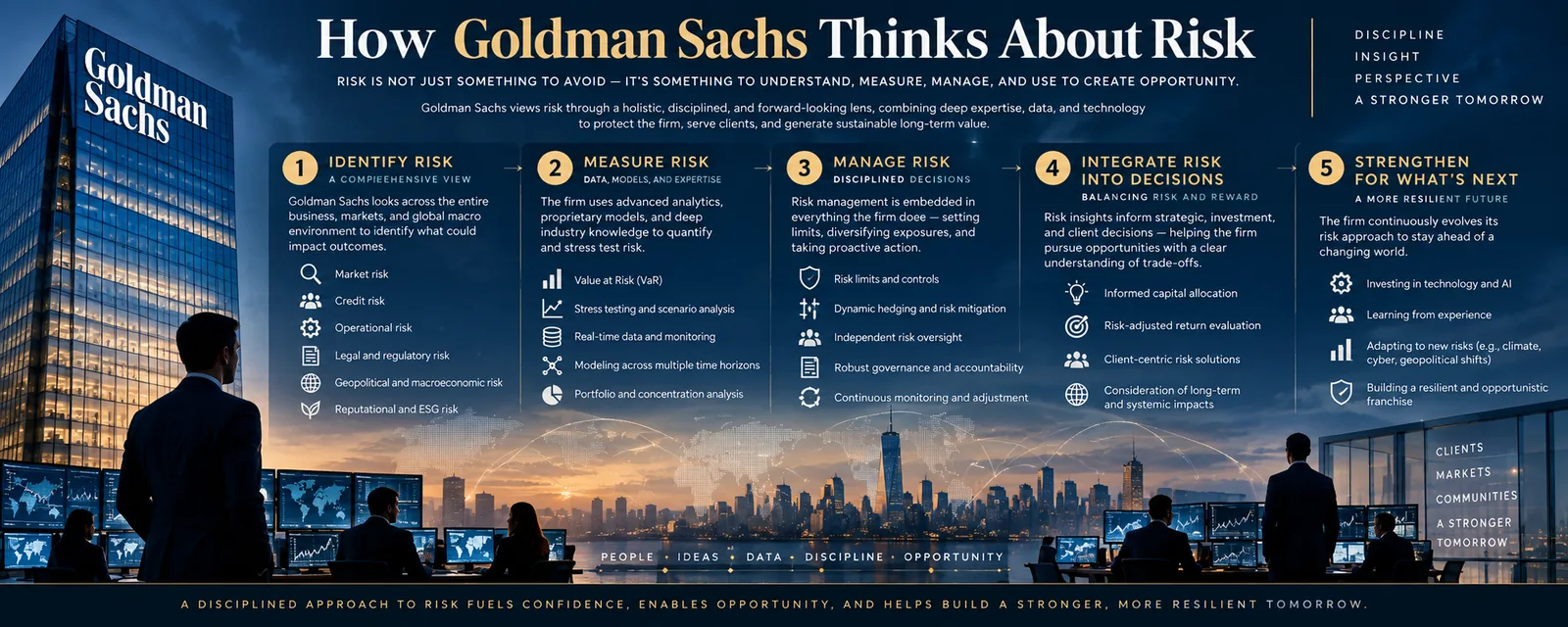 AnalysisEducationHow Goldman Sachs Thinks About RiskThe first question in institutional trading is how much can be lost, how quickly, and who will act. Goldman Sachs offers a useful lens on that discipline: risk is measured, challenged and escalated throughout the life of a position.@Abe5 min read
 AnalysisEducationHow Institutions Think About LiquidityLiquidity is the price of getting something done. An institution asks how much it can trade, how quickly, and how far its own orders could move the market. The answer shapes both entry and exit.@Abe5 min read
 AnalysisEducationTokenized Real EstateA property token can move in minutes. Finding a buyer for it may still take far longer. Tokenized real estate makes ownership easier to divide and transfer; it does little by itself to make the underlying building liquid.@Abe4 min read
A short note from a GIO4X desk, filed under Education. It explains; it does not forecast and it does not tell you to trade. GIO4X is a broker and earns money when clients trade.
Editorial standardshttps://www.gio4x.com/intelligence/blog/could-markets-trade-around-the-clock
Printed from gio4x.com.