Part 9 of 20The Future of Trading
@AbePublished 4 min read

Fetching the page
Education · Analysis
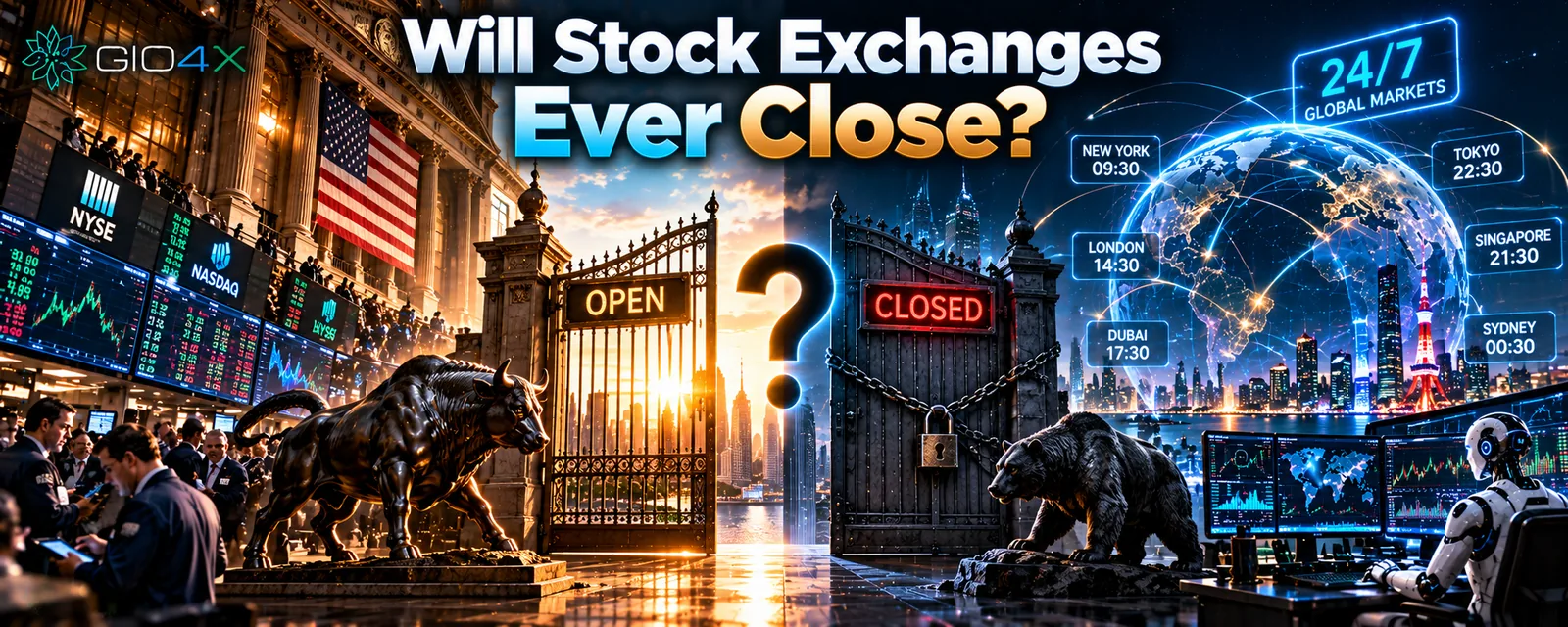
The trading floor is fading. The exchange’s more valuable functions—listing companies, enforcing rules and producing a trusted reference price—are harder to replace. Exchanges will keep changing shape, even as their buildings lose their original purpose.
Part 9 of 20The Future of Trading
@AbePublished 4 min read
Why the institution outlasts the trading floor
The trading floor is fading. The exchange’s more valuable functions—listing companies, enforcing rules and producing a trusted reference price—are harder to replace. Exchanges will keep changing shape, even as their buildings lose their original purpose.
Key takeaway. An exchange’s durability rests on liquidity, accountability and trusted prices. Technology can relocate those functions without eliminating the need for them.
The question here is whether exchanges could disappear as institutions. That is distinct from extending their daily trading hours.
Temporary closures are part of market history. The New York Stock Exchange shut for about four months in 1914 at the outbreak of the First World War. It closed for four trading days after the attacks of September 2001 and for two days during Hurricane Sandy in 2012.
Permanent closures are common too, though less noticed. India once had more than twenty regional stock exchanges, in cities from Madras to Ludhiana. Electronic trading on the NSE and BSE made them redundant, and nearly all have exited the business. The United States and Europe saw the same consolidation.
So exchanges do close. What closes them is a better way of doing the same job.
London's trading floor emptied within months of the 1986 "Big Bang" reforms that brought in screen trading. Chicago's futures pits, once the loudest rooms in finance, were mostly shut by 2015 and the rest after the pandemic.
The NYSE floor closed temporarily in March 2020 and the market ran fully electronically without trouble. It reopened, and still hosts designated market makers and the opening bell. Much of its value today is ceremonial and televisual.
The real exchange is a set of matching engines in data centres in New Jersey, Mumbai and the suburbs of London.
To ask whether exchanges will disappear, list their jobs.
Each of these can now be done by someone else. The question is whether anyone does all five better together.
Off-exchange trading. In the United States, roughly half of share volume now trades away from exchanges, in dark pools and inside wholesale market makers that fill retail orders. The exchange's price is used as the reference, but the trade happens elsewhere.
Decentralised exchanges. In crypto, automated market makers match trades with code and no operator. They run every hour of the year, and tokenised versions of listed shares already trade on them.
Tokenisation. If a share is a token that settles instantly between wallets, the separate layers of exchange, clearing house and depository begin to merge. In 2026 Nasdaq won approval to trade tokenised versions of listed securities, which shows exchanges intend to absorb this change, not be replaced by it.
Liquidity attracts liquidity. Traders go where other traders are. A venue with the deepest order book gets the next order too. This network effect has protected leading exchanges through every technology shift so far.
Someone must be accountable. Regulators want a licensed entity they can inspect and fine. Issuers want a recognised stamp when they list. Code alone does not answer a subpoena.
The reference price is a public good. Dark pools and wholesalers depend on the exchange price to do their business. If everyone left the exchange, the price they rely on would deteriorate. That dependence gives exchanges lasting relevance, and it worries regulators as off-exchange share grows.
They have changed business. Modern exchange groups earn much of their revenue from data, indices, technology and clearing. LSEG bought the data firm Refinitiv; the owner of the NYSE runs mortgage technology. They are data and infrastructure companies with a famous brand attached.
Two developments would threaten the institution itself.
The first is issuers leaving. Companies are staying private longer, funded by private equity and private credit. If the best companies never list, the exchange becomes a market for the rest.
The second is a regulatory decision that a tokenised ledger, run as shared public infrastructure, should replace exchange, clearing house and depository together. That is technically possible. It would require a level of political agreement that markets have rarely achieved.
Expect fewer, larger exchange groups running several kinds of venue: a lit order book, dark pools, and tokenised markets that never stop. Expect physical floors to become studios and museums. Expect national exchanges in smaller markets to merge or be bought.
Physical trading floors will continue to close or become ceremonial spaces. Exchanges as rule-makers and reference-price setters are more likely to endure. A market still needs trusted infrastructure, however little of it remains visible on a trading floor.
CoinDesk — Nasdaq tokenized securities approval (opens in a new tab)
Linked figures were checked on 5 October 2026 in the original edition.
Part 9 of 20 in the series The Future of Trading. Next: Could Markets Trade Around the Clock?.
General information, not investment advice. Unlinked figures are approximate.
 AnalysisEducationWhat Happens When AIs Trade Against Other AIs?Machines have been trading against machines for more than a decade. The result is familiar: tighter spreads, fewer simple opportunities and failures that can unfold at extraordinary speed. Learning systems add a harder question—what happens when those machines adapt to one another?@Abe4 min read
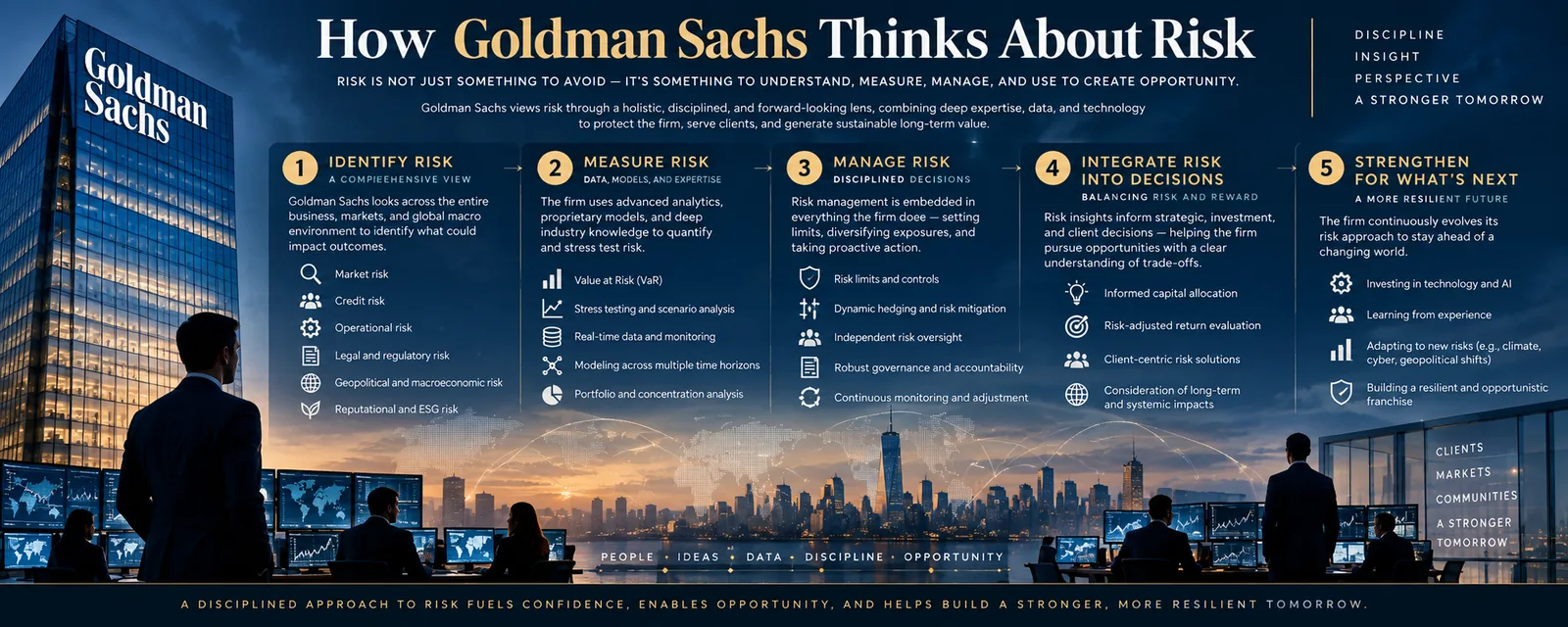 AnalysisEducationHow Goldman Sachs Thinks About RiskThe first question in institutional trading is how much can be lost, how quickly, and who will act. Goldman Sachs offers a useful lens on that discipline: risk is measured, challenged and escalated throughout the life of a position.@Abe5 min read
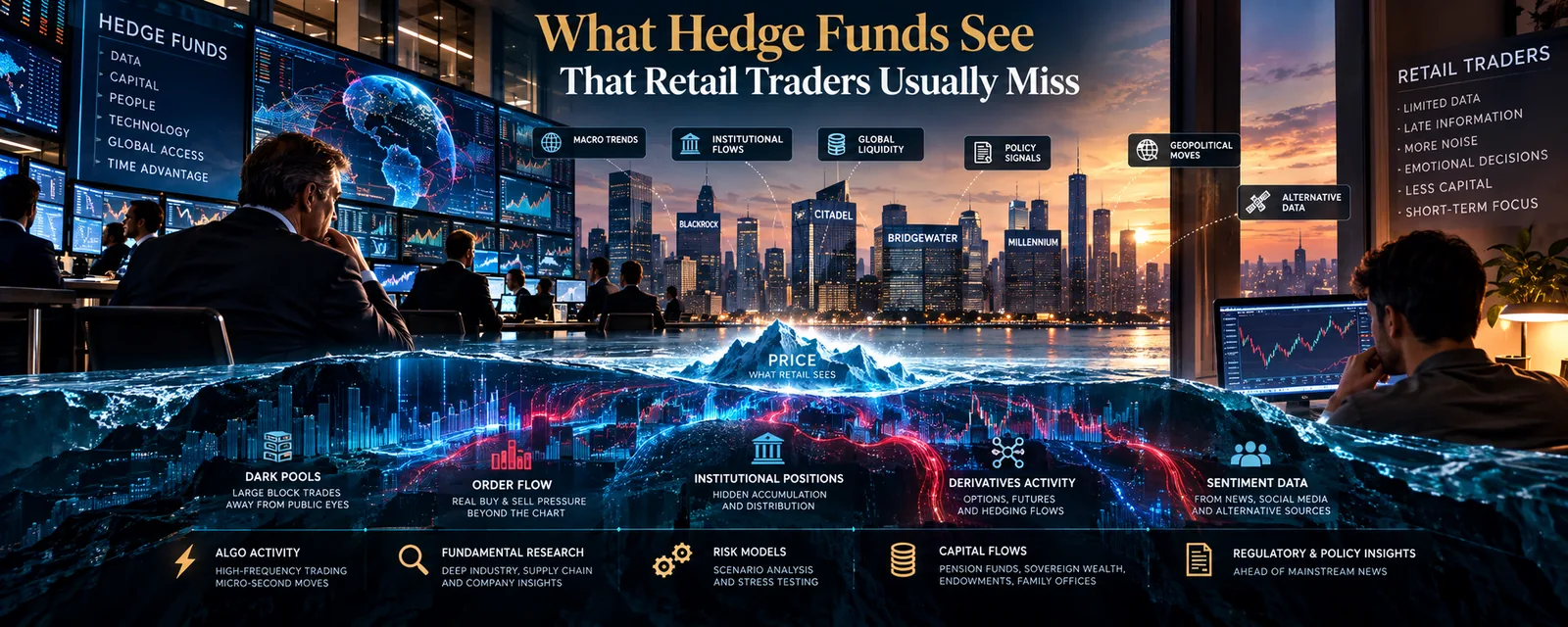 AnalysisEducationWhat Hedge Funds See That Retail Traders Usually MissThe chart shows price. A hedge fund also asks who holds the trade, what it costs to carry, and which other positions would lose alongside it. That wider view can change a decision before the first order is sent.@Abe5 min read
A short note from a GIO4X desk, filed under Education. It explains; it does not forecast and it does not tell you to trade. GIO4X is a broker and earns money when clients trade.
Editorial standardshttps://www.gio4x.com/intelligence/blog/will-stock-exchanges-ever-close
Printed from gio4x.com.