Part 5 of 20The Future of Trading
@AbePublished 4 min read

Fetching the page
Education · Analysis
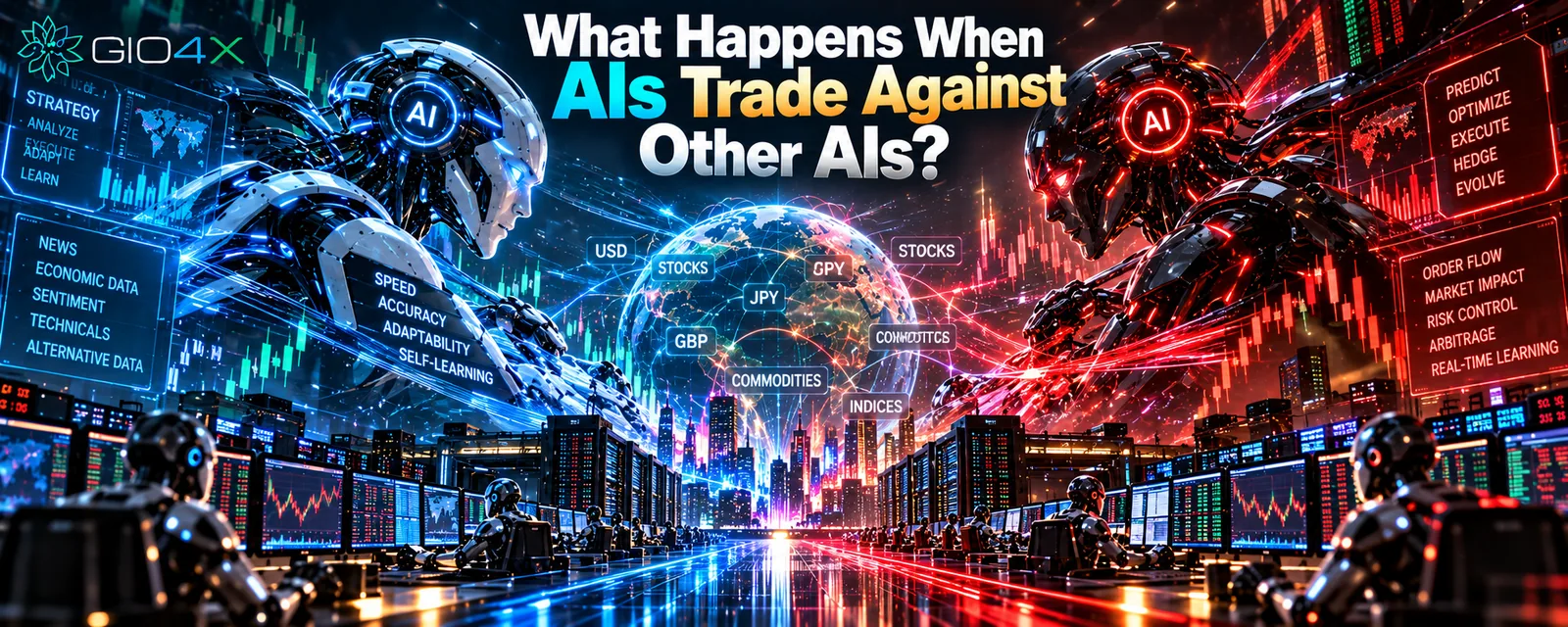
Machines have been trading against machines for more than a decade. The result is familiar: tighter spreads, fewer simple opportunities and failures that can unfold at extraordinary speed. Learning systems add a harder question—what happens when those machines adapt to one another?
Part 5 of 20The Future of Trading
@AbePublished 4 min read
Competition and feedback in automated markets
Machines have been trading against machines for more than a decade. The result is familiar: tighter spreads, fewer simple opportunities and failures that can unfold at extraordinary speed. Learning systems add a harder question—what happens when those machines adapt to one another?
Key takeaway. Automated markets can be efficient in normal conditions and fragile under stress. Similar models and shared data can turn separate decisions into a crowded exit.
In US equities and major currency pairs, the counterparty to an algorithm is usually another algorithm. High-frequency market makers quote, other machines take, and humans appear in the flow as occasional large orders sliced into pieces by yet more software.
The result for ordinary investors has been largely good. Bid-ask spreads in liquid stocks and currencies are a fraction of what they were in the 1990s. Execution is instant and cheap.
So the question is really what changes when the machines become learning systems instead of fixed rules.
A trading edge is information that others have not yet acted on. When every participant has a capable model reading the same data, any pattern that can be found is found by many at once, and then it is gone.
This is an arms race with a familiar shape. Firms once spent hundreds of millions on microwave links between Chicago and New York to save a few milliseconds. The next round is being spent on compute, proprietary data and talent.
For the market as a whole this is efficient. For any single participant it means running faster to stay in place.
Machines reacting to machines can produce feedback that no human designed.
A small example became famous in 2011. Two booksellers on Amazon used pricing bots, each setting its price as a multiple of the other's. A biology textbook, The Making of a Fly, climbed to more than $23 million before anyone noticed.
Markets have seen the serious version. In the May 2010 Flash Crash, automated selling met automated market makers that withdrew, and prices of some large stocks briefly traded at a cent. In October 2016, sterling fell about 6 percent in two minutes during thin Asian hours, with algorithms amplifying the move.
Each event was short. Each showed that liquidity provided by machines can disappear in the same instant.
This is the risk regulators talk about most. If many firms build on the same few foundation models, train on the same data and use the same vendors, their systems will tend to reach the same conclusion at the same time.
Diversity of opinion is what makes a market liquid: one participant sells because another wants to buy. A market of near-identical models has everyone on the same side. The Bank of England, the IMF and the Financial Stability Board have each flagged this concentration as a financial stability concern.
Researchers have shown, in simulated markets, that reinforcement learning agents can learn to keep prices above competitive levels without communicating. Each simply discovers that undercutting triggers retaliation and that restraint pays.
No agreement exists, and no human intended it. Competition law is built around agreements and intent. How it applies when the outcome emerges from independent learning is an open legal question.
Once behaviour is predictable, it becomes prey. Algorithms already probe for large hidden orders and trade ahead of predictable index rebalancing.
Learning systems extend this. One model can learn another's habits and exploit them, or feed it misleading signals. Spoofing, placing orders you intend to cancel in order to mislead, is illegal for humans and for the firms behind machines. Detecting it when a model invents a subtle new variant is harder.
In a contest between machines, advantage comes from what the others lack.
The last two matter for individuals. A small trader with patience does not have to win the arms race. They have to avoid entering it.
After 2010, exchanges added circuit breakers that pause trading when prices move too far too fast, and price bands that reject clearly erroneous orders. Firms are required to test algorithms and maintain kill switches.
These controls assume that failures are fast and mechanical. That assumption holds for AI too, which is reassuring. The harder problem is the slow one: many models quietly converging on the same positions over months, then leaving together.
Machine-against-machine markets are efficient much of the time and fragile some of the time. Expect tighter spreads, shorter-lived opportunities and occasional sharp moves that reverse quickly. For a human trader, sensible sizing, avoiding resting stop-loss orders during illiquid hours and a different time horizon matter more than winning a speed contest.
Part 5 of 20 in the series The Future of Trading. Next: Quantum Computing and Financial Markets.
General information, not investment advice. Unlinked figures are approximate.
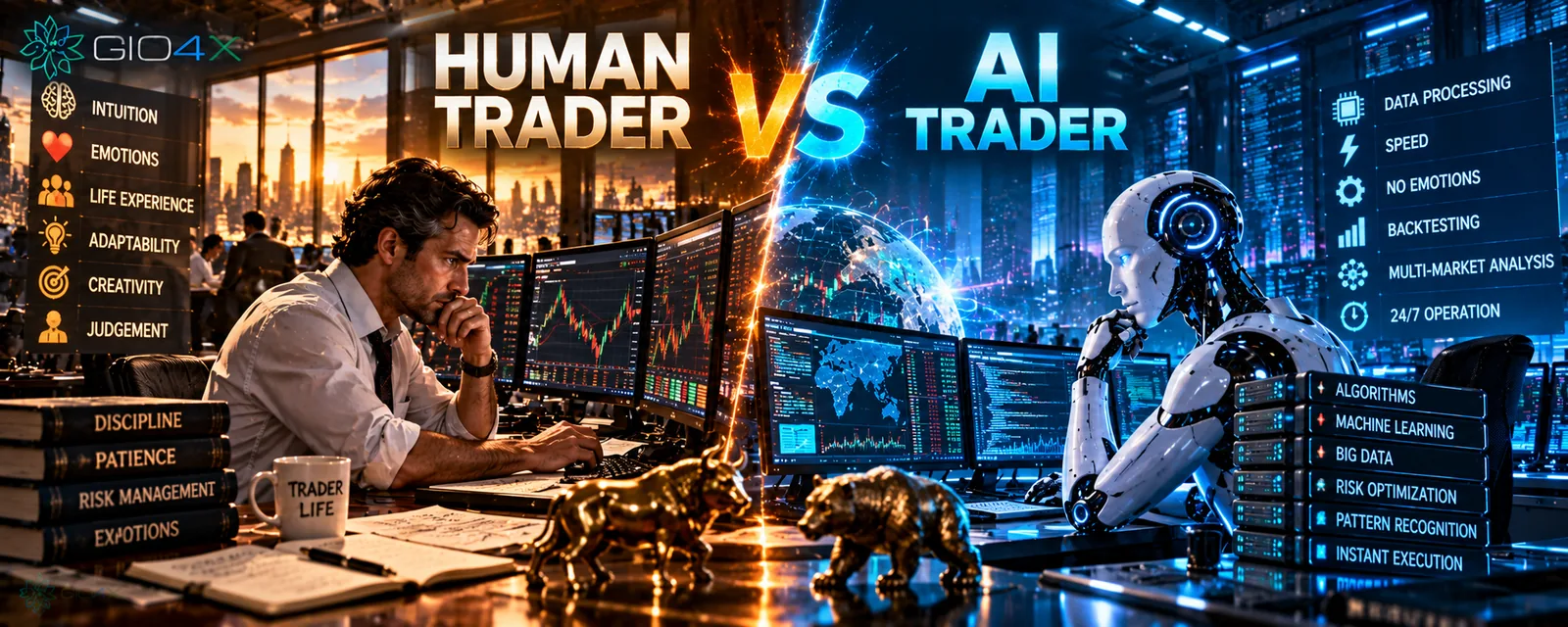 AnalysisEducationHuman Trader versus AI TraderA machine can watch thousands of markets without blinking. A human can recognise that the assumptions behind its signals have broken. Speed, breadth and consistency favour AI; context and unfamiliar situations still leave room for judgment. Your trading edge determines which strengths you need.@Abe3 min read
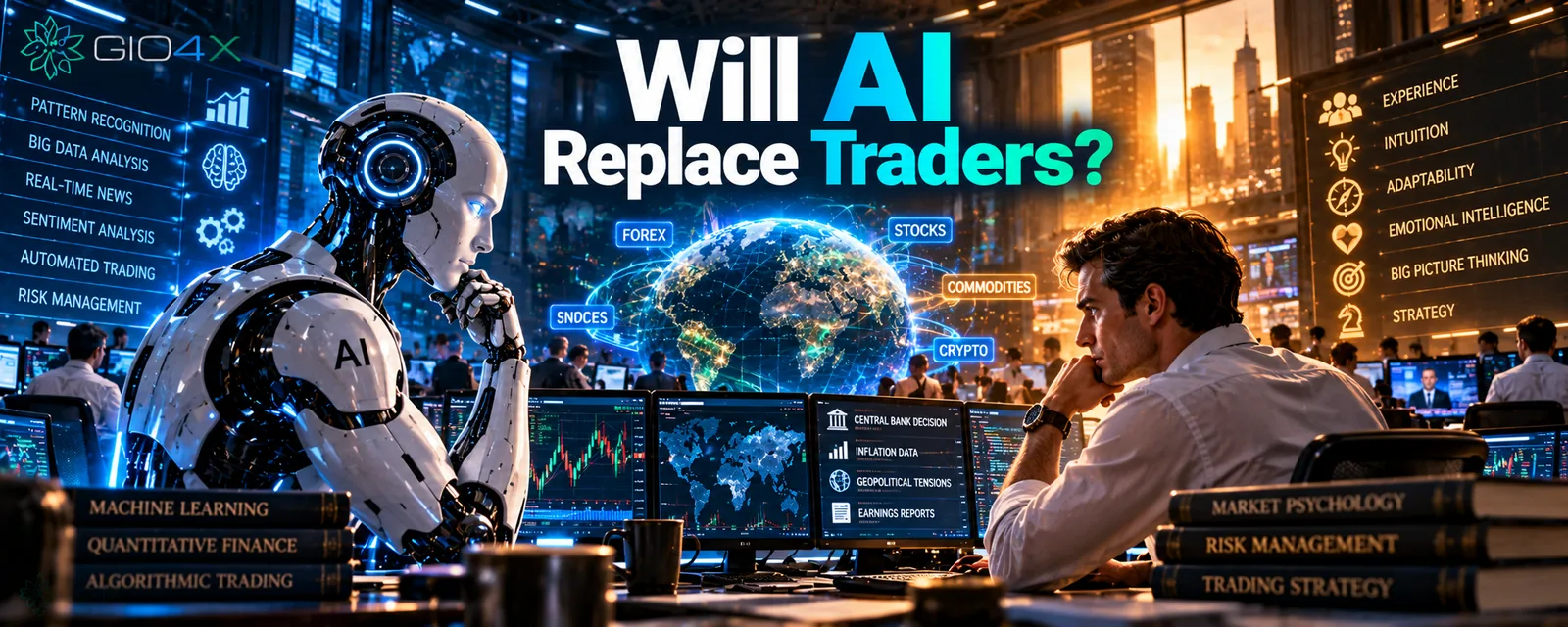 AnalysisEducationWill AI Replace Traders?AI is taking over the work traders do with their hands far faster than the work they do with their judgment. Execution and routine analysis are increasingly automated. Deciding what risks to take—and owning the consequences—remains a human responsibility.@Abe3 min read
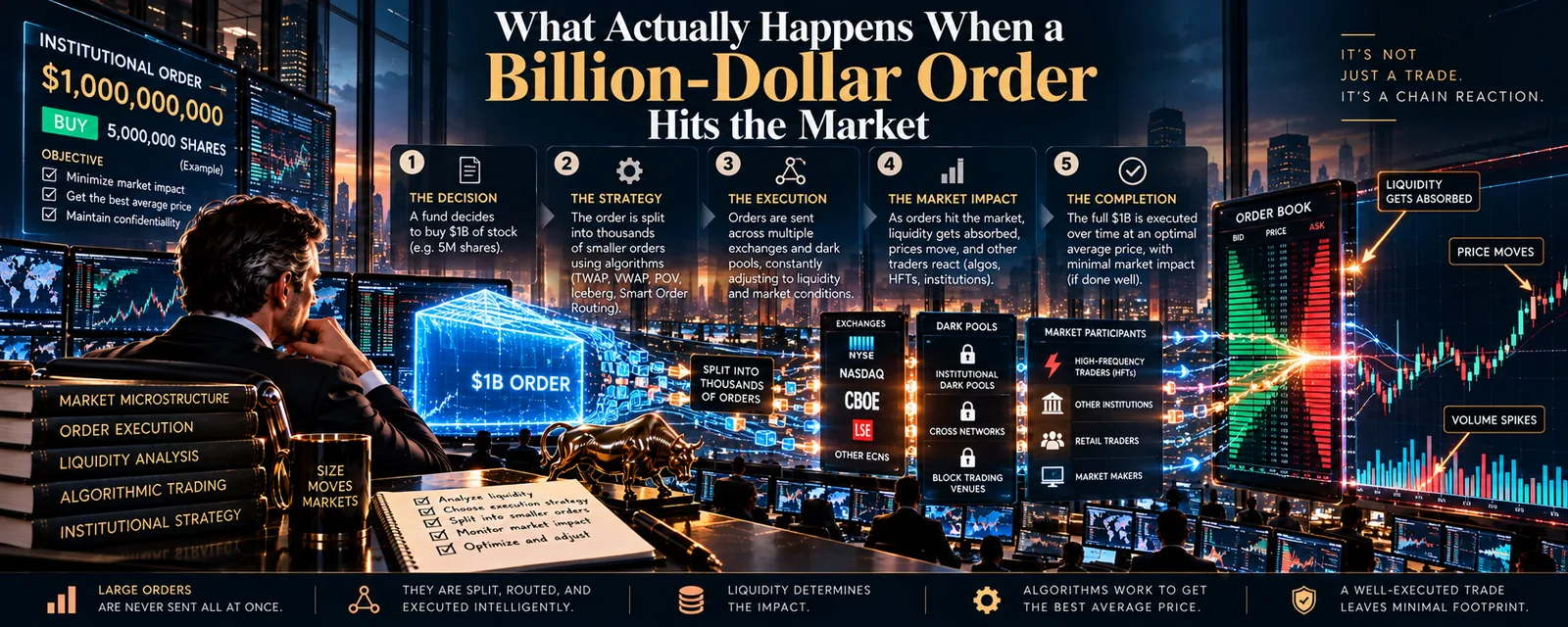 AnalysisEducationWhat Actually Happens When a Billion-Dollar Order Hits the MarketA billion-dollar equity order can become a project lasting several sessions. The execution desk divides the instruction, finds counterparties and balances speed against market impact. The route depends on liquidity and urgency.@Abe6 min read