Part 6 of 20The Future of Trading
@AbePublished 4 min read

Fetching the page
Education · Analysis
Quantum computing is already changing banks’ security priorities. Its effect on profitable trading strategies is likely to arrive later—and be smaller than the headlines imply. Encryption migration is a live project; most investment applications remain experiments.
Part 6 of 20The Future of Trading
@AbePublished 4 min read
The immediate priority is financial security
Quantum computing is already changing banks’ security priorities. Its effect on profitable trading strategies is likely to arrive later—and be smaller than the headlines imply. Encryption migration is a live project; most investment applications remain experiments.
Key takeaway. The urgent financial application is preparation for quantum threats to encryption. Potential gains in pricing and optimisation still depend on more capable hardware.
A classical bit is 0 or 1. A quantum bit, or qubit, can hold a blend of both and can be linked to other qubits so that they behave as one system. For certain mathematical problems, this lets a quantum computer reach an answer in far fewer steps.
The key word is certain. A quantum computer is not a faster version of a normal computer. It is a different machine that is dramatically better at a short list of tasks and no better at most others.
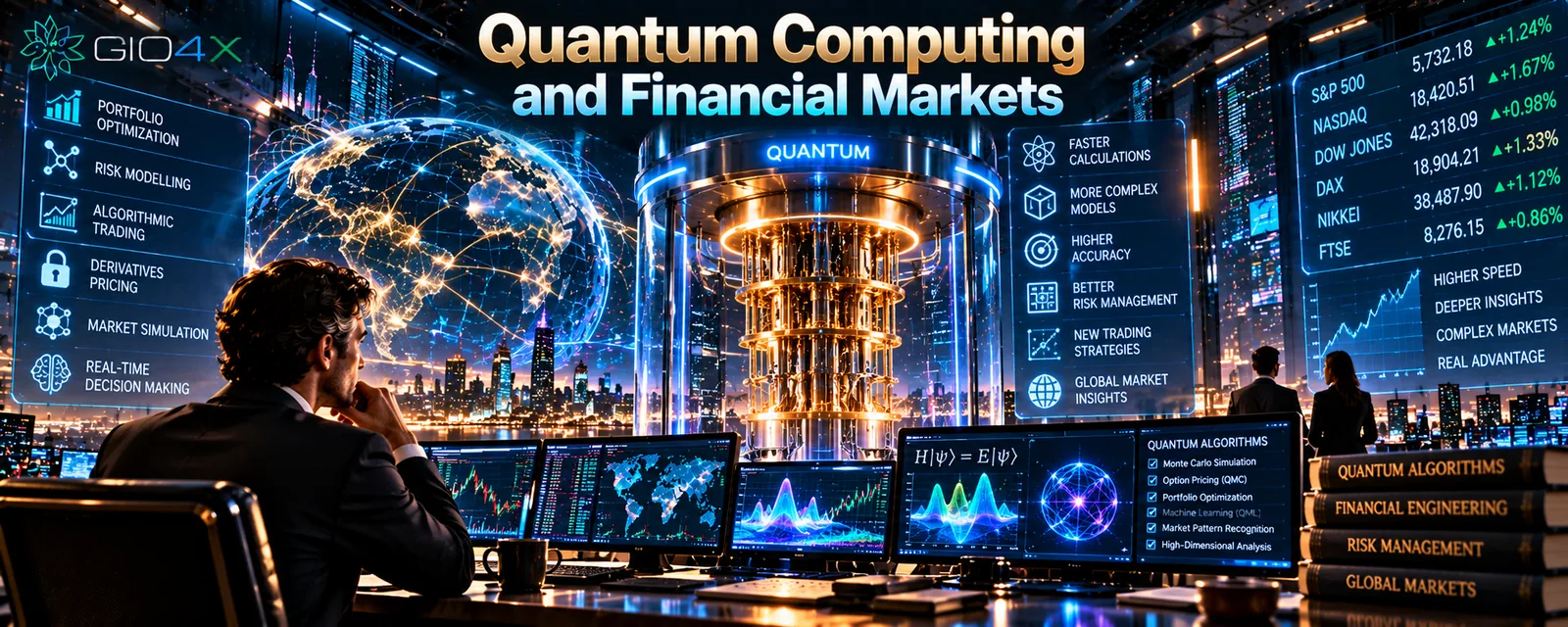
Portfolio optimisation. Choosing the best mix of thousands of assets under real constraints is a hard combinatorial problem. Quantum methods may find better solutions, or the same solutions faster.
Derivative pricing and risk. Banks price complex products and calculate risk by Monte Carlo simulation, running millions of random scenarios. A quantum technique called amplitude estimation promises the same accuracy with far fewer runs. In theory, an overnight risk calculation could become an intraday one.
Machine learning. Quantum versions of some learning algorithms may detect patterns in fraud or credit data more efficiently. This is the least proven of the three.
JPMorgan, Goldman Sachs, HSBC and others have published research and run trials on today's hardware. Results so far show promise on small problems, with honest debate about whether classical methods could match them.
Qubits are fragile. Heat, vibration and stray fields cause errors within fractions of a second. Useful calculations need error correction, which spends many physical qubits to make one reliable "logical" qubit.
Today's best machines have hundreds to a few thousand physical qubits. Pricing a realistic derivatives book with a clear advantage is estimated to need thousands of logical qubits, which means far larger machines than exist.
Hardware roadmaps from the major developers point to fault-tolerant systems around the end of this decade. Roadmaps in this field have slipped before.
In 1994 Peter Shor showed that a large quantum computer could factor big numbers efficiently. The public-key encryption that secures online banking, trading connections and digital signatures relies on that task being impractical.
No machine today can do it at the scale required. But two facts make banks act now.
First, data stolen today can be stored and decrypted later, an approach known as "harvest now, decrypt later". Anything that must stay secret for ten or twenty years is already exposed.
Second, replacing cryptography across a bank takes many years. Every system, card, certificate and counterparty link must change.
In August 2024 the US standards body NIST published its first finalised post-quantum encryption standards. Regulators and central banks are now pushing firms to inventory their cryptography and plan the migration. For most financial institutions, this is the quantum project that matters this decade.
Bitcoin and most blockchains use elliptic-curve signatures, which Shor's algorithm also breaks. An attacker with a powerful enough machine could derive a private key from an exposed public key and move the coins.
Blockchains can upgrade to quantum-resistant signatures, and proposals exist. The difficulty is governance: every holder must move their coins to new addresses, and coins whose owners have lost their keys cannot be moved at all. That is a social problem as much as a technical one.
Probably not in the way people imagine. Three reasons.
The likely result is better-run banks, more precise hedging and faster risk numbers, not a machine that prints money.
For individual traders, little changes in the near term. Two practical checks still matter.
Ask whether your broker and bank have a post-quantum migration plan; credible firms should increasingly explain those plans publicly. Treat “quantum-powered trading” claims sceptically. The hardware needed for the sweeping advantages such marketing implies has yet to arrive.
Part 6 of 20 in the series The Future of Trading. Next: The Future of Trading Terminals.
General information, not investment advice. Unlinked figures are approximate.
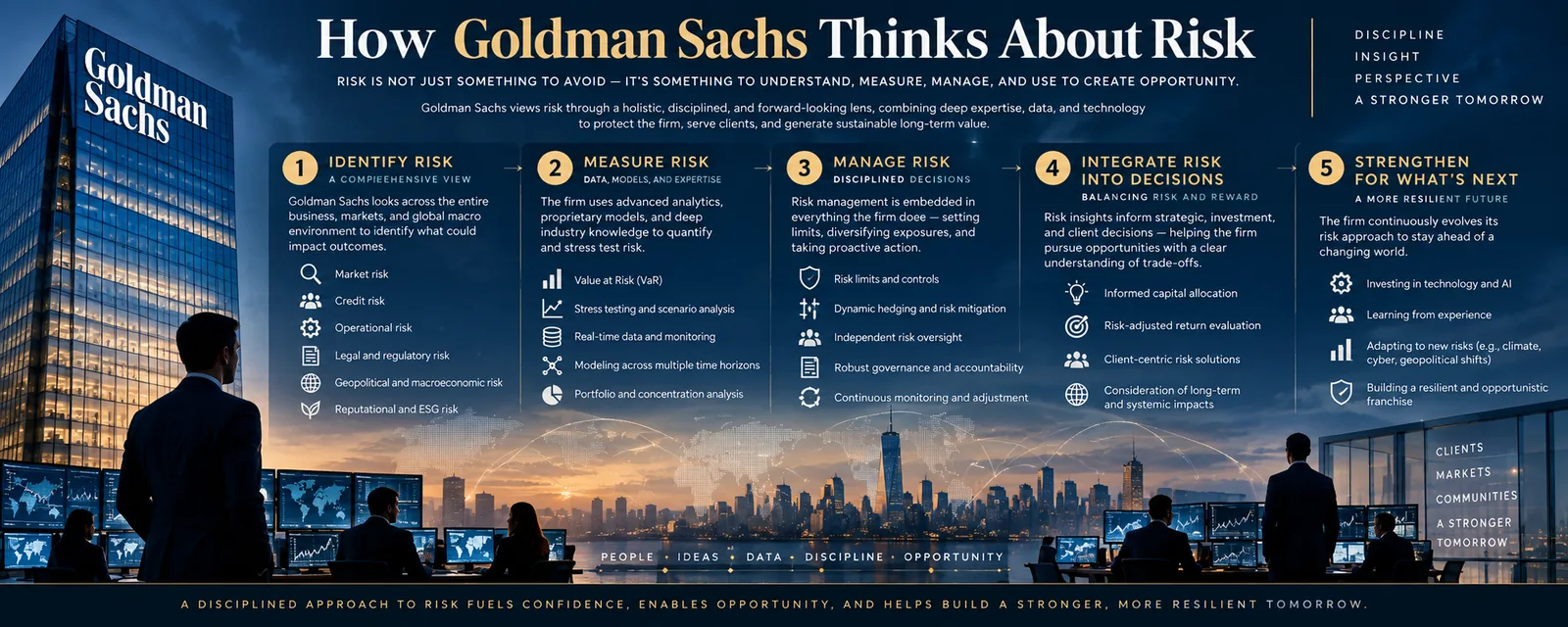 AnalysisEducationHow Goldman Sachs Thinks About RiskThe first question in institutional trading is how much can be lost, how quickly, and who will act. Goldman Sachs offers a useful lens on that discipline: risk is measured, challenged and escalated throughout the life of a position.@Abe5 min read
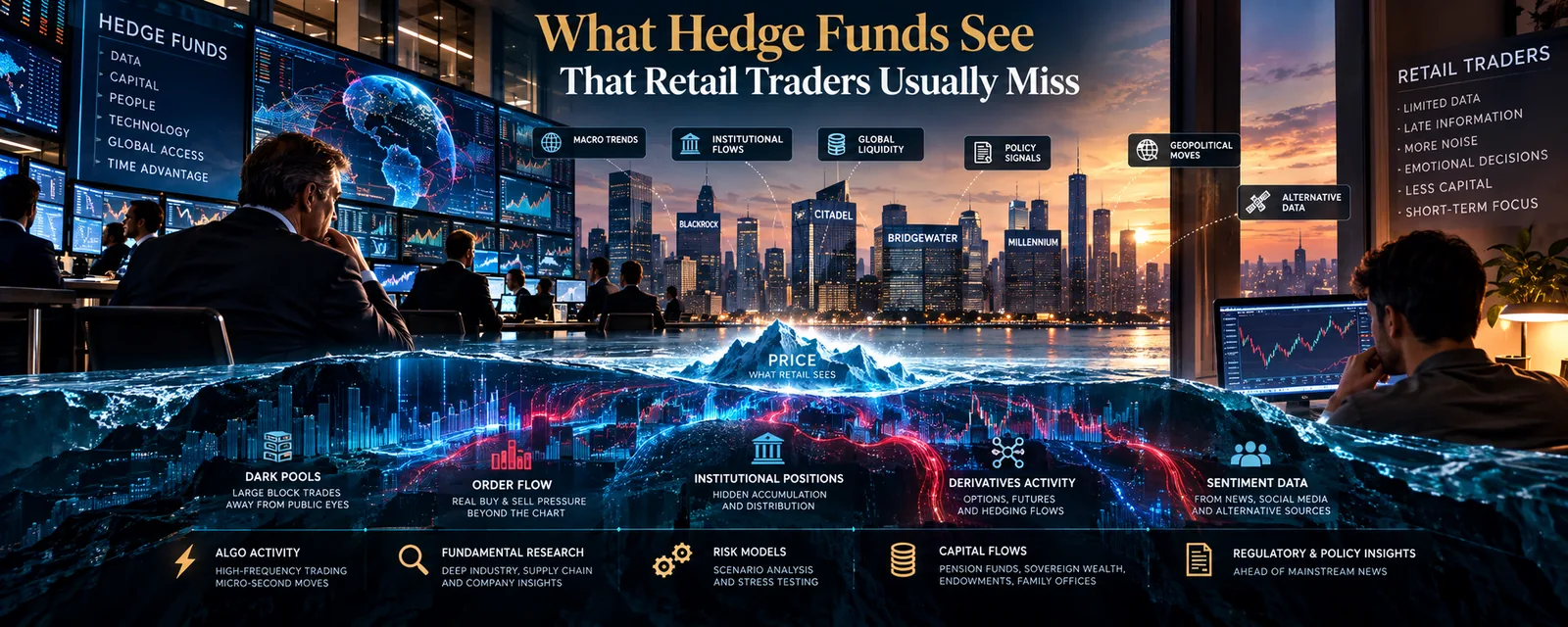 AnalysisEducationWhat Hedge Funds See That Retail Traders Usually MissThe chart shows price. A hedge fund also asks who holds the trade, what it costs to carry, and which other positions would lose alongside it. That wider view can change a decision before the first order is sent.@Abe5 min read
 AnalysisEducationTrade Like a Desk, Not Like a GamblerThe same entry can belong to a disciplined trading business or an impulsive bet. The difference sits around the order: a mandate, a repeatable setup, a risk budget and an honest review.@Abe5 min read