Part 2 of 15Institutional Trading
@AbePublished 5 min read

Fetching the page
Education · Analysis
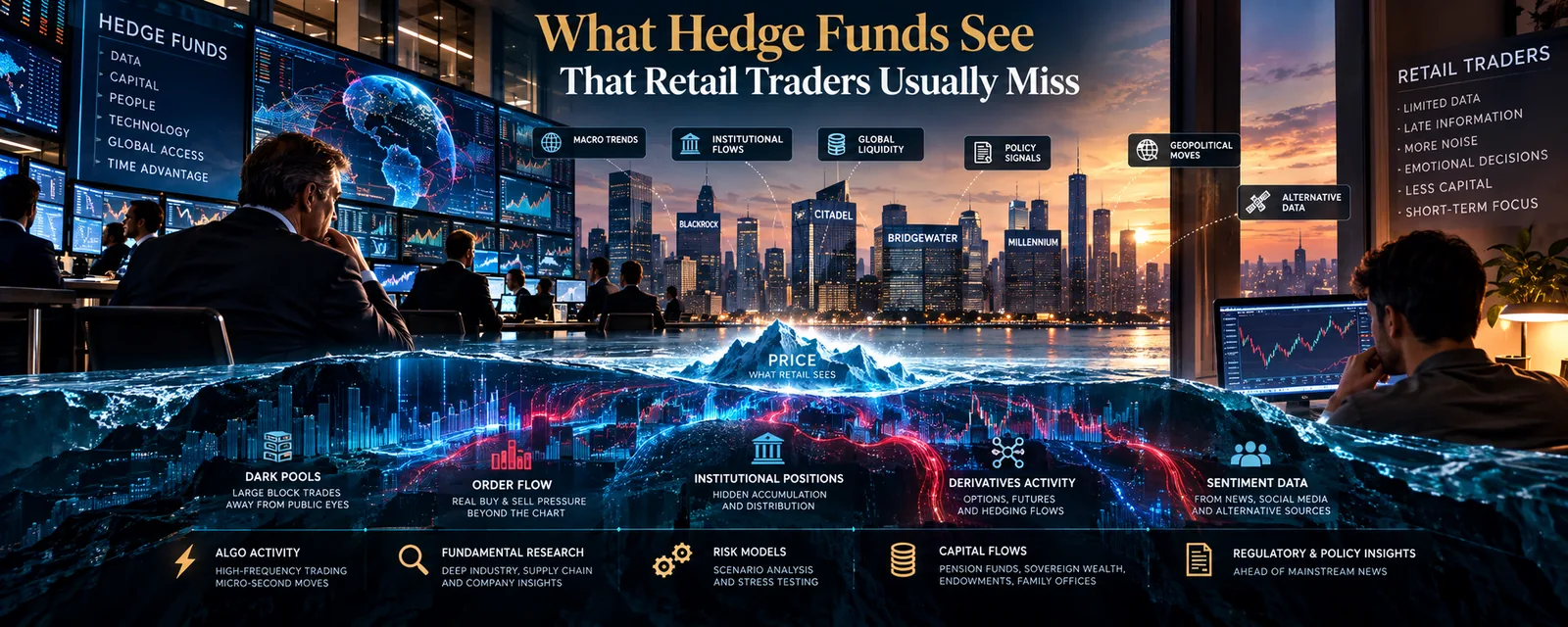
The chart shows price. A hedge fund also asks who holds the trade, what it costs to carry, and which other positions would lose alongside it. That wider view can change a decision before the first order is sent.
Part 2 of 15Institutional Trading
@AbePublished 5 min read
Positioning, flows, carry and the exposures behind the chart
The chart shows price. A hedge fund also asks who holds the trade, what it costs to carry, and which other positions would lose alongside it. That wider view can change a decision before the first order is sent.
Desk insight. Several tickets can express the same underlying bet. Label the driver before adding another.
The gap between professional and retail trading is often described as a gap in information. That is partly true, but it is not the main thing. The larger gap is in what each side chooses to look at.
A retail trader looks at a trend and asks whether it will continue. A fund asks who is already in it.
A trade that everyone holds is fragile. There are few buyers left to push it further and many sellers waiting if it turns. Funds watch futures positioning reports, options skew, fund flow data and broker surveys to estimate how crowded an idea has become.
This helps explain why markets can fall on good news. If optimistic investors are already positioned, the release may bring fewer new buyers than expected. Outcomes matter relative to expectations and positioning.
A large share of daily volume comes from participants who are not expressing a view. Pension funds rebalance at month-end. Index funds buy what is added and sell what is removed. Corporations convert foreign revenue on a schedule. Options dealers hedge as price moves.
These flows are mechanical, often predictable in timing, and indifferent to your support level. A fund that knows a large rebalancing is due will not read the resulting move as a change in fundamentals.
Retail traders tend to assume every candle carries a message. Much of the time it carries a calendar.
Every position has a running cost or a running income. In currencies this is the interest rate difference between the two sides. In futures it is the shape of the curve. In shorts it is the borrow fee.
A fund considers carry before entry. Positive carry may ease the cost of waiting; negative carry raises the hurdle the trade must clear. Neither protects the position from an adverse price move.
Many retail traders discover swap charges only when they read their statement. By then the cost has already changed the maths of the trade.
A fund does not have twenty trades. It has a handful of exposures expressed twenty ways.
Long the Australian dollar, long copper, long emerging market equities and short the yen can look like four ideas. In a risk-off week they behave like one. Risk systems group positions by the factor that drives them, so the fund knows its true bet.
Retail accounts often blow up this way. Each trade risked a sensible two percent. All five lost on the same afternoon for the same reason.
Professionals ask a blunt question before entering: who is selling this to me, and why are they willing?
Sometimes the answer is reassuring. The seller is forced, such as a fund facing redemptions or an index dropping a stock. Sometimes the answer is worrying. The seller knows the asset better than you do.
The counterparty need not be wrong: traders can transact for different horizons, hedges or liquidity needs. The useful question is whether your own expected advantage survives a plausible explanation for the other side.
Interest rate futures, options and forward curves show what the market expects. A fund compares its own view with that implied view, and only the gap between them is a trade.
“The central bank will raise rates” is not an idea if the market has fully priced the rise. “The central bank will raise by more than the market expects” is an idea. The first is a forecast. The second is a position.
Being right about where price ends up is not enough. A leveraged position has to survive the route.
Funds model the drawdown a trade could suffer before it works. If that drawdown would breach a limit or trigger a margin call, the trade is sized down or structured differently, perhaps with options.
Retail traders often set a target and a stop and ignore everything between. Then a correct idea is stopped out by ordinary volatility.
Most funds review trades in a structured way. They separate the quality of the idea from the quality of the execution and from luck. They track which setups make money and which only feel good.
A trader without records has only memory, and memory flatters. The winners are remembered as skill and the losers as bad luck.
Some advantages do not transfer. Large funds get direct conversations with company management, sell-side research, prime broker colour on flows, and expensive alternative data. They have teams and time.
These advantages are hard to replicate. A retail trader is unlikely to beat specialised firms on speed or exclusive access. Patience, selectivity and the freedom to stay flat offer more realistic grounds for competition.
Key takeaway. Hedge funds do not own a better chart. They place the chart inside a wider frame of positioning, flows, carry, correlation and expectations.
Start by widening the questions you ask. Better context cannot guarantee a profitable trade, but it can expose a weak one.
Part 2 of 15 in the series Institutional Trading. Next: Trade Like a Desk, Not Like a Gambler.
Independent educational commentary, not investment advice. References to firms do not imply affiliation or endorsement. Figures in examples illustrate a method, not a recommended allocation or a promised outcome. Trading leveraged products carries a high risk of loss.
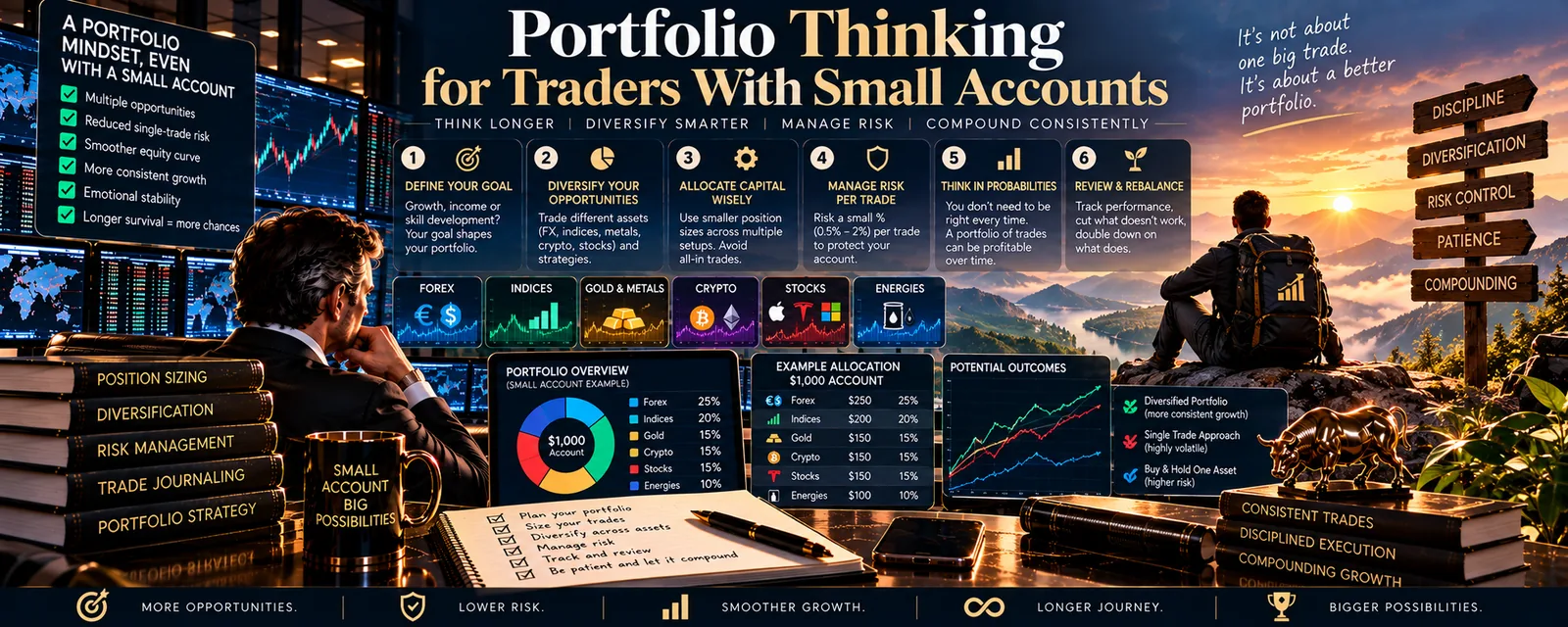 AnalysisEducationPortfolio Thinking for Traders With Small AccountsFive trades can still be one bet. Portfolio thinking asks what your positions would lose together, which drivers they share, and how much damage the whole account can absorb.@Abe6 min read
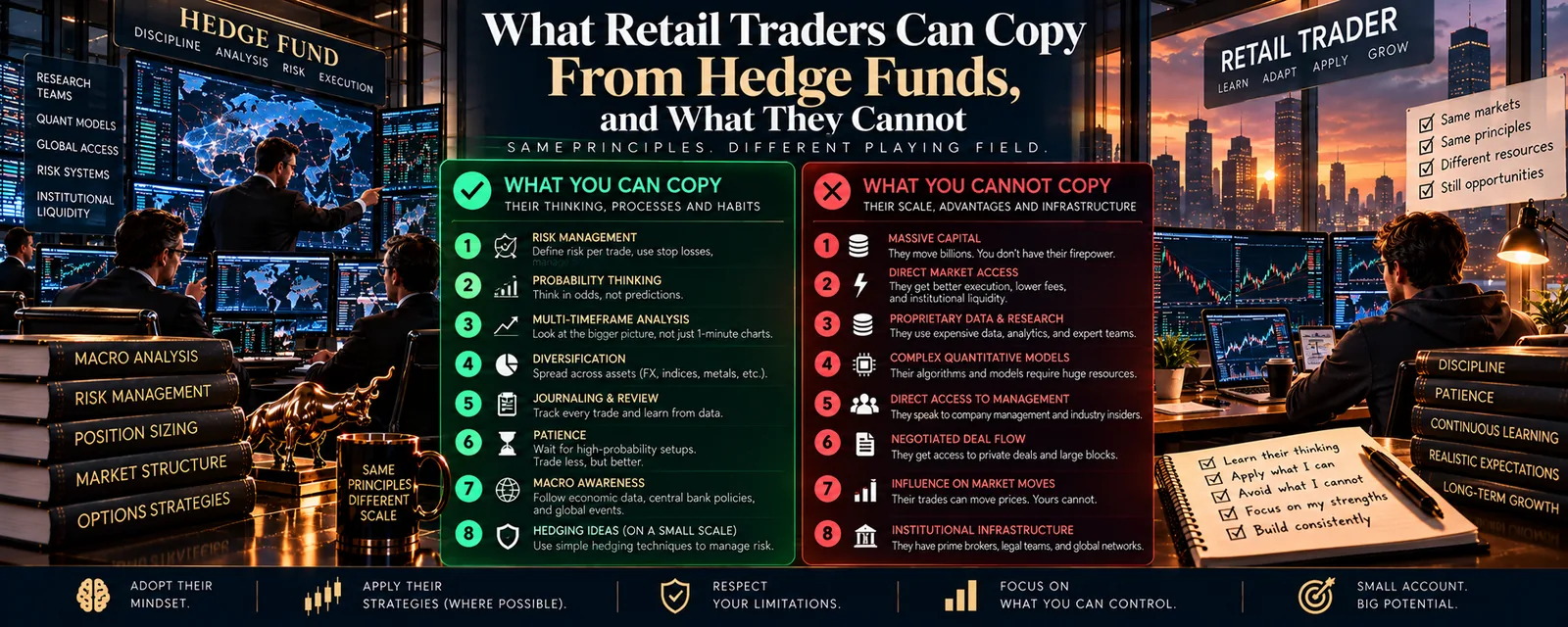 AnalysisEducationWhat Retail Traders Can Copy From Hedge Funds, and What They CannotHedge-fund discipline is more transferable than hedge-fund infrastructure. A retail trader can adopt written decisions, risk budgets and reviews while recognising the limits of access, financing, instruments and execution.@Abe6 min read
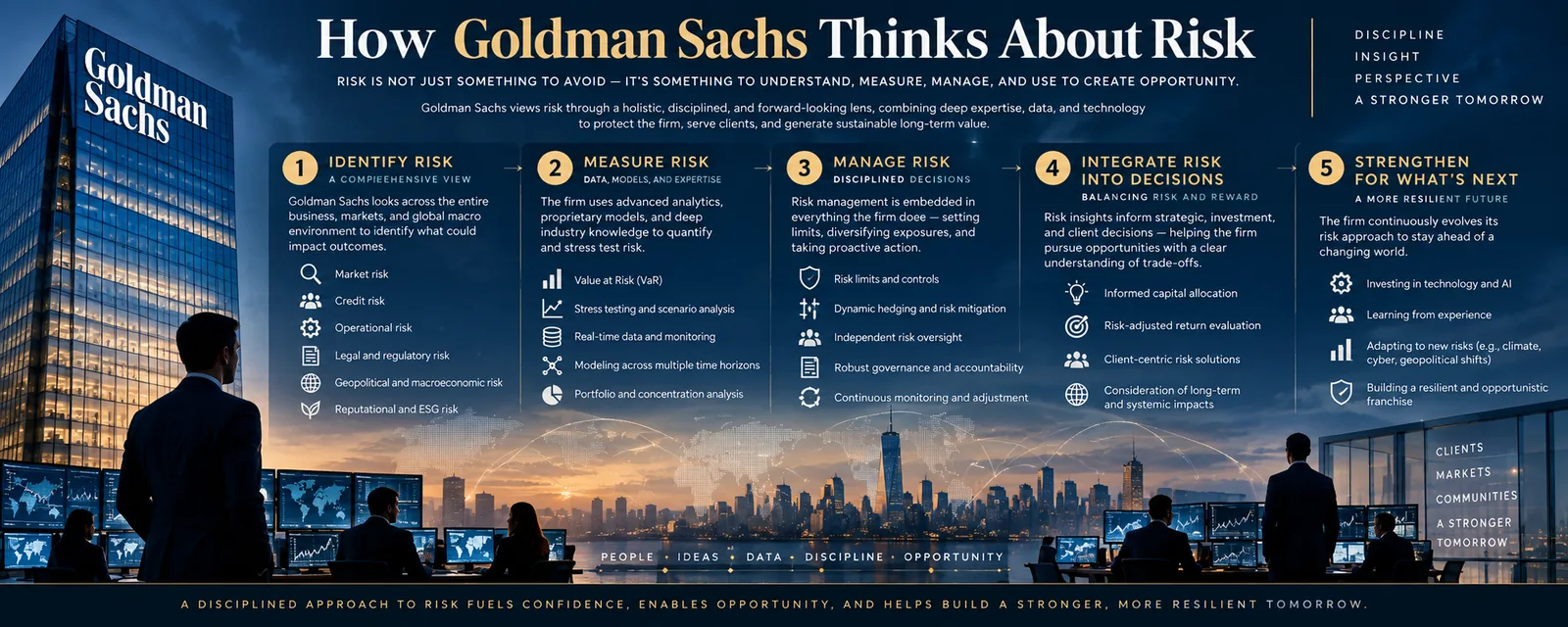 AnalysisEducationHow Goldman Sachs Thinks About RiskThe first question in institutional trading is how much can be lost, how quickly, and who will act. Goldman Sachs offers a useful lens on that discipline: risk is measured, challenged and escalated throughout the life of a position.@Abe5 min read