Part 4 of 20The Future of Trading
@AbePublished 4 min read
On this page
Autonomy needs a defined mandate
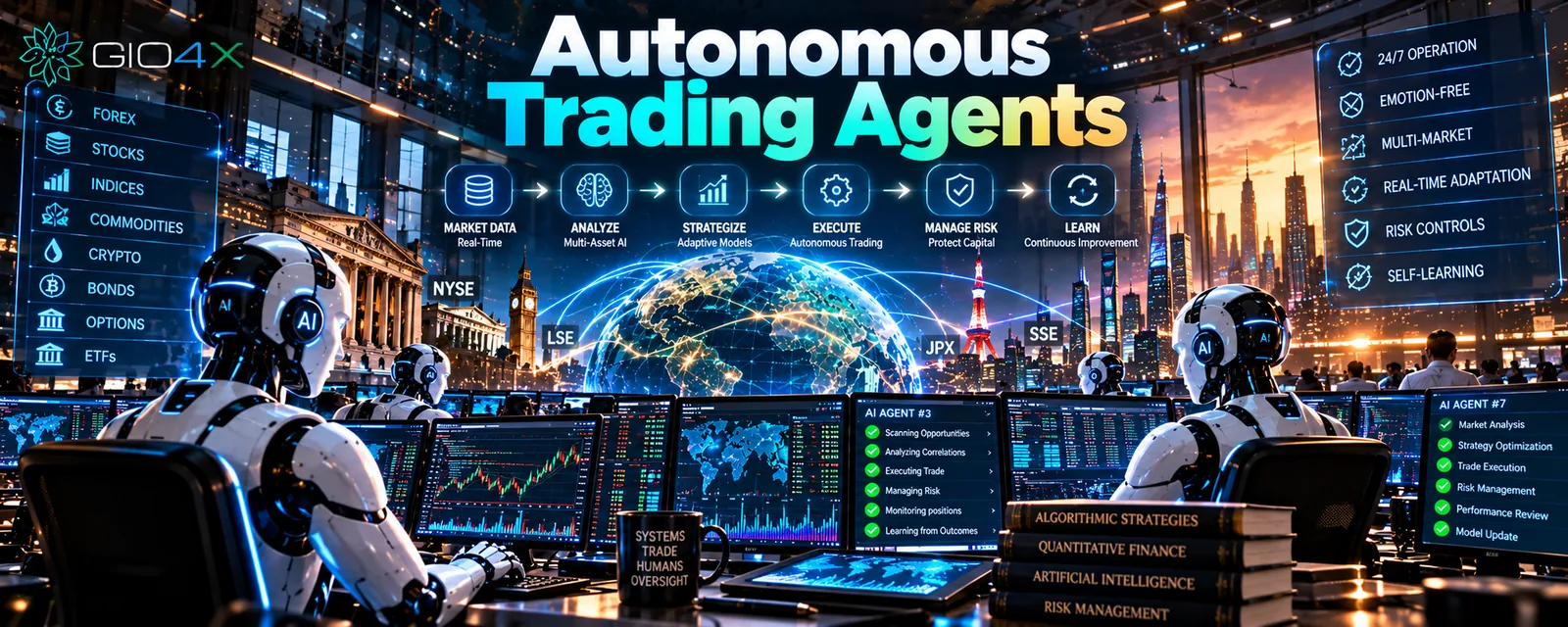
A trading bot follows instructions. An autonomous agent chooses how to pursue a goal. The shift from “buy when the averages cross” to “grow this account within a 10 percent drawdown” changes both the software’s capabilities and the oversight it requires.
Key takeaway. Give agents narrow jobs, enforce risk limits outside the agent, and expand authority only after measured results justify it.
Fixed rules and goal driven agents
A traditional expert advisor follows fixed logic. If condition A and condition B are true, open a position. It does exactly what its author wrote, forever.
An agent works in a loop. It observes the market, reasons about what to do, takes an action through a tool, checks the result and repeats. The reasoning step is usually a large language model. The tools are data feeds, a code interpreter, a broker API.
The bot’s intended behaviour is bounded by fixed logic. An agent has more room to choose its actions, and can surprise you in both directions.
What an agent can do today
A well-built agent can already carry out a research workflow end to end.
- Read the economic calendar and overnight news.
- Form a view and write it down.
- Pull historical data and test whether similar setups worked.
- Write or adjust strategy code.
- Place orders within pre-set limits.
- Monitor positions and write a daily report.
Each step used to need a person or a separate program. The agent chains them, and can run many copies in parallel across markets.
Five levels of autonomy
It helps to borrow the idea of levels from self-driving cars.
| Level | What the agent does | Human role |
|---|---|---|
| 1. Assistant | Answers questions, drafts analysis | Makes every decision |
| 2. Co-pilot | Proposes specific trades | Approves each one |
| 3. Supervised | Trades alone inside tight limits | Reviews daily, can halt |
| 4. Delegated | Manages a strategy and its own risk | Sets mandate, audits monthly |
| 5. Fully autonomous | Allocates capital, changes strategy |
Related posts
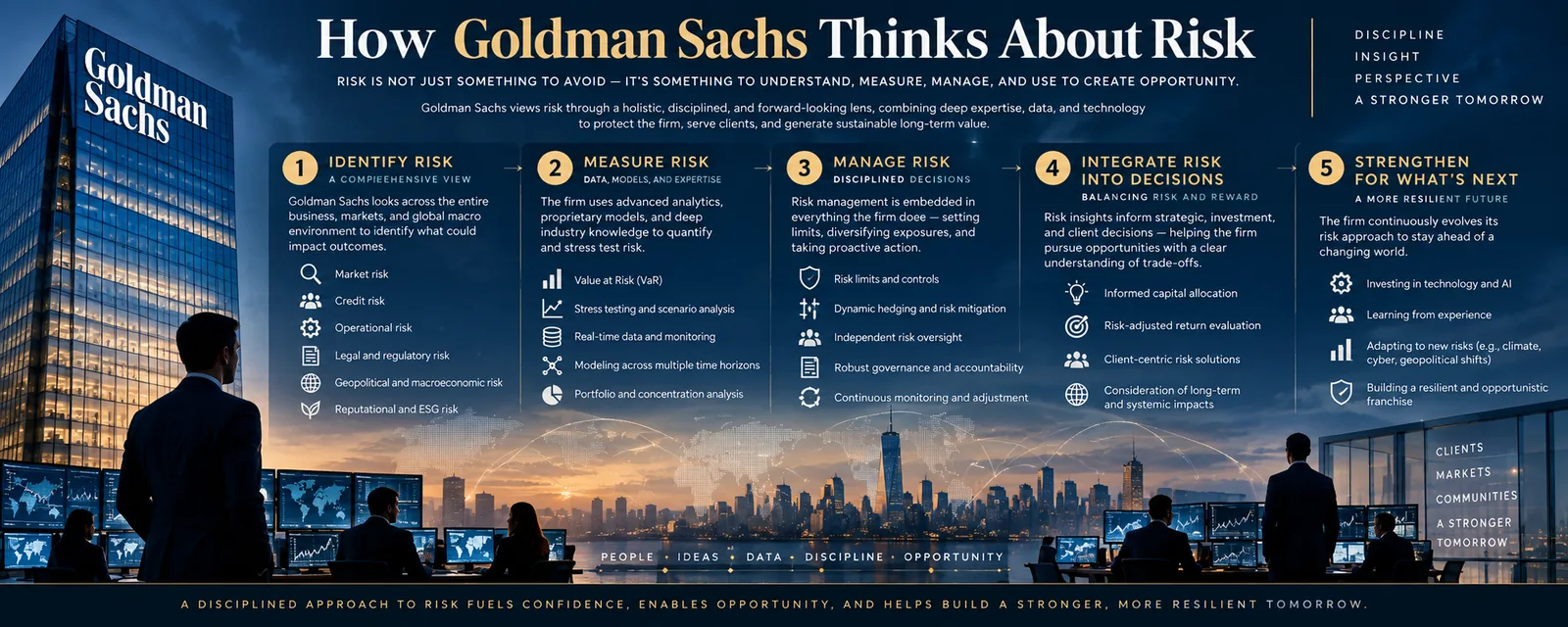 AnalysisEducationHow Goldman Sachs Thinks About RiskThe first question in institutional trading is how much can be lost, how quickly, and who will act. Goldman Sachs offers a useful lens on that discipline: risk is measured, challenged and escalated throughout the life of a position.@Abe5 min read
 AnalysisEducation