Part 3 of 20The Future of Trading
@AbePublished 4 min read


Fetching the page
Education · Analysis
An LLM can read an earnings call brilliantly and still make a poor trade. Large language models are strong at interpreting what people say about markets; forecasting the next price move is a different task. Confusing the two is where much of the disappointment begins.
Part 3 of 20The Future of Trading
@AbePublished 4 min read
Research strength and forecasting limits
An LLM can read an earnings call brilliantly and still make a poor trade. Large language models are strong at interpreting what people say about markets; forecasting the next price move is a different task. Confusing the two is where much of the disappointment begins.
Key takeaway. Use LLMs to read, structure and explain information. Test trading signals separately, using genuinely unseen data and realistic costs.
A large language model is trained to predict the next word across an enormous body of text. In doing so it absorbs a great deal about how the world is described, including finance.
It has read the textbooks, the filings, the research notes and the forum arguments. It can explain carry trades, convexity or the mechanics of a short squeeze as well as a good analyst. That is real knowledge, and it is useful.
A language model’s text training is not trading experience. On its own, it has no profit and loss, no experience of slippage and no feedback from being wrong with money at stake.
Reading at scale. A model can process thousands of earnings calls, regulatory filings and news items in the time a person reads one. It can extract guidance changes, tone shifts and risk disclosures consistently.
Sentiment and nuance. Older sentiment tools counted positive and negative words. LLMs handle negation, hedging and sarcasm. "We are not uncomfortable with current guidance" reads correctly as cautious reassurance.
Translation between formats. Turning a strategy described in plain English into MQL5 or Python, summarising a 200-page prospectus, or explaining an options position to a client are all tasks where LLMs save hours.
Structured reasoning about scenarios. Asked what a surprise rate cut might do to a currency, a good model lays out the channels: yield differentials, growth expectations, positioning. It reasons like a competent macro student.
Numbers and time series. Prices are not language. A price series is noisy, non-stationary and mostly unpredictable. LLMs given raw price data and asked to forecast perform no better than simple baselines in most careful tests.
Look-ahead contamination. This is the trap in most impressive backtests. A model trained on text through 2025 already "knows" what happened in 2023. Ask it to trade 2023 and it looks brilliant. Only tests on data after the training cutoff mean anything.
Confident error. LLMs can state a wrong figure, a non-existent filing or an invented correlation in fluent prose. In research this costs time. In live trading it costs money.
Consensus thinking. A model trained on public text reflects what was widely written. Market returns come from being right where the consensus is wrong. An LLM is, almost by construction, a consensus machine.
It helps to separate two meanings of "understand".
In the first sense, explaining why a market moved, LLMs do well. Given the news and the price action, they produce a coherent account.
In the second sense, saying where the market goes next, almost nobody does well, human or machine. Markets price in public information quickly. An LLM reading the same headline as everyone else has no natural edge from the reading alone.
The edge, where it exists, comes from speed, breadth or combination. Reading every small-cap filing that no analyst covers is an edge. Reading the Fed statement that ten thousand machines parse within a millisecond is not.
Serious firms rarely let an LLM make the trade decision alone. The common pattern has three layers.
In this design the LLM does what it is good at and nothing else.
☐ Was it tested on data after its training cutoff?
☐ Were trading costs included?
☐ Is the edge still there when the model cannot see the news?
Most claims fail the first question.
LLMs understand the language of markets, a substantial part of an analyst’s work. That does not give them a hidden ability to forecast prices. Use them as tireless research assistants and coding partners, verify their facts, and keep trading decisions inside a process that measures its own results.
Part 3 of 20 in the series The Future of Trading. Next: Autonomous Trading Agents.
General information, not investment advice. Unlinked figures are approximate.
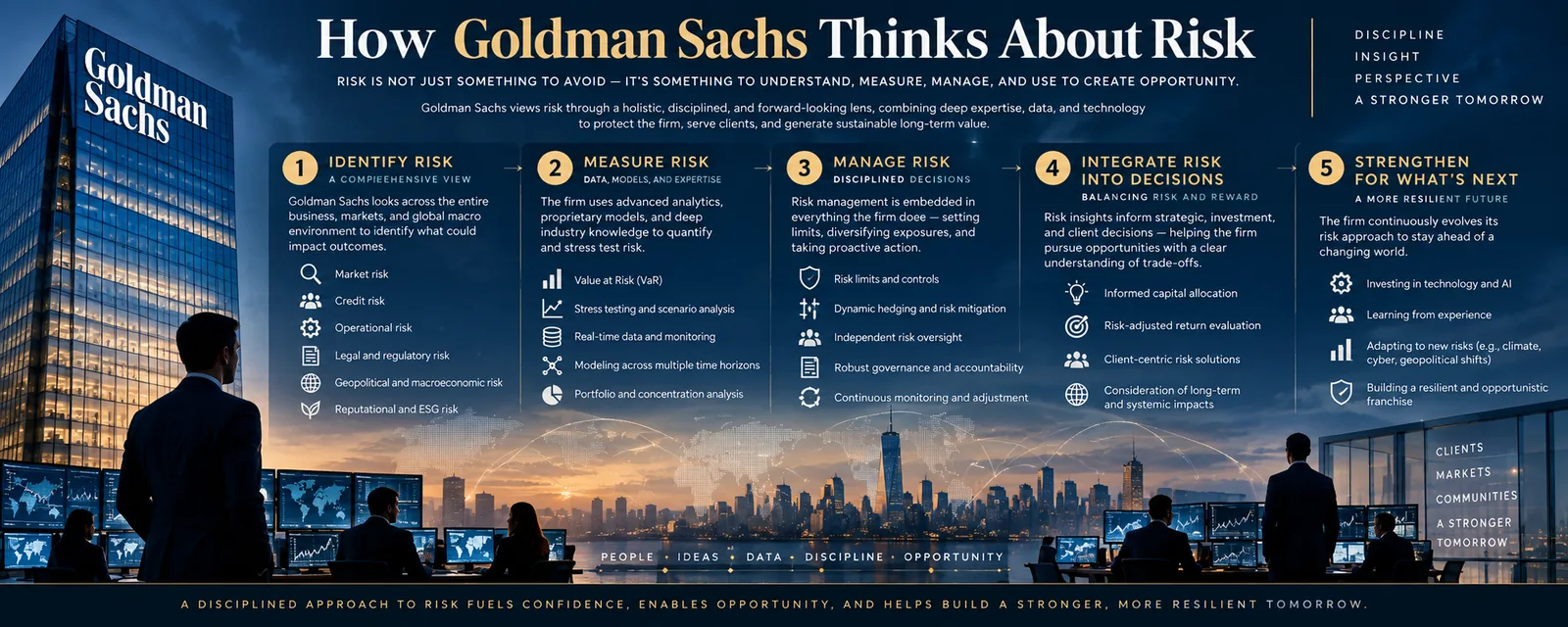 AnalysisEducationHow Goldman Sachs Thinks About RiskThe first question in institutional trading is how much can be lost, how quickly, and who will act. Goldman Sachs offers a useful lens on that discipline: risk is measured, challenged and escalated throughout the life of a position.@Abe5 min read
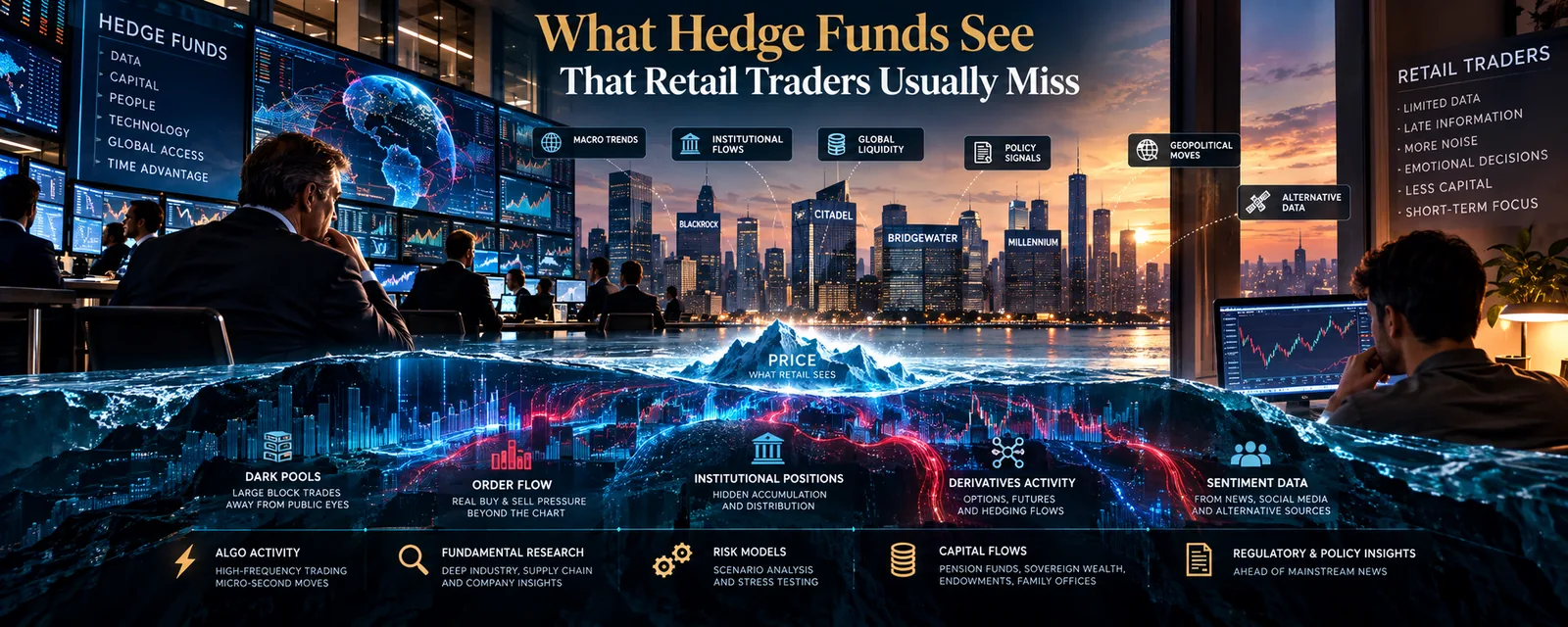 AnalysisEducationWhat Hedge Funds See That Retail Traders Usually MissThe chart shows price. A hedge fund also asks who holds the trade, what it costs to carry, and which other positions would lose alongside it. That wider view can change a decision before the first order is sent.@Abe5 min read
 AnalysisEducationTrade Like a Desk, Not Like a GamblerThe same entry can belong to a disciplined trading business or an impulsive bet. The difference sits around the order: a mandate, a repeatable setup, a risk budget and an honest review.@Abe5 min read
A short note from a GIO4X desk, filed under Education. It explains; it does not forecast and it does not tell you to trade. GIO4X is a broker and earns money when clients trade.
Editorial standardshttps://www.gio4x.com/intelligence/blog/can-llms-understand-financial-markets
Printed from gio4x.com.