Part 3 of 15The History of Trading
@AbePublished 3 min read
On this page
A lump of precious metal is valuable. It is also an argument waiting to happen.
How much does it weigh? How pure is it? Will the next person accept the same valuation? Before a payment can be completed, buyer and seller may have to become amateur metallurgists.
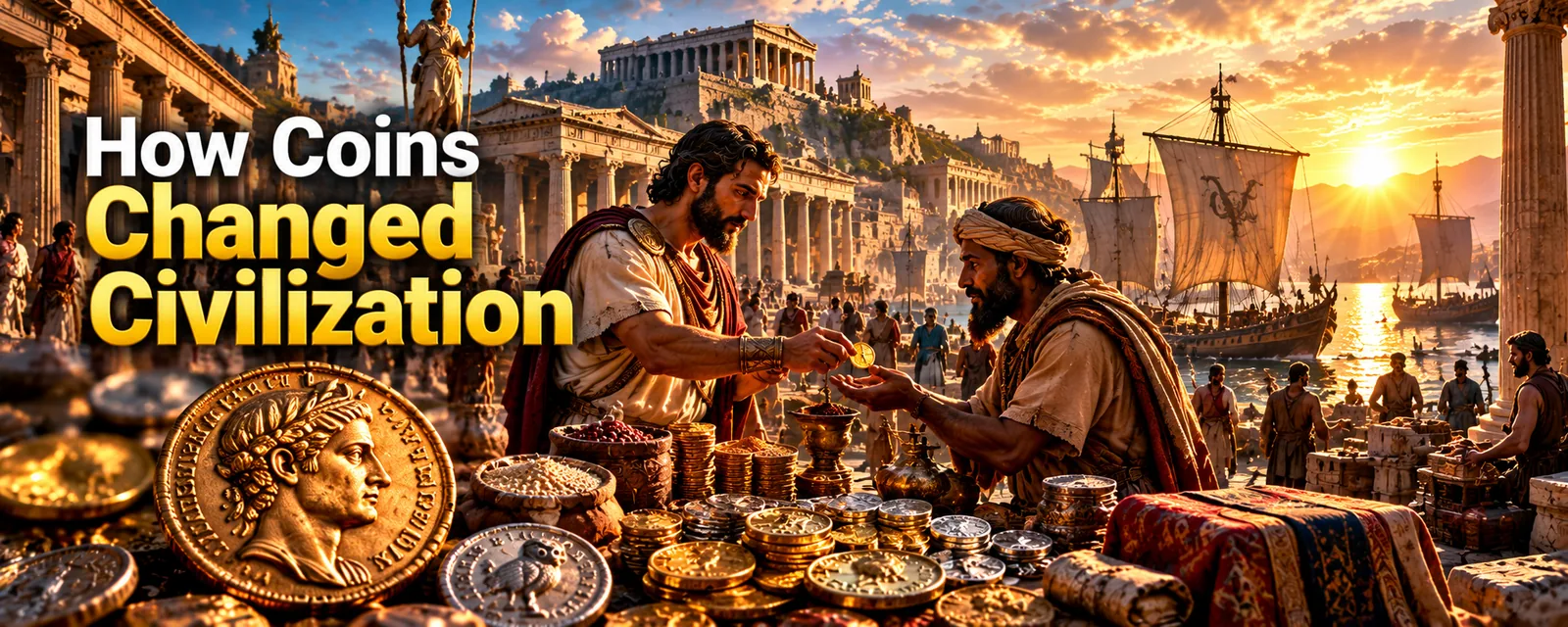
Around 600 BCE, in Lydia in what is now western Turkey, stamped pieces of electrum offered a different approach. Electrum is a naturally occurring alloy of gold and silver. A lion's head on a small piece of metal helped turn material into recognisable money.
The breakthrough was not simply the metal. It was the mark.
🦁 A promise small enough to carry
A coin's stamp associated it with an issuing authority and a recognised standard. Instead of renegotiating everything about a piece of metal, users could place some confidence in its identity.
That did not make weighing, testing or fraud disappear. Coins could still vary, be damaged or be distrusted. Early electrum also presented questions about composition. But a recognisable issue made repeated transactions easier to organise.
Trust had gained a portable symbol. The person receiving the coin did not have to know the person who had originally produced it.
This is one reason coinage matters so much in the history of markets. It helped exchange extend beyond the reach of personal acquaintance.
🦉 An idea with many local forms
King Croesus of Lydia issued separate gold and silver coins. Greek cities developed their own issues, and Athens' silver owl became widely recognised in Mediterranean exchange.
The image mattered because it made the coin identifiable. Familiarity could reduce uncertainty, provided experience supported the coin's reputation. A recognisable symbol was useful only while people had reason to accept what stood behind it.
China developed coinage independently. Cast bronze forms included spades and knives before round coins with square holes became prominent. The different shapes remind us that monetary history was not a single invention spreading unchanged across the world.
🔎 Did You Know? The shekel in the previous post began as a weight. Coinage added something different: a physical piece issued in a recognisable form, carrying an authority's mark.
🏛️ Coins helped states reach further
Standardised money made more than shopping convenient. It supported taxation and payments to soldiers. It helped connect people whose work and obligations brought them into contact with a state.
A farmer receiving widely accepted coin could use the proceeds elsewhere. A soldier could be paid in a form other suppliers recognised. Neither example required a chain of personal favours linking everyone involved.
The advantages were practical, but the politics were unavoidable. Issuers acquired influence over the medium through which people paid and were paid. A coin could carry both spending power and an assertion of authority.
Related posts
 ExplainerEducationThe First Trade in Human HistoryLong before coins, contracts or candlestick charts, volcanic glass was travelling across ancient landscapes. The first chapter in our trading story begins with a sharp edge and a question of trust.@Abe4 min read
 AnalysisEducation