Part 15 of 15The History of Trading
@AbePublished 4 min read

Fetching the page
Education · Explainer
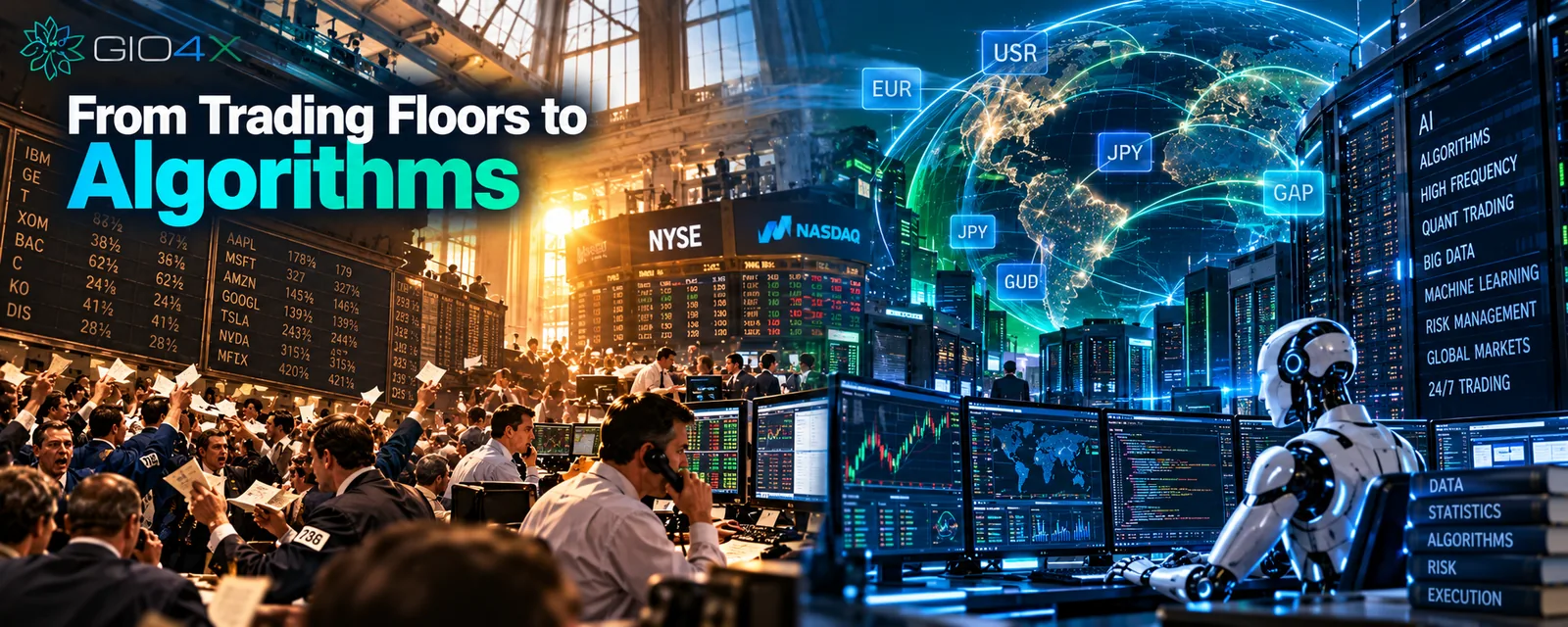
Markets once sounded like a crowd. Electronic quotations, automated execution and high-speed infrastructure changed that sound, while crashes exposed new ways for liquidity and human decisions to interact.
Part 15 of 15The History of Trading
@AbePublished 4 min read
For a long time, a market had a sound.
Voices competed to be heard. Hands carried bids and offers across a crowded pit. Position on the floor could affect what a trader saw and how quickly another trader noticed a response.
Open outcry was a communication system built from people. In common futures-pit conventions, palms facing inward indicated buying and outward indicated selling, with other signals conveying price and quantity. Details varied across settings.
Then the market began to move onto screens. Its central problem remained: connect willing counterparties and establish a price. Its machinery changed almost beyond recognition.
Nasdaq began in 1971 as an electronic quotation system. Instead of gathering every participant on one physical floor, it made dealer quotes available through a network. [1]
It is often called the first electronic stock market. The qualification matters: the original system should not be imagined as a complete version of today's automatic order matching and execution.
Publishing a quote electronically, routing an order and executing a transaction are distinct functions. Their integration developed over time.
Even the first step mattered. Information that had been difficult to compare became more accessible through a common display. The screen began to change what being close to the market meant.
During the 1980s, institutions increasingly used programs to manage or trade baskets of stocks. Computers could coordinate actions that would have been cumbersome to carry out one security at a time.
On October 19, 1987, Black Monday, the Dow Jones Industrial Average fell 22.6 percent in one session. Automated strategies, particularly those associated with portfolio insurance, came under intense scrutiny.
It would be misleading to say that computers alone caused the crash. The episode involved interactions between strategies, market structure, liquidity and human decisions. Automation could transmit selling pressure; it did not create a world separate from the institutions using it.
The lesson was uncomfortable. A rule designed to respond sensibly to an individual portfolio's falling value could contribute to pressure when many portfolios responded similarly.
🧭 Why This Matters to Traders: A strategy's behaviour depends partly on what other participants are doing. A rule tested in isolation can behave differently when many similar rules act at once.
U.S. stock-price decimalisation in 2001 reduced the minimum quoted increment, contributing to narrower spreads. Electronic venues developed, and competition increasingly involved speed and routing as well as a trader's physical position.
Some firms placed equipment close to exchange systems and invested in fast communications. Milliseconds, and eventually microseconds, became commercially significant for particular strategies.
This did not mean every successful participant needed to win a speed race. It meant some opportunities were especially sensitive to delay, and the resources required to compete for them changed.
A retail trader studying longer-term price behaviour and a high-frequency firm managing fleeting quotes may use the same broad market while pursuing very different tasks.
On May 6, 2010, the Flash Crash sent the Dow down roughly 1,000 points at one stage before a rapid recovery of much of the decline.
The episode exposed the fragility of liquidity under stress and the complex interaction of automated activity across connected markets. It is not accurately explained as one machine deciding to make prices fall.
A displayed price can change faster than a human can interpret the reason. That makes order design, controls and the ability to stop a malfunctioning process important parts of electronic trading.
Most Chicago futures pits closed in 2015. Pandemic closures accelerated the retreat from open outcry, but the claim that every remaining pit stayed shut is too broad.
In May 2021, CME announced that most affected pits would not reopen while explicitly retaining the Eurodollar options pit. The historical direction was clear; the exception still matters. [2]
The extent of algorithmic trading varies across instruments, venues and definitions. A universal claim that one fixed majority of all major-market volume is algorithmic hides those differences.
A person can now write rules, test them against historical data and arrange automated execution from a computer. A backtest can help examine a proposal, but it cannot guarantee live results. Assumptions about costs, available prices and execution influence what the test appears to show.
🎯 Trader Takeaway: Treat automation as a way to implement a decision process. Understand its assumptions, limits and failure conditions before trusting its speed. Faster execution does not make a weak premise stronger.
This series began with obsidian moving across a landscape. It ends with orders moving through networks at speeds no person can follow unaided.
Across that distance, the questions remain recognisable. What is worth exchanging? Who will honour the agreement? What happens when the expected buyer, payment or price is no longer there?
The market's sound has changed. The need for judgement has not.
Series complete. Return to the first exchange
Part 15 of 15 in the series The History of Trading.
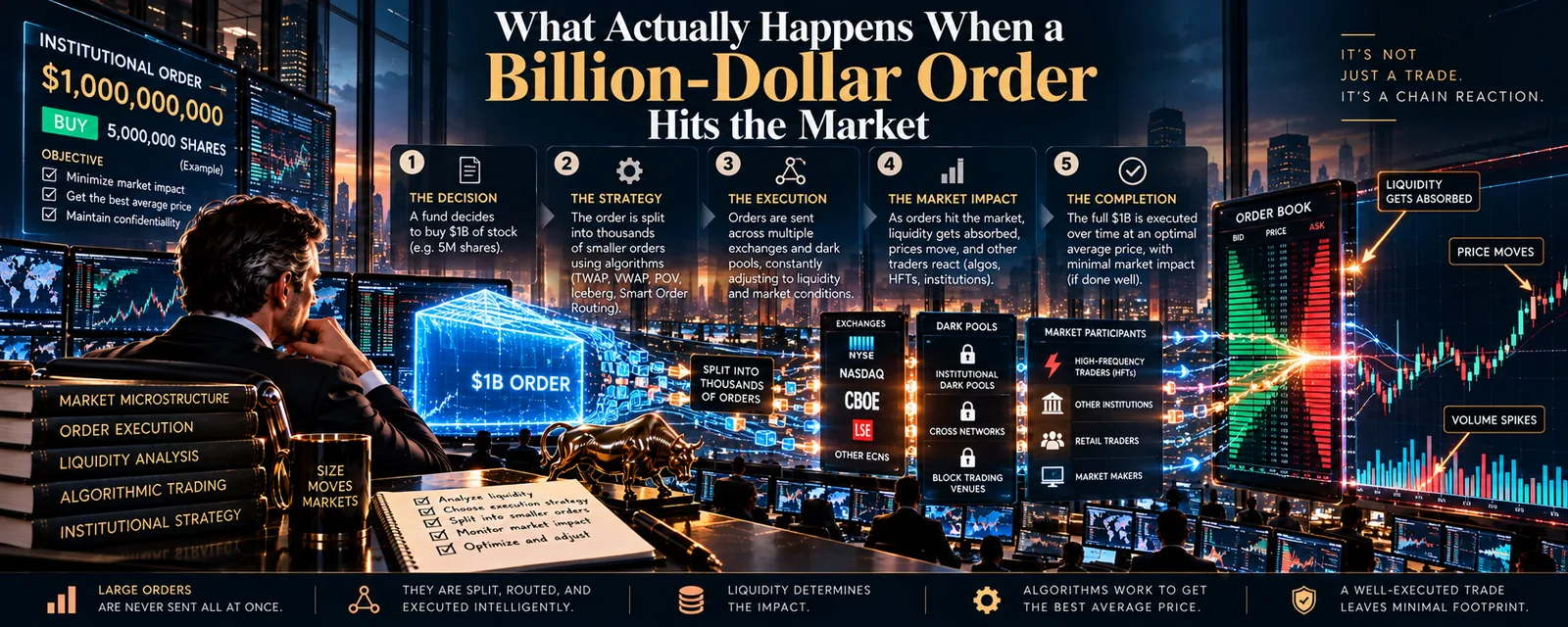 AnalysisEducationWhat Actually Happens When a Billion-Dollar Order Hits the MarketA billion-dollar equity order can become a project lasting several sessions. The execution desk divides the instruction, finds counterparties and balances speed against market impact. The route depends on liquidity and urgency.@Abe6 min read
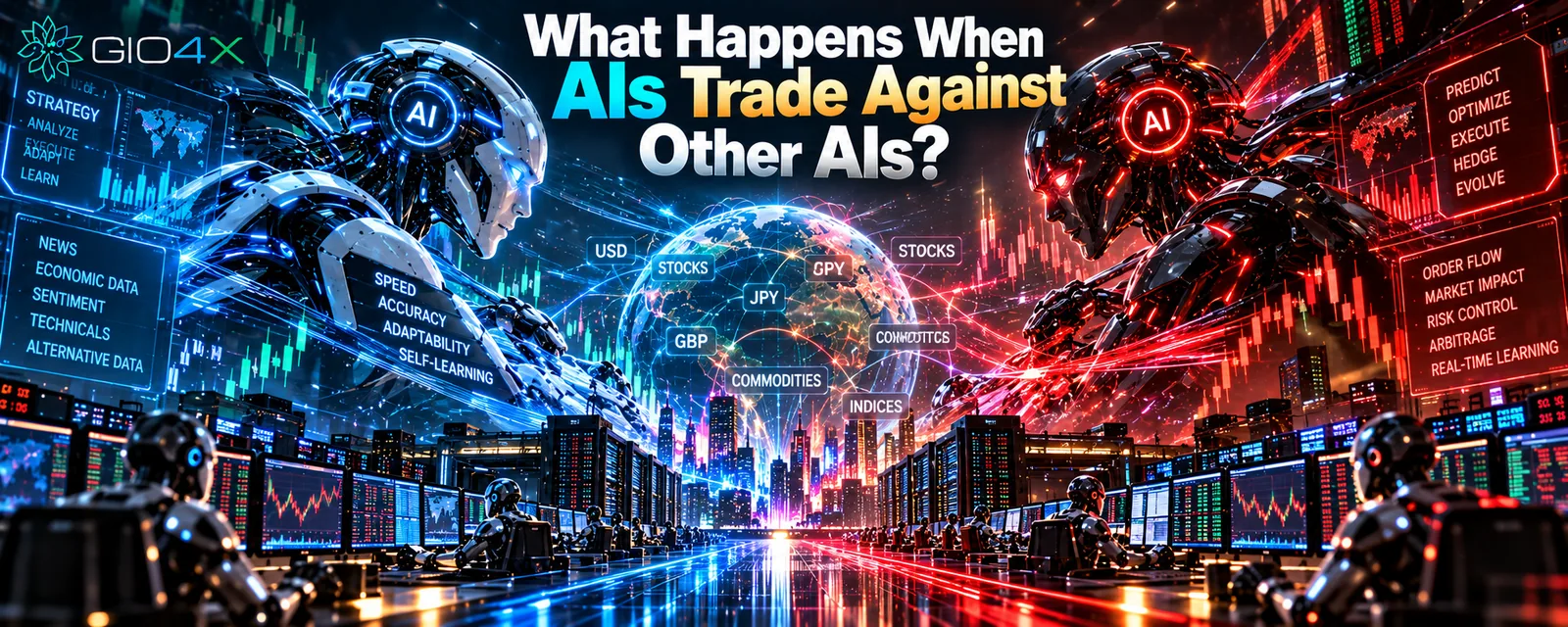 AnalysisEducationWhat Happens When AIs Trade Against Other AIs?Machines have been trading against machines for more than a decade. The result is familiar: tighter spreads, fewer simple opportunities and failures that can unfold at extraordinary speed. Learning systems add a harder question—what happens when those machines adapt to one another?@Abe4 min read
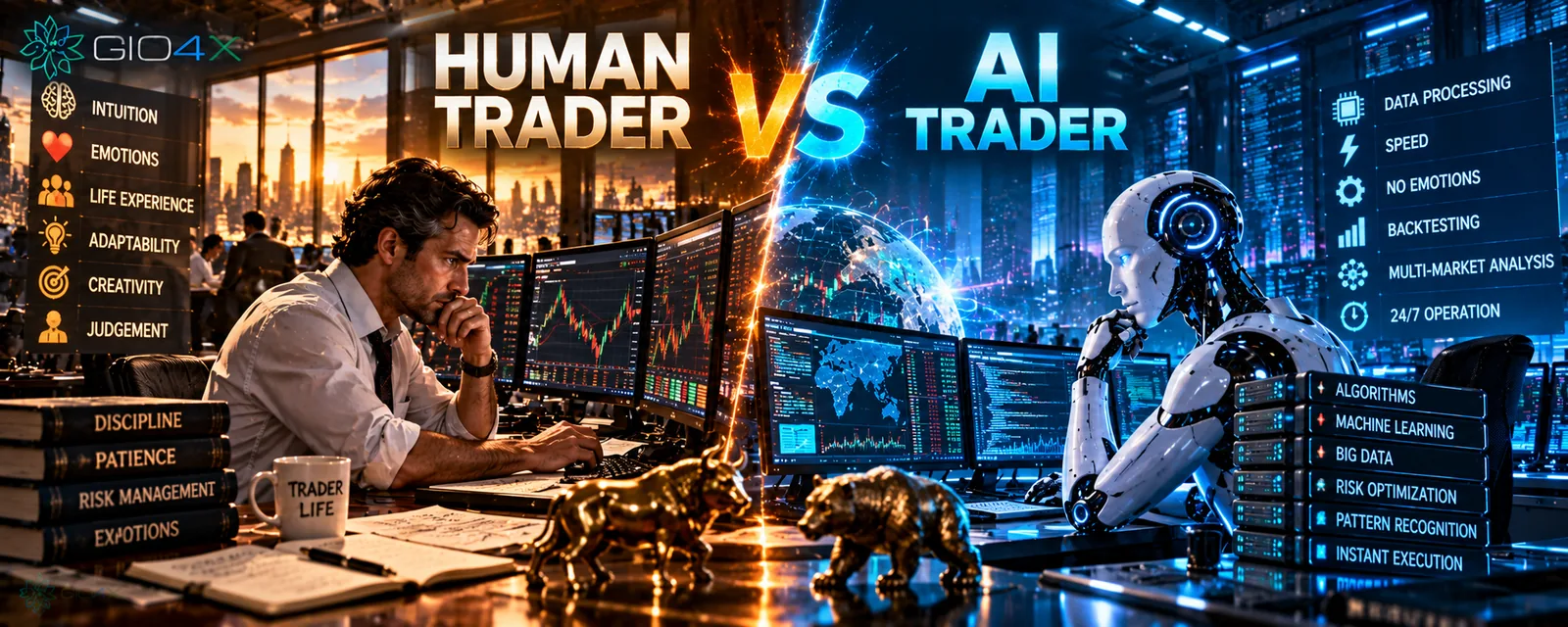 AnalysisEducationHuman Trader versus AI TraderA machine can watch thousands of markets without blinking. A human can recognise that the assumptions behind its signals have broken. Speed, breadth and consistency favour AI; context and unfamiliar situations still leave room for judgment. Your trading edge determines which strengths you need.@Abe3 min read
https://www.gio4x.com/intelligence/blog/trading-floors-to-algorithms
Printed from gio4x.com.