Part 8 of 15Institutional Trading
@AbePublished 5 min read


Fetching the page
Education · Analysis
Patience has a balance sheet. Long-term funding, manageable leverage and money that is not needed for immediate expenses make waiting possible. Without that structure, even a sound thesis can become a forced exit.
Part 8 of 15Institutional Trading
@AbePublished 5 min read
How funding, leverage and time horizons shape investment decisions
Patience has a balance sheet. Long-term funding, manageable leverage and money that is not needed for immediate expenses make waiting possible. Without that structure, even a sound thesis can become a forced exit.
Desk insight. Patience requires the capacity to wait and a thesis that remains valid.
It is tempting to believe that institutional investors are calmer people. Some are. Most are simply operating under conditions that make waiting cheap. Change the conditions and the calm goes with them.
A pension fund has liabilities that fall due over decades. An endowment is meant to last for ever. A sovereign wealth fund invests for citizens not yet born. An insurer matches long-dated promises with long-dated assets.
Long-dated obligations can support a longer investment horizon. They do not remove near-term cash needs, collateral calls, benefit payments or the risk of being forced to sell.
Hedge funds sit in between. They use lock-up periods, notice periods and redemption gates so that investors cannot all leave at once. These terms exist to buy the manager time.
Leverage reduces the adverse move capital can absorb. At ten-times exposure, a 10 percent move against a simple unhedged position would exhaust the initial equity before costs. Maintenance-margin rules may trigger liquidation earlier.
This is the main reason retail accounts cannot wait. A highly leveraged position has to work soon, or the margin call decides the outcome. The idea may be correct. The account will not be there to see it.
Institutions that forgot this have learned it publicly. Long-Term Capital Management in 1998 held trades that many argue would have converged eventually. Its leverage meant it could not survive the path.
A trader who needs the account to pay rent has a monthly deadline that the market knows nothing about. That deadline pushes toward more trades, bigger size and lower standards.
Many asset managers fund operations through fees, while other institutions rely on a sponsor or broader business budget. These arrangements can reduce dependence on any one trade, although they do not eliminate business pressure.
This is the least discussed and most important difference. Patience is close to impossible when the money at risk is money you need.
A large allocation often requires research, a written case, and committee approval. This can take weeks.
That process is sometimes mocked as bureaucracy. It also filters out ideas that only looked good for an afternoon. An idea that still makes sense after a month of scrutiny has passed a test that an impulse never faces.
For a sufficiently large position relative to market depth, entry and exit may take days or weeks. A fund's total assets alone do not determine execution time; the instrument and order size matter.
So it chooses ideas that can be held for a long time. Short-term noise is irrelevant to a position that takes a month to assemble. The horizon is set by the size.
They can supply liquidity when others need it. In a panic, sellers pay a steep discount to get out now. The buyer with cash and no deadline collects that discount.
They can let a thesis mature. Valuation gaps, policy shifts and business turnarounds play out over quarters or years. Only patient holders are still present at the end.
They pay fewer costs. Every trade has a spread and a commission. Lower turnover means less of the return is handed to the market.
They can reduce forced-sale risk. Capital that can withstand a drawdown gives the manager more choice about when to exit. It does not remove the danger of a lasting loss in value.
The picture is not as neat as it sounds. Fund managers are judged against benchmarks every quarter. Underperform for long enough and the money leaves, lock-up or not.
This career risk makes many professionals less patient than their mandate allows. They hug the index, chase what has worked, and sell what is embarrassing to hold at quarter-end.
Patience also is not a virtue when the thesis is wrong. Waiting is only valuable if the reason for holding is still true. The discipline is to review the reason, not the price.
There is a real irony here. On pure flexibility, the individual is better placed than the institution.
An individual investing their own discretionary capital has no client redemptions or committee timetable. Small orders are also easier to execute in liquid markets, although immediate fills at the quoted price are never assured.
The individual has the freedom to be patient but usually not the structure. The institution has the structure but often not the freedom. The opportunity is to build the structure yourself.
Key takeaway. Patient capital creates options: wait for evidence, avoid a forced sale, or supply liquidity when others need it. Those options depend on funding, leverage and the continuing validity of the thesis.
A small account can recreate most of the conditions. Use money that is not needed, borrow less, and give ideas the time they require. The patience follows from the setup.
Part 8 of 15 in the series Institutional Trading. Next: How Institutions Think About Liquidity.
Independent educational commentary, not investment advice. References to firms do not imply affiliation or endorsement. Figures in examples illustrate a method, not a recommended allocation or a promised outcome. Trading leveraged products carries a high risk of loss.
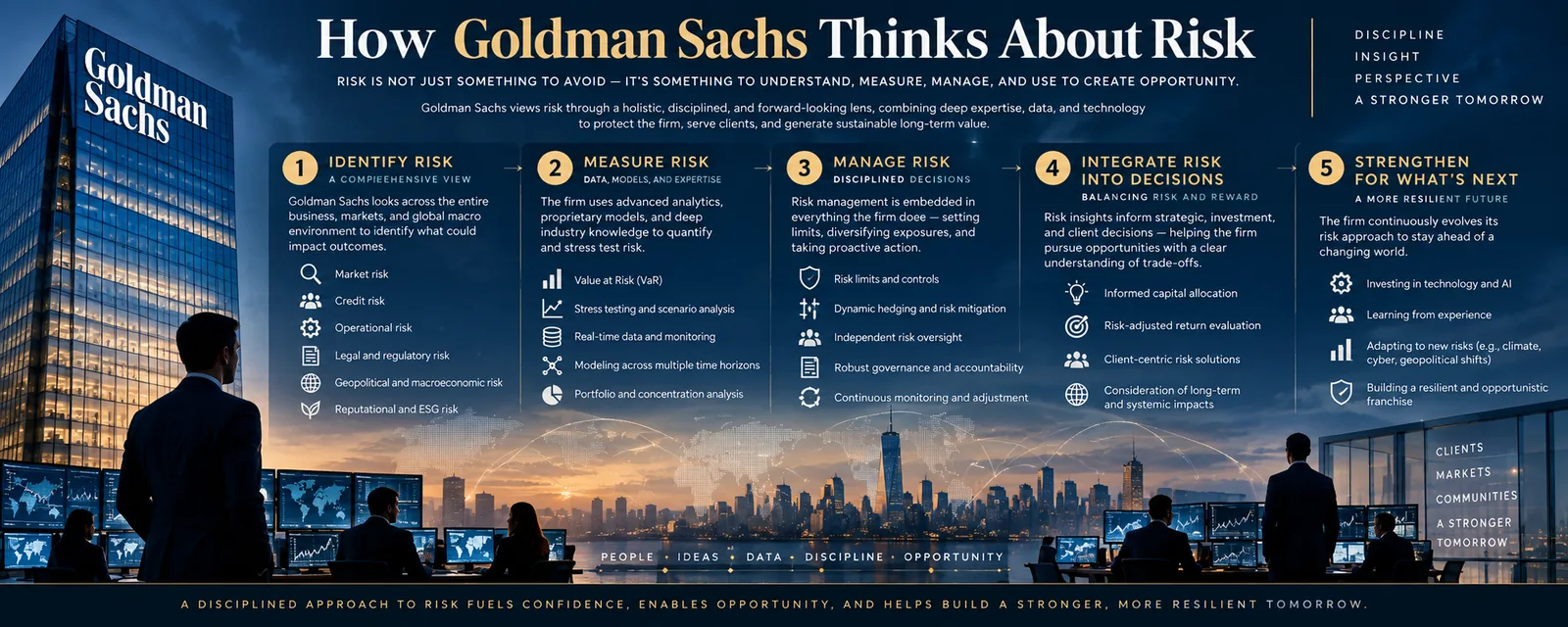 AnalysisEducationHow Goldman Sachs Thinks About RiskThe first question in institutional trading is how much can be lost, how quickly, and who will act. Goldman Sachs offers a useful lens on that discipline: risk is measured, challenged and escalated throughout the life of a position.@Abe5 min read
 AnalysisEducationTrade Like a Desk, Not Like a GamblerThe same entry can belong to a disciplined trading business or an impulsive bet. The difference sits around the order: a mandate, a repeatable setup, a risk budget and an honest review.@Abe5 min read
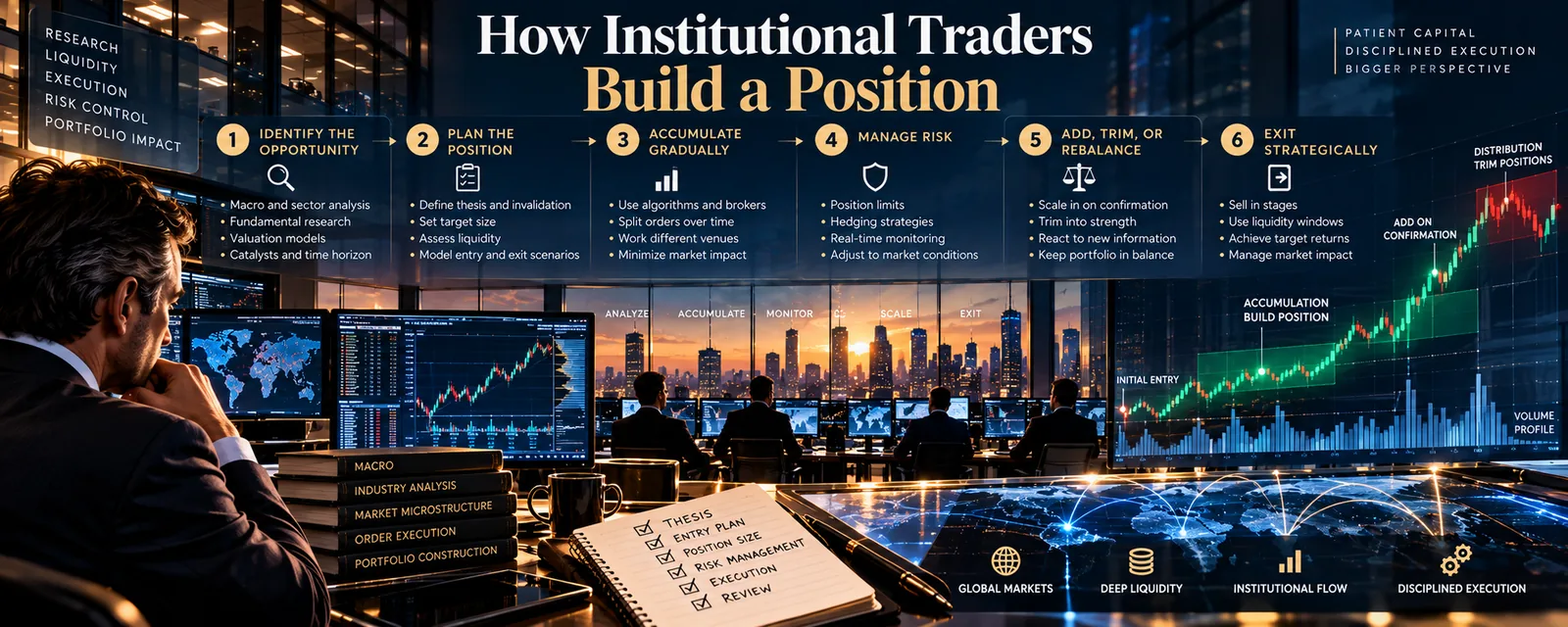 AnalysisEducationHow Institutional Traders Build a PositionFor a large order, entry is a sequence of decisions. Institutions often build positions in stages to manage market impact, timing uncertainty and the risk committed to an idea.@Abe6 min read
A short note from a GIO4X desk, filed under Education. It explains; it does not forecast and it does not tell you to trade. GIO4X is a broker and earns money when clients trade.
Editorial standardshttps://www.gio4x.com/intelligence/blog/why-big-money-can-afford-to-be-patient
Printed from gio4x.com.