Part 15 of 15Institutional Trading
@AbePublished 6 min read

Fetching the page
Education · Analysis
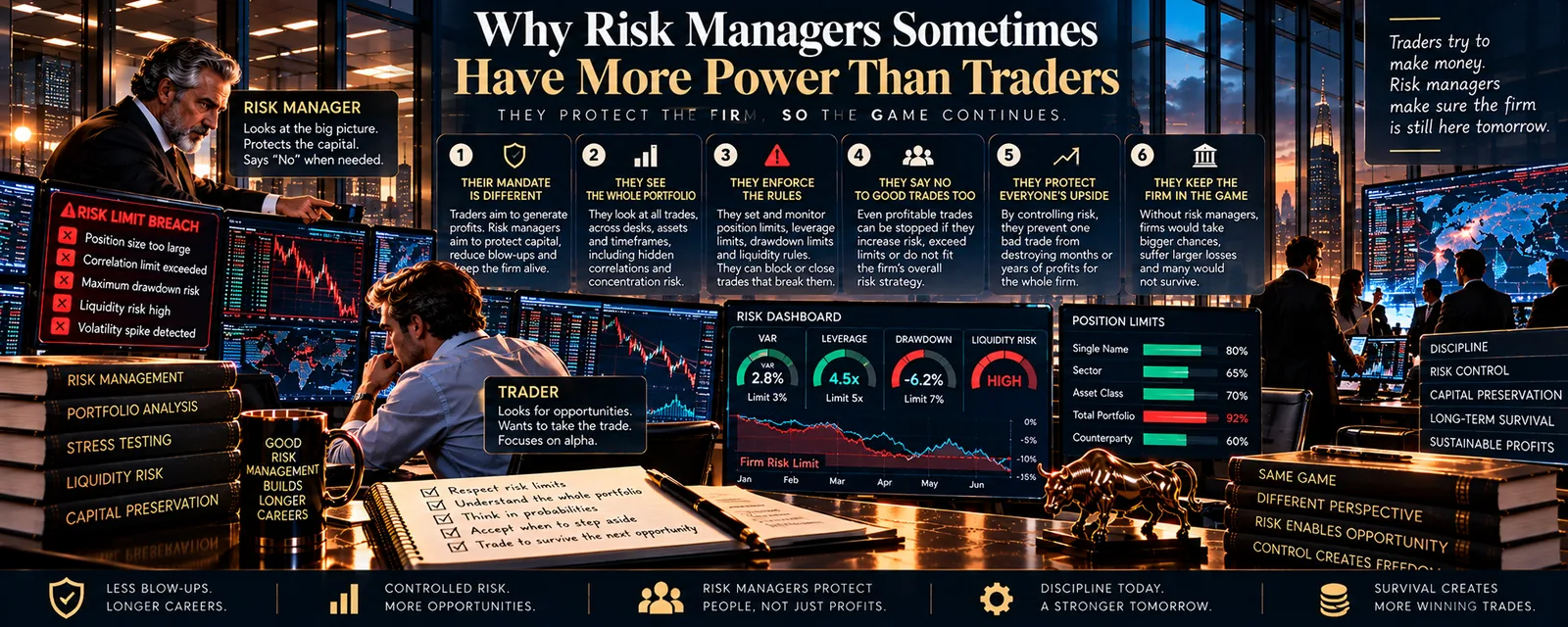
The trader manages an opportunity; the risk function challenges whether the firm can afford it. When those judgments collide, effective governance gives risk officers the authority to reduce exposure and escalate the decision.
Part 15 of 15Institutional Trading
@AbePublished 6 min read
Independent oversight, hard limits and capital protection
The trader manages an opportunity; the risk function challenges whether the firm can afford it. When those judgments collide, effective governance gives risk officers the authority to reduce exposure and escalate the decision.
Desk insight. Write the risk policy while flat. Enforce it when a live position makes exceptions tempting.
From outside, this looks backwards. Traders make the money and often earn far more. Yet at a well-run firm, a risk officer can cut a star trader’s position, and the trader has to comply.
Compensation can create an incentive problem. A strong year may produce a large bonus while a disastrous position imposes losses beyond the trader's own stake. Deferrals, clawbacks and other controls may reduce that imbalance, but they do not remove the need for independent oversight.
That is a natural incentive to take more risk than the firm’s owners would choose. It does not require bad intent. It is simply what the contract rewards.
The risk function is the counterweight. It represents the people whose capital is actually at stake: shareholders, clients, creditors and, for large banks, the wider financial system.
A risk manager who reports to the head of trading is an adviser. A risk manager who reports to a chief risk officer, who in turn has a direct line to the board, is a control.
Bank governance standards emphasise an independent risk function, with senior access and compensation arrangements that avoid conflicts with the businesses being monitored. The exact structure and legal requirements vary.
This separation matters at one specific moment: when the desk is making money and wants more room. A risk manager paid from that profit would find it hard to refuse.
The authority is concrete.
In day-to-day life, most of this is quiet. The limit sits in the system and the trader works within it. The power is visible only at the edges.
Risk management costs money in obvious ways. A profitable position gets cut early. A trader is stopped out just before the market turns. An attractive trade is refused because it would concentrate exposure.
Every trader has a story of the limit that cost them a fortune. Some of the stories are true.
The firm accepts this because the two kinds of error are not equal. A missed profit reduces this year’s earnings. An uncontrolled loss can end the company. A rule that gives up some gains to remove the fatal outcome is a good trade.
The case for strong risk management is written in its failures.
Barings, 1995. A trader in Singapore, Nick Leeson, ran large hidden futures positions. He had authority over both trading and the back office that recorded the trades. The losses destroyed a bank more than two centuries old.
Société Générale, 2008. A trader, Jérôme Kerviel, built enormous unauthorised positions and concealed them with fictitious offsetting trades. The bank reported a loss of several billion euros when it unwound them.
JPMorgan, 2012. In the episode known as the London Whale, a unit meant to hedge risk built very large credit derivative positions. Official inquiries described limit breaches that were tolerated and a risk model that was changed in a way that made the positions look safer. Losses ran to roughly six billion dollars.
The details differ. The pattern repeats: a profitable individual or unit, controls that were absent or overridden, and warning signs that were explained away.
A risk limit is designed for the moment a trader is most certain. That is the point.
Conviction is highest when a position has moved against you and now looks even cheaper. This is also when the firm is most exposed. The limit does not assess whether the trader is right. It assesses whether the firm can afford for the trader to be wrong.
Traders often are right eventually. The market can stay against them longer than the firm’s capital lasts. Risk management is the function that takes that sentence seriously.
Good risk managers are partners, not police. They help a desk structure a trade so it fits within limits. They point out exposures the trader had not noticed. They can argue for more risk when the firm is underusing its capacity.
The best ones have often traded themselves. They understand the positions and can tell a real hedge from a cosmetic one. Their value lies in asking the question the trader has stopped asking.
Risk management has limits of its own. Models missed much of what went wrong in 2008. A risk team can be captured by the business, drowned in data, or simply ignored. Independence on paper is worthless without the standing to be heard.
A retail trader holds both jobs. You are the trader who wants the position and the risk manager who must limit it. The trader usually wins, because the trader is the one at the screen.
Many familiar failures reflect that conflict: moving a stop further away, overriding a loss limit for one more trade, or doubling size to recover a loss.
The solution is to separate the two roles in time. Let the risk manager make decisions when no position is open, and deny the trader the authority to change them.
Automation and outside review can make enforcement more credible. Check what the tools actually control, and ensure the person reviewing your results sees breaches as well as profits.
Key takeaway. Independent risk management gives limits authority when conviction is strongest. Its purpose is to challenge exposure, preserve the firm's ability to operate and make warning signs harder to ignore. Talent alone cannot do that.
For a solo trader, the practical equivalent is a written risk policy made before the session, enforced during it, and reviewed afterwards. Give that policy the final word.
Part 15 of 15 in the series Institutional Trading.
Independent educational commentary, not investment advice. References to firms do not imply affiliation or endorsement. Figures in examples illustrate a method, not a recommended allocation or a promised outcome. Trading leveraged products carries a high risk of loss.
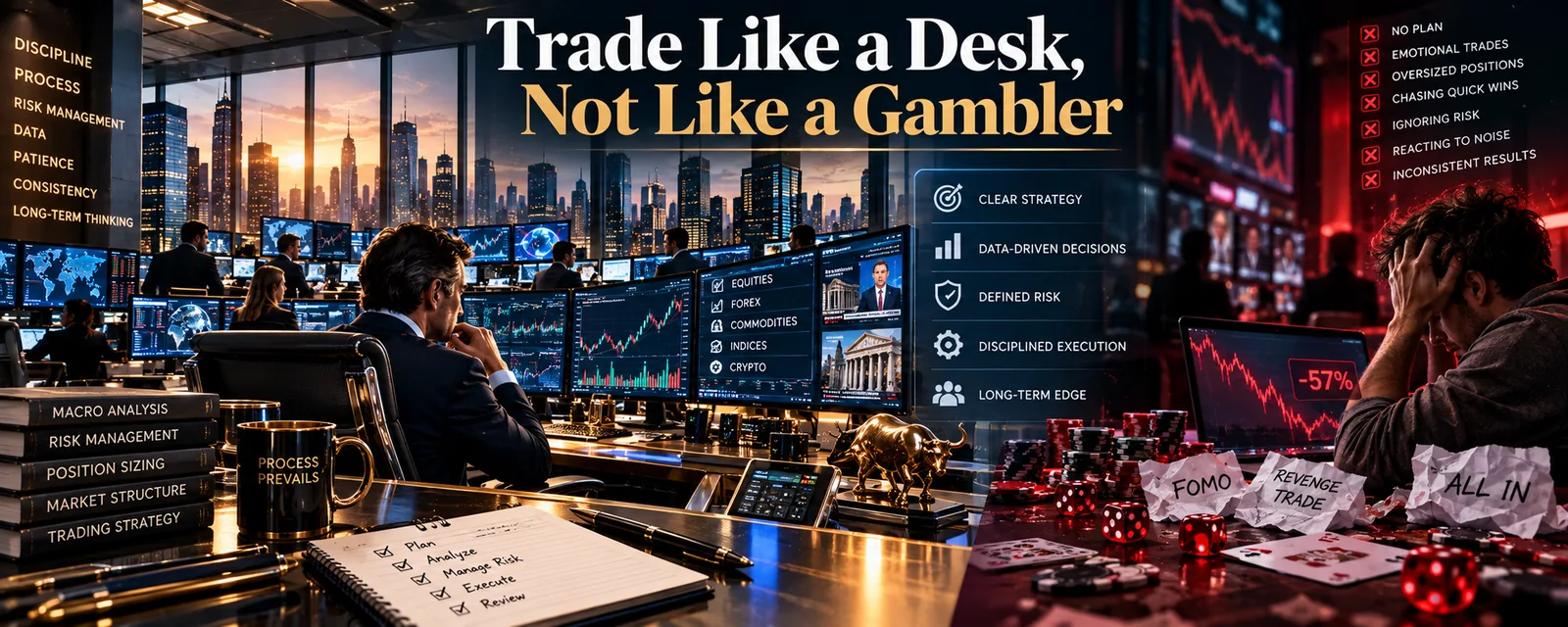 AnalysisEducationTrade Like a Desk, Not Like a GamblerThe same entry can belong to a disciplined trading business or an impulsive bet. The difference sits around the order: a mandate, a repeatable setup, a risk budget and an honest review.@Abe5 min read
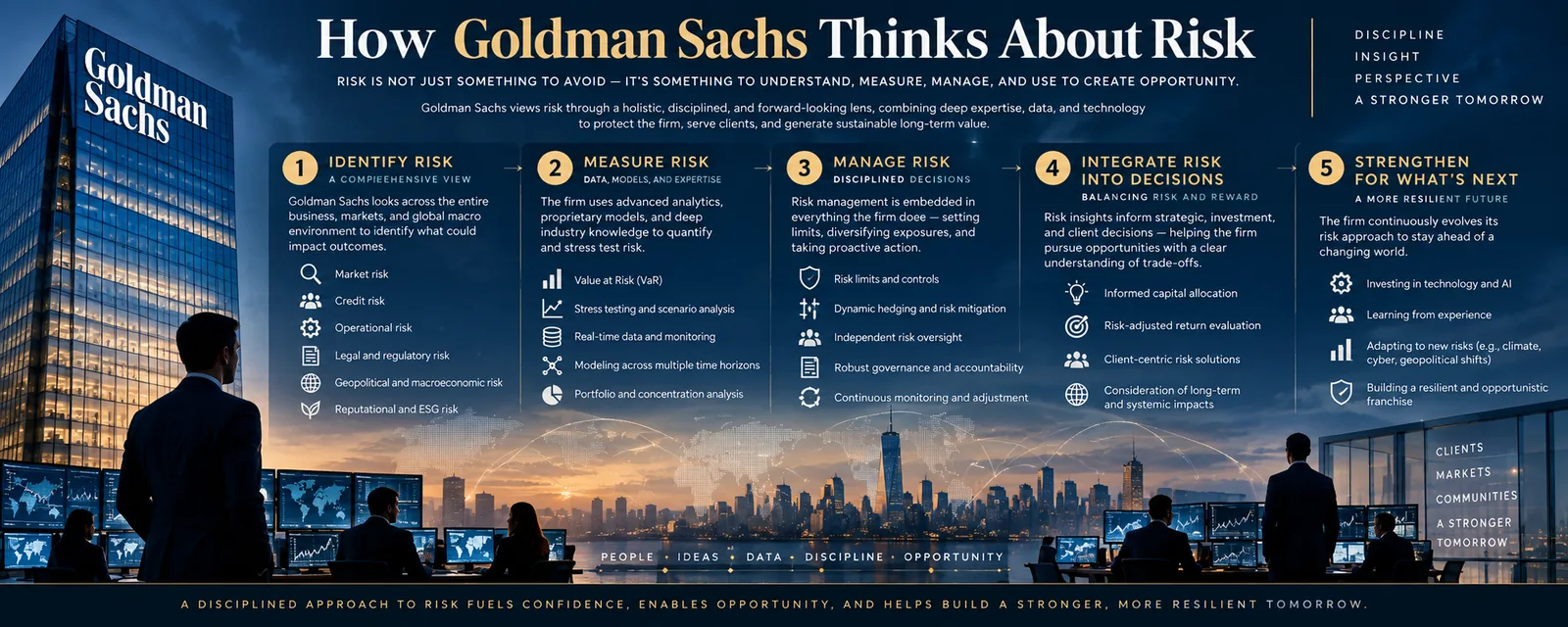 AnalysisEducationHow Goldman Sachs Thinks About RiskThe first question in institutional trading is how much can be lost, how quickly, and who will act. Goldman Sachs offers a useful lens on that discipline: risk is measured, challenged and escalated throughout the life of a position.@Abe5 min read
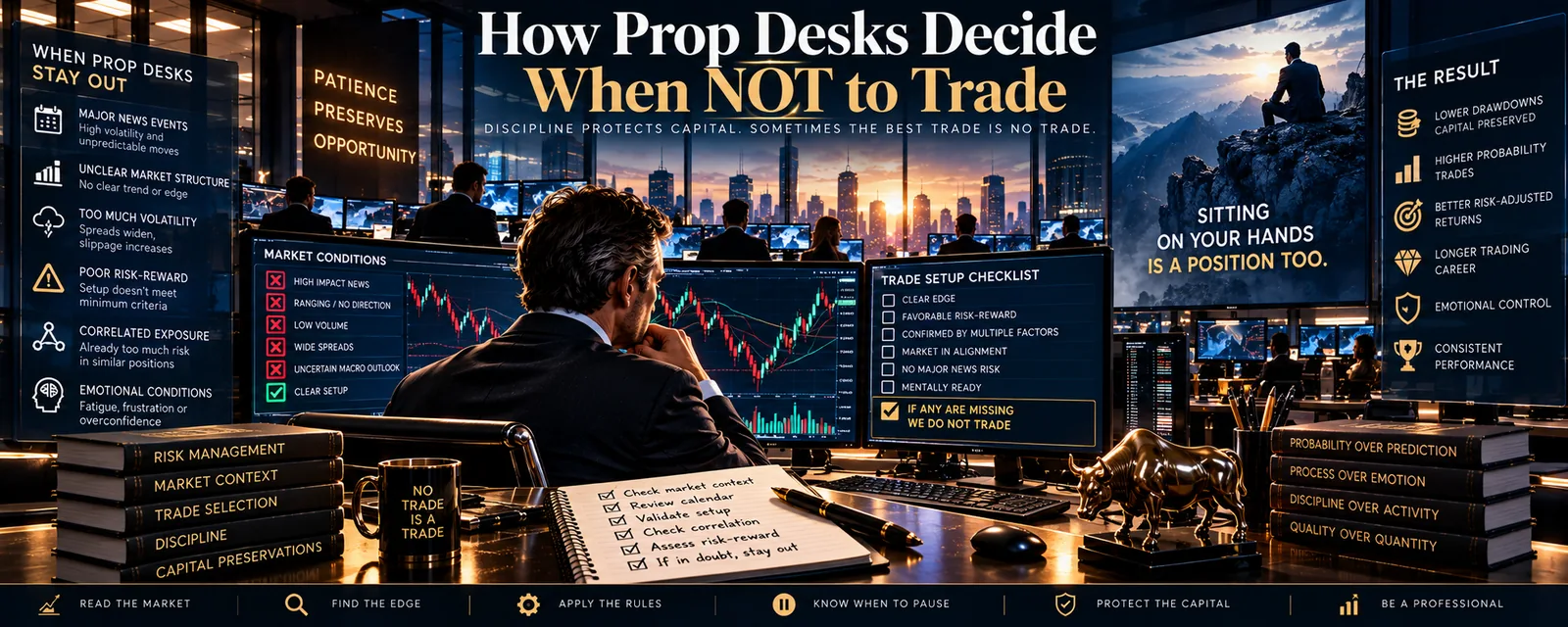 AnalysisEducationHow Prop Desks Decide When NOT to TradeA no-trade rule is a risk decision made before pressure arrives. Well-controlled prop desks define when losses, poor conditions or a trader's state require a pause or a reduction in size.@Abe5 min read