Part 20 of 20The Future of Trading
@AbePublished 5 min read

Fetching the page
Education · Analysis
An AI portfolio manager could become as ordinary as the map on your phone. The more consequential question is whose interests it serves. Cheap automation can improve everyday investing, but fees, incentives and the authority you delegate will determine its value.
Part 20 of 20The Future of Trading
@AbePublished 5 min read
Whose interests will the AI manager serve
An AI portfolio manager could become as ordinary as the map on your phone. The more consequential question is whose interests it serves. Cheap automation can improve everyday investing, but fees, incentives and the authority you delegate will determine its value.
Key takeaway. Judge an AI manager by its incentives, regulation, explanations and limits. Lower costs and fewer mistakes are more credible benefits than promised market-beating returns.
The first robo-advisers launched around 2010. They asked a few questions about age and risk tolerance, built a portfolio of low-cost index funds and rebalanced it automatically, for a fee near 0.25 percent a year.
They were rule-based, not intelligent. But they showed that the core of portfolio management for an ordinary saver, which is allocation, rebalancing and tax efficiency, could be automated cheaply. Assets managed this way have since passed a trillion dollars worldwide by most estimates.
Target-date pension funds do something similar for hundreds of millions of workers who have never heard the term.
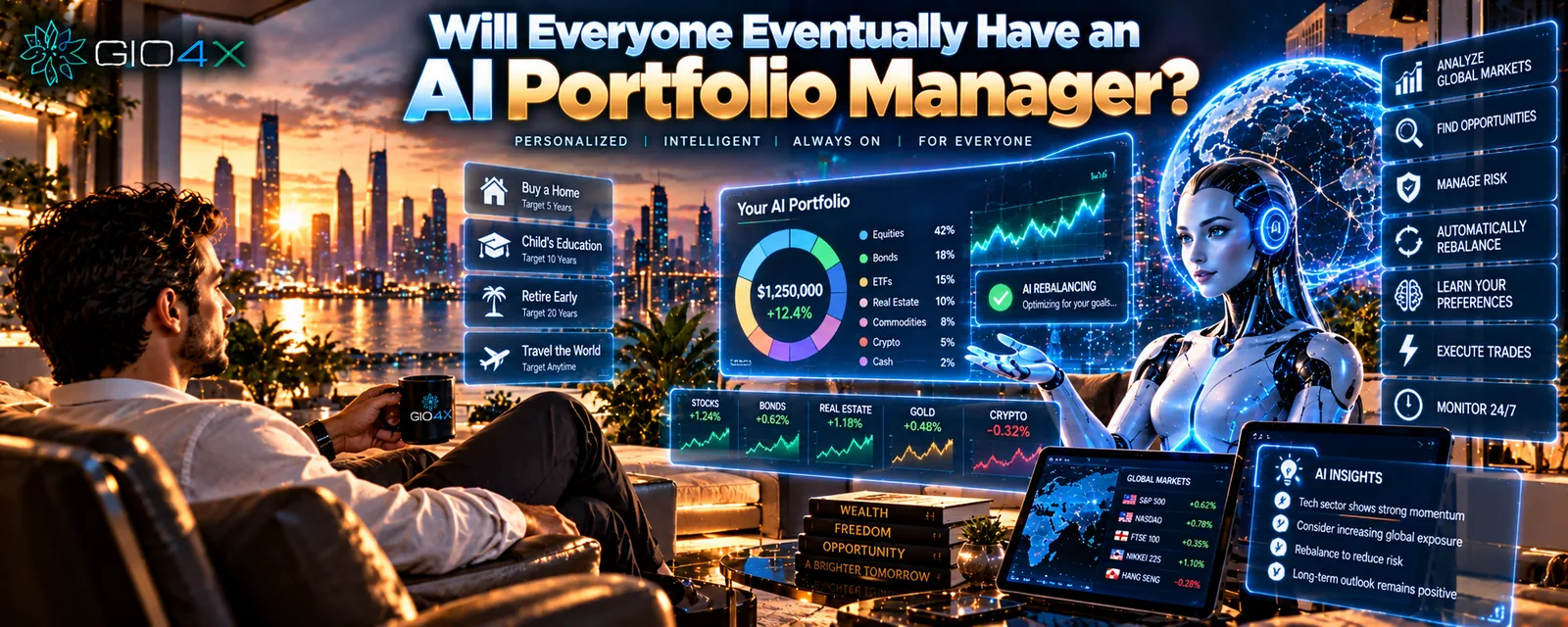
The robo-adviser manages a portfolio. An AI portfolio manager can manage a financial life.
It sees everything. With permission, it reads your salary, spending, loans, insurance, property and pension, not just one investment account.
It talks. You can ask why your portfolio fell, whether you can afford a house, or what happens if you retire three years early, and get an answer about your own situation.
It personalises. Instead of five model portfolios, it can hold individual shares tailored to your tax position, your employer's stock and your preferences.
It acts continuously. It harvests tax losses, sweeps idle cash, flags an expensive fund and adjusts when your circumstances change.
It coaches. During a market fall, the most valuable service an adviser offers is persuading the client not to sell. An assistant available at two in the morning can do that at the moment it matters.
Cost. Human advice costs around 1 percent of assets a year and is uneconomic for small accounts. Software serves a small account at almost no extra cost.
The advice gap. Most people in most countries have never had professional financial advice. For them the comparison is with nothing, or with tips from friends and social media.
Distribution. Banks, brokers, pension providers and payment apps already hold the customer. Each will add an AI manager as a standard feature. It will arrive as an update, and many people will be using one before they think of it as such.
Regulation. Giving personalised investment advice is a licensed activity almost everywhere. Regulators, including SEBI in India, are working out how suitability, disclosure and liability apply when the adviser is a model.
Liability. When an AI manager makes a costly error, the firm that offers it is responsible. Firms will therefore constrain what it may do.
Trust. Handing control of savings to software is a large step. Adoption will follow a path from suggestions, to approvals, to delegated authority within limits.
Explainability. A client is entitled to know why a decision was made. Systems will need to give reasons a person can check.
This is the issue that matters most. Who is the AI manager working for?
A manager supplied free by a platform is paid for somehow. It may favour the platform's own funds, encourage trading that earns the platform revenue, or hold more cash than is good for you because the platform earns interest on it.
None of this is new. Human advisers have faced the same conflicts, and regulation has tried to address them with fiduciary duties and fee disclosure. With AI, the bias can be subtler, applied to millions of clients at once, and harder to detect from outside.
The question to ask of any AI manager is how it is paid.
If a billion people take advice from a few similar models, their portfolios will look alike and they may act together. A rebalancing rule shared by enough accounts becomes a market force.
Index funds raised a mild form of this concern. AI managers that react to news in similar ways raise a sharper one. Diversity among models and mandates is a public interest, and regulators have begun to say so.
No, not for everyone, because that is arithmetically impossible. All investors together hold the market. Before costs, the average investor earns the market return; after costs, slightly less.
An AI manager's value lies elsewhere. It lowers costs, improves tax outcomes, keeps the allocation suited to the person and prevents expensive mistakes in panics and manias. Studies of investor behaviour suggest that last item alone is worth more than most stock-picking.
Be wary of any AI manager sold on the promise of superior returns.
Human advisers will move up the value chain. The routine work of allocation and rebalancing goes to software.
What remains is what people pay most for anyway: complex situations, family decisions, business sales, inheritance, and someone to talk to when life changes. Many advisers will use an AI manager as their own tool and serve more clients with it.
☐ How is it paid? A clear fee is better than "free".
☐ Is the provider regulated as an adviser? Check the licence.
☐ What can it do without asking me? Start with approvals; widen authority slowly.
☐ Can it explain each decision? Ask it to, and check the answer.
☐ Can I leave? Your assets and data should be portable.
☐ What does it do in a crash? Read the policy before you need it.
Within a decade, an AI portfolio manager may feel ordinary. What will distinguish one from another is how honestly it serves you, how well it understands your circumstances and how much authority you choose to delegate. Software can manage the portfolio; those choices remain yours.
Part 20 of 20 in the series The Future of Trading.
General information, not investment advice. Unlinked figures are approximate.
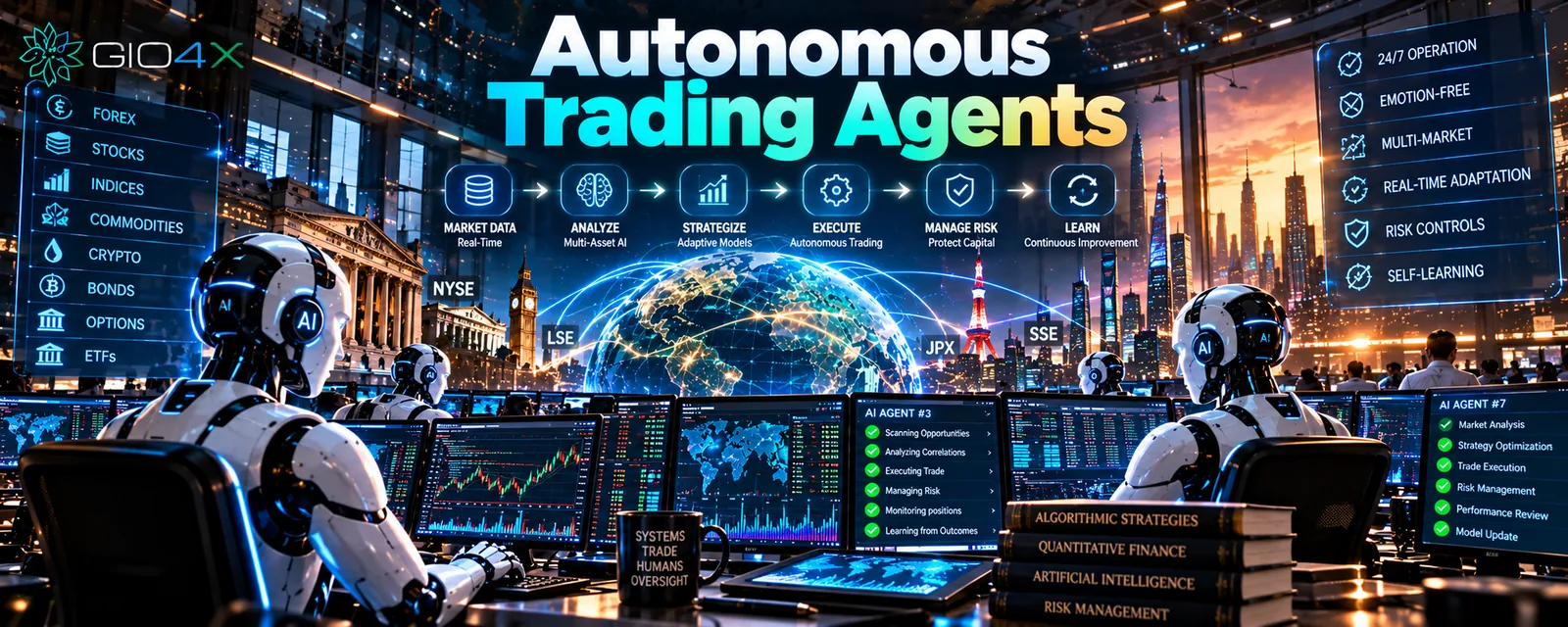 AnalysisEducationAutonomous Trading AgentsA trading bot follows instructions. An autonomous agent chooses how to pursue a goal. The shift from “buy when the averages cross” to “grow this account within a 10 percent drawdown” changes both the software’s capabilities and the oversight it requires.@Abe4 min read
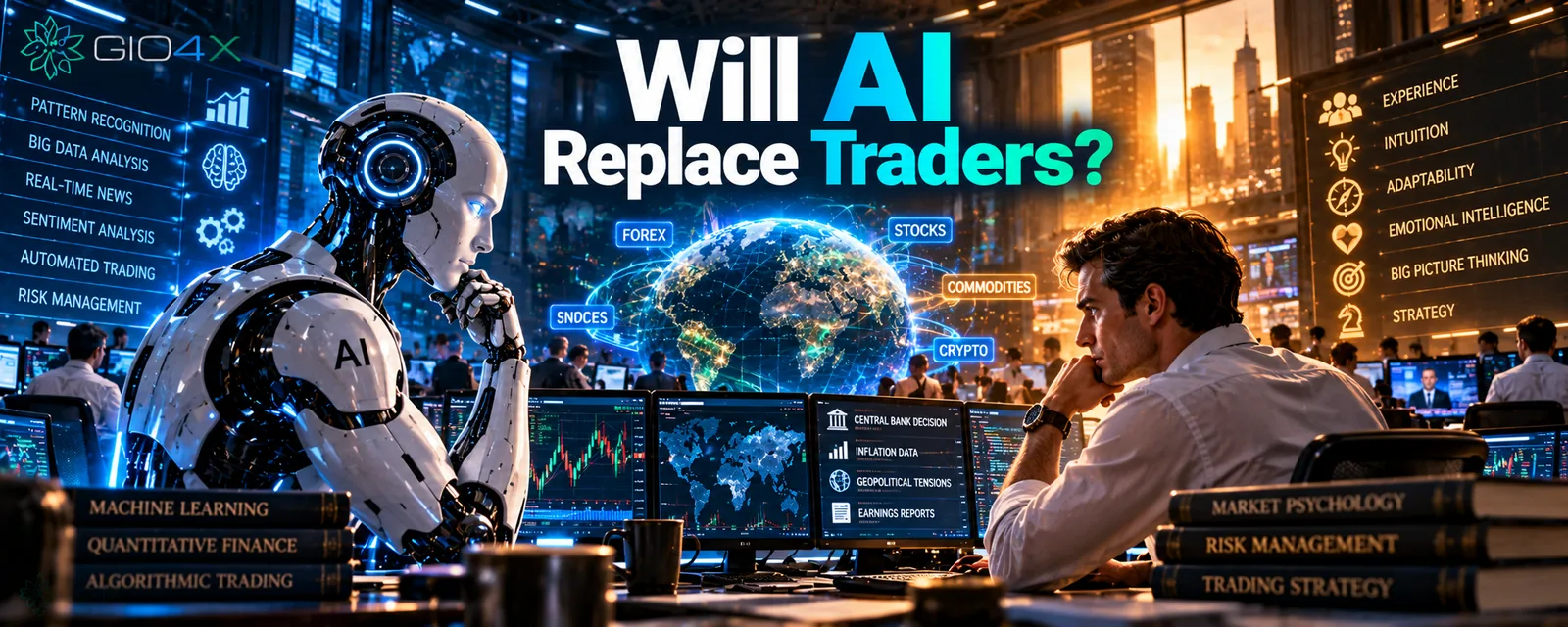 AnalysisEducationWill AI Replace Traders?AI is taking over the work traders do with their hands far faster than the work they do with their judgment. Execution and routine analysis are increasingly automated. Deciding what risks to take—and owning the consequences—remains a human responsibility.@Abe3 min read
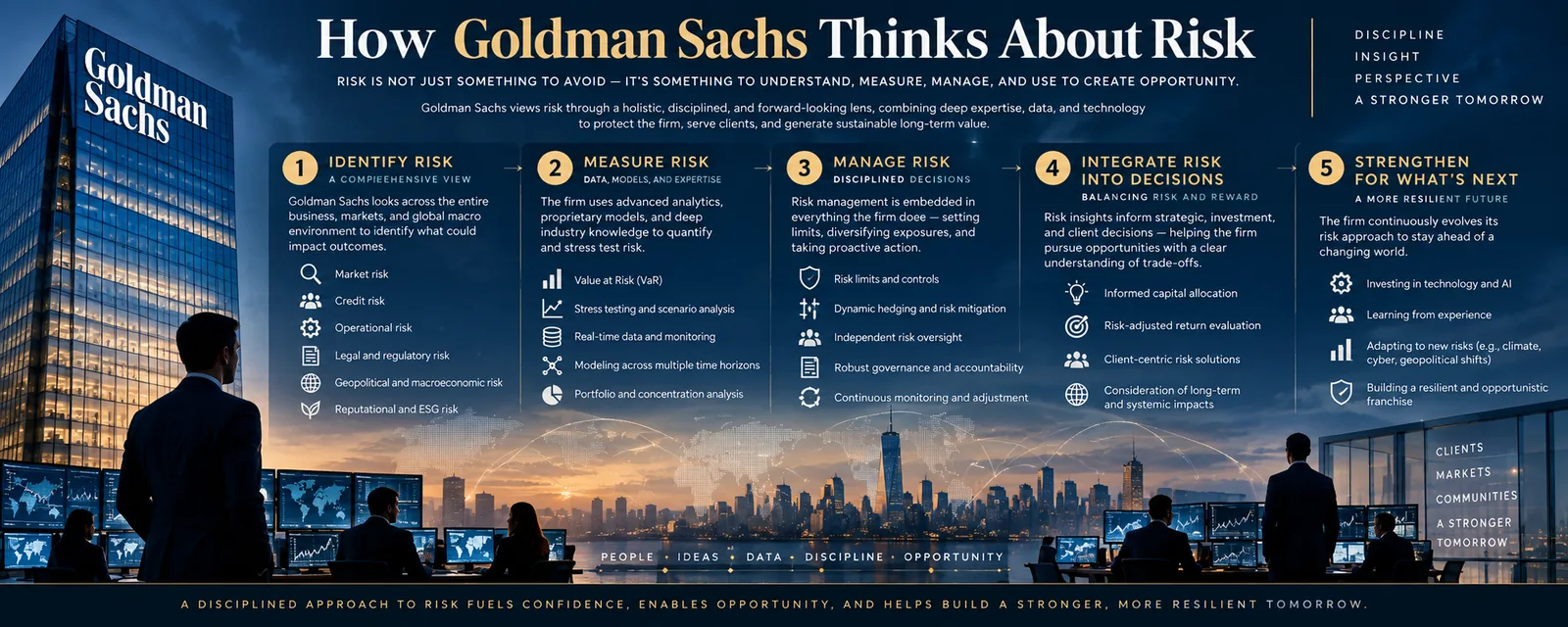 AnalysisEducationHow Goldman Sachs Thinks About RiskThe first question in institutional trading is how much can be lost, how quickly, and who will act. Goldman Sachs offers a useful lens on that discipline: risk is measured, challenged and escalated throughout the life of a position.@Abe5 min read