Part 1 of 15Lessons From the Masters
@AbePublished 2 min read

Fetching the page
Education · Analysis
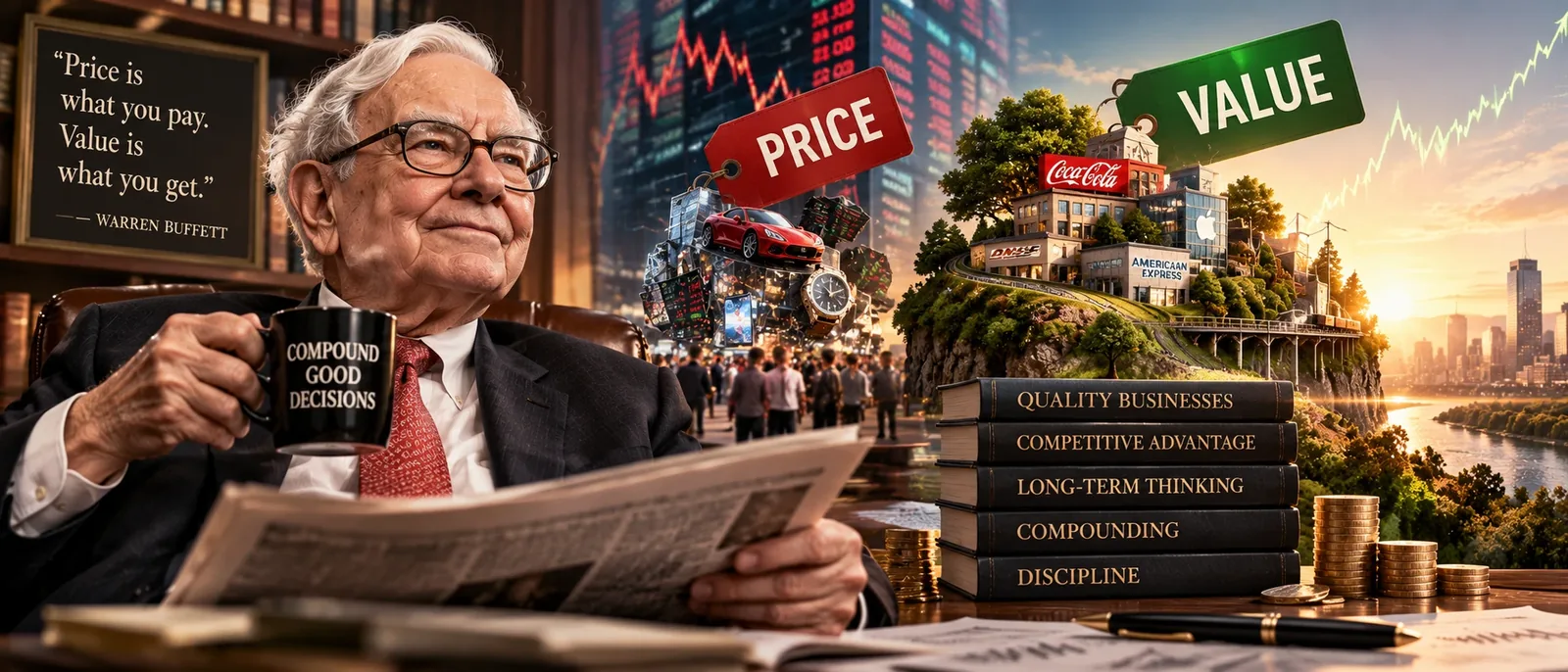
Warren Buffett's entire career rests on one distinction: price is what you pay, and value is what you get. The line comes from his teacher Benjamin Graham, and Buffett has repeated it for decades. Most investors nod at it and then spend their days watching prices.
Part 1 of 15Lessons From the Masters
@AbePublished 2 min read
Warren Buffett's entire career rests on one distinction: price is what you pay, and value is what you get. The line comes from his teacher Benjamin Graham, and Buffett has repeated it for decades. Most investors nod at it and then spend their days watching prices.
A share price is simply the last figure at which two strangers agreed to trade. It changes every second and reflects mood as much as fact. Value is the cash a business will hand its owners over its remaining life, discounted back to today.
Buffett never pretends that value can be calculated to the decimal. He wants a range, and he wants the price to sit well below the bottom of it. If he needs a spreadsheet to prove a stock is cheap, it is not cheap enough.
Early Buffett bought "cigar butts": poor businesses priced so low that one last puff of profit remained. Berkshire Hathaway itself, a dying textile mill, was one of them, and he later called buying it a mistake.
See's Candies changed his thinking. Berkshire paid about $25 million for it in 1972, a price that looked rich against its assets. But See's could raise prices every year without losing customers, and it needed very little capital to grow. The lesson, pressed on him by Charlie Munger, was that a wonderful business at a fair price beats a fair business at a wonderful price.
Buffett looks for a moat, meaning something that stops competitors from eroding profits. Brand, cost advantage, switching costs and scale all qualify. Coca-Cola, which he bought heavily after the 1987 crash, had all the brand it needed.
He also watches what management does with the cash. A great business run by people who waste its earnings on poor acquisitions destroys the value the moat creates.
For most investors a falling price is a warning. For Buffett it is a discount, provided the value has not changed. He has said he would rather see the stock market close for years than be forced to sell a good business.
This is why he keeps large cash reserves. Cash lets him act when prices detach from value, as they did in 1987 and 2008.
Part 1 of 15 in the series Lessons From the Masters. Next: George Soros and the Art of Being Wrong Quickly.
Independent educational commentary, not investment advice. References to people and firms do not imply affiliation or endorsement. The picture is an illustration, not a photograph. Past results say nothing about future ones. Trading leveraged products carries a high risk of loss.
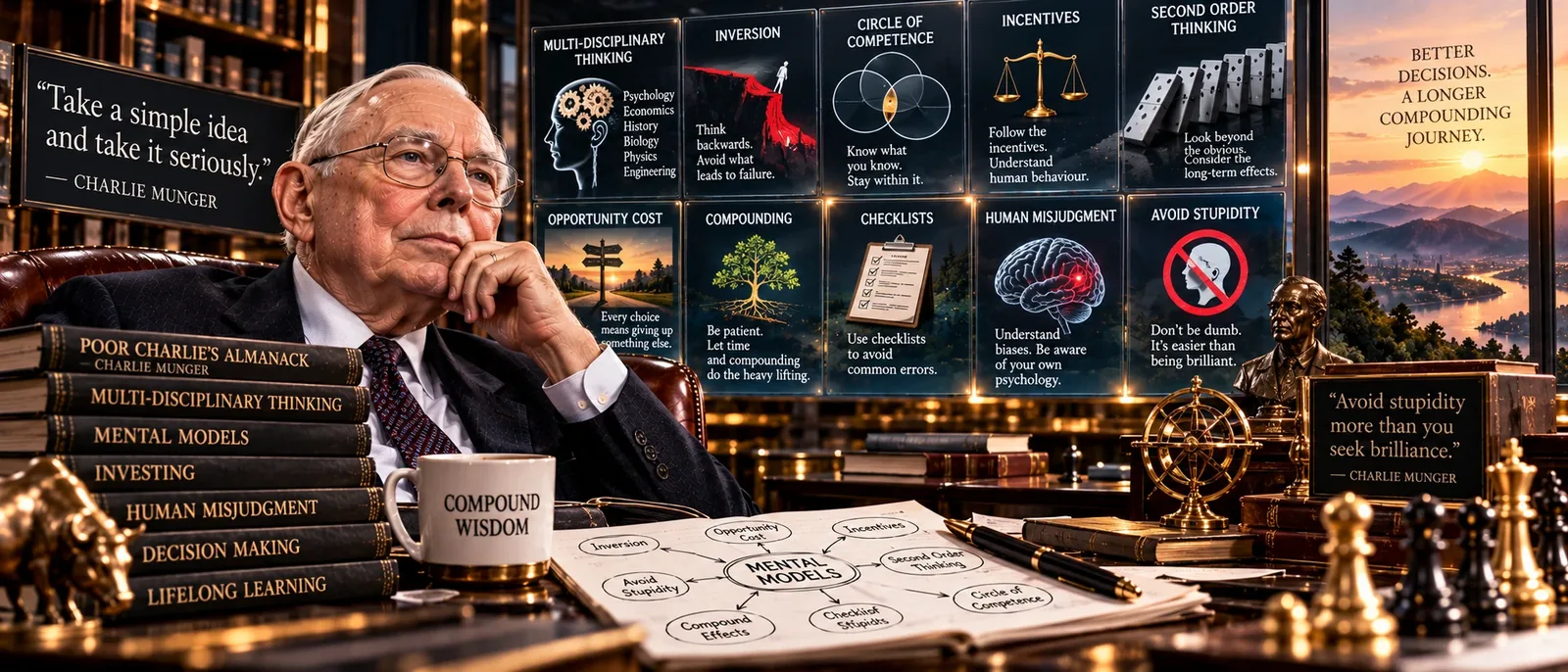 AnalysisEducationCharlie Munger's Mental Models for InvestorsCharlie Munger believed that most investment errors are thinking errors, not finance errors. His answer was a "latticework of mental models": the big ideas from many disciplines, used together.@Abe2 min read
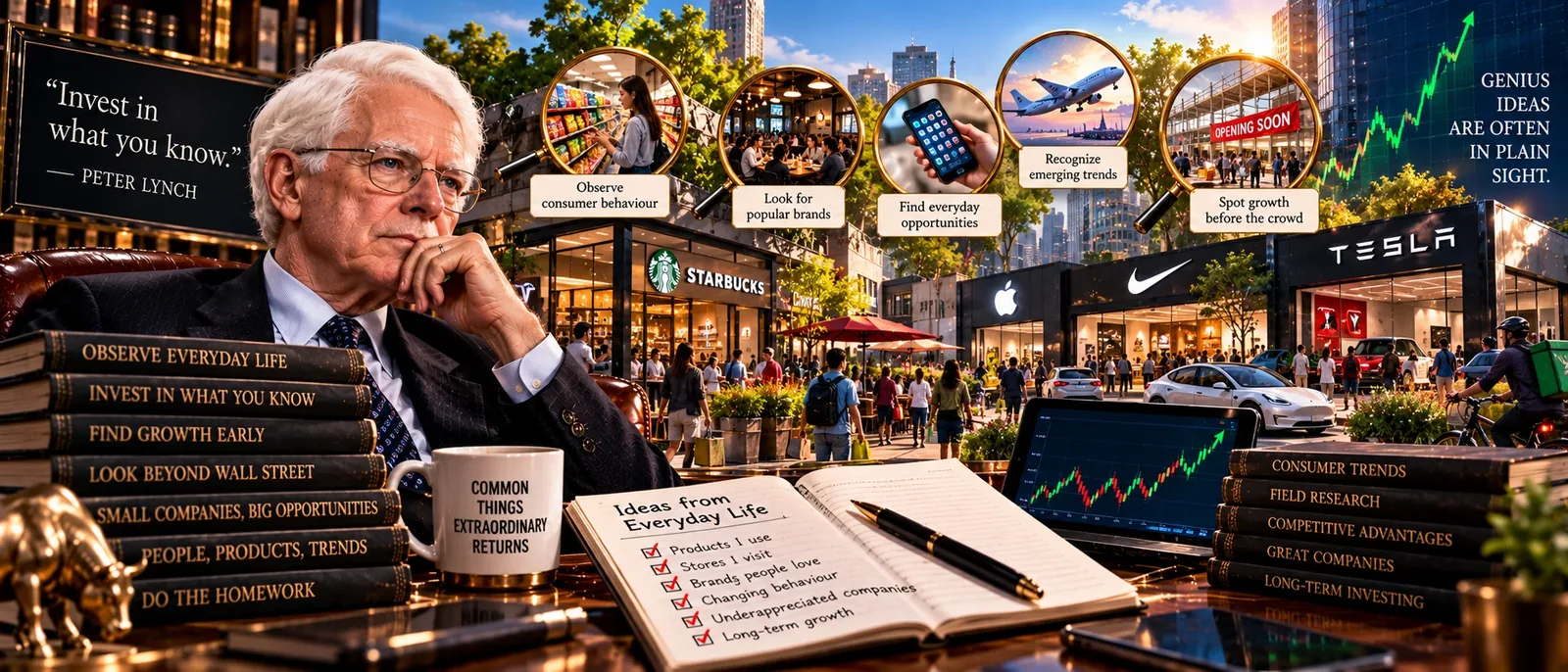 AnalysisEducationPeter Lynch: Finding Investments Hiding in Plain SightPeter Lynch argued that ordinary people can beat professionals by paying attention to what is in front of them. He had the record to say it. He ran Fidelity's Magellan Fund from 1977 to 1990, returned about 29% a year, and grew it from $18 million to $14 billion.@Abe3 min read
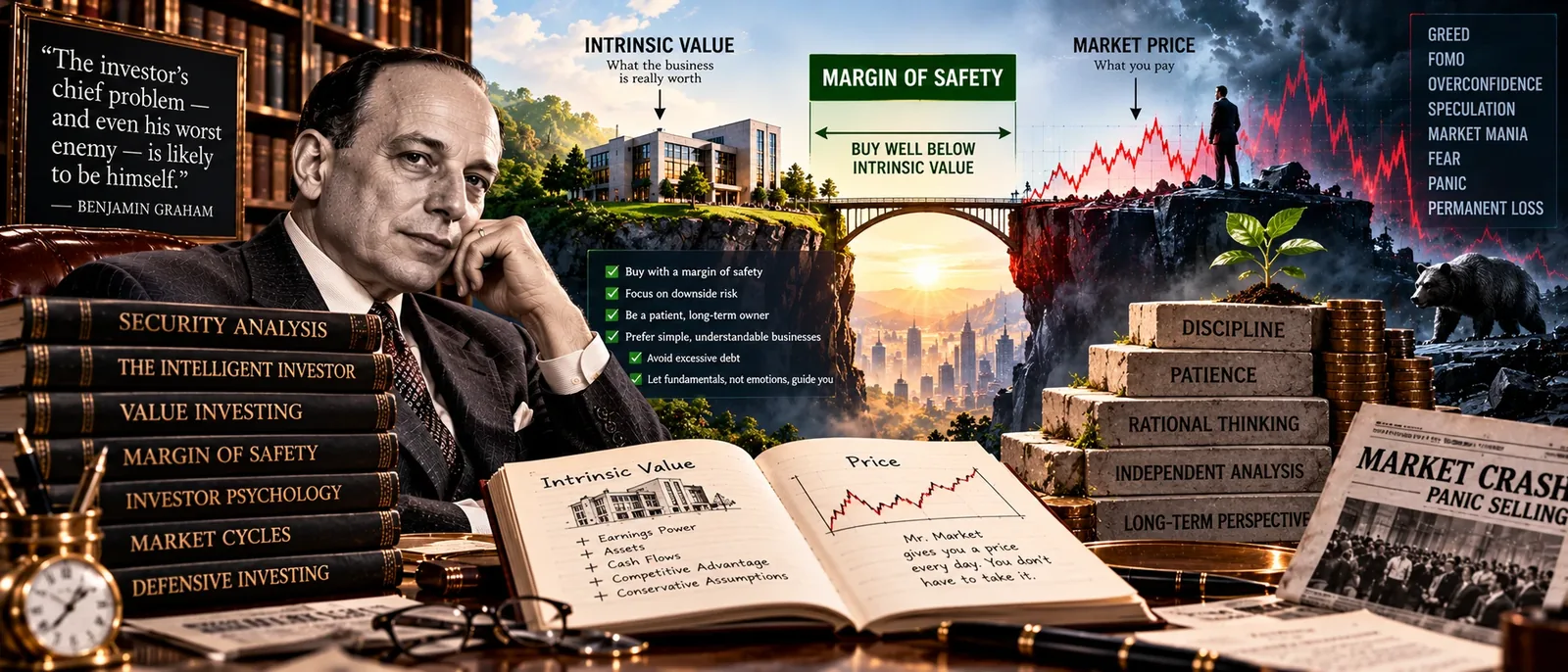 AnalysisEducationBenjamin Graham and the Margin of SafetyBenjamin Graham reduced sound investing to three words: margin of safety. Buy an asset for much less than it is worth, and the gap protects you from error, bad luck and the unknown. Almost every value investor since, including his student Warren Buffett, has built on that idea.@Abe3 min read