Part 2 of 15Lessons From the Masters
@AbePublished 2 min read

Fetching the page
Education · Analysis
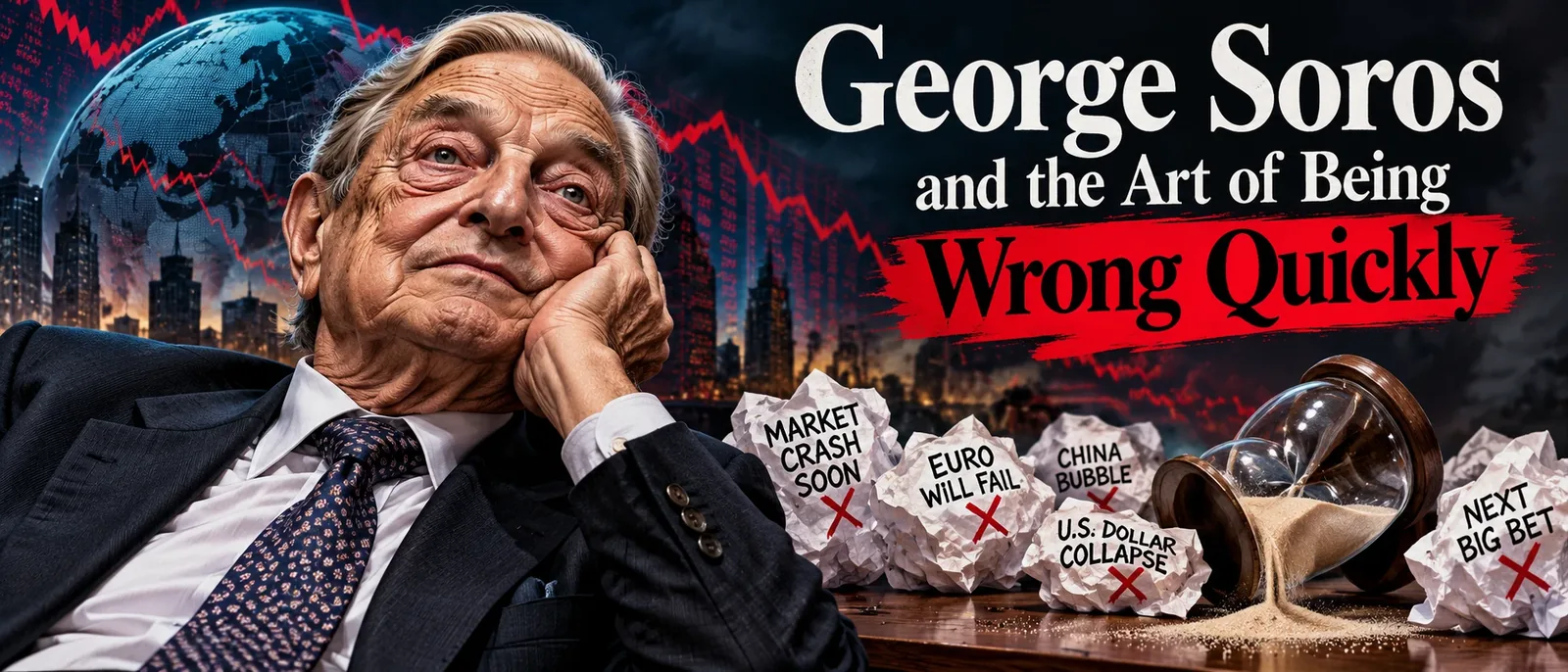
George Soros built one of the great trading records by assuming he was probably mistaken. Where most traders defend their views, Soros hunted for the flaw in his own. His edge was not prediction. It was the speed at which he abandoned a bad idea.
Part 2 of 15Lessons From the Masters
@AbePublished 2 min read
George Soros built one of the great trading records by assuming he was probably mistaken. Where most traders defend their views, Soros hunted for the flaw in his own. His edge was not prediction. It was the speed at which he abandoned a bad idea.
Soros studied under the philosopher Karl Popper, who argued that knowledge advances by disproving theories. Soros carried this into markets. Every position was a hypothesis, and the market's job was to test it.
This changes how a loss feels. If you expect to be wrong often, a losing trade is information, not an insult. Soros said that recognising a mistake gave him something close to pleasure, because it removed a hidden risk.
His second idea was reflexivity. Prices do not just reflect fundamentals; they change them. A rising share price lets a company raise cheap capital, which improves its results, which lifts the price again.
These loops create booms that run much further than logic suggests, and busts that do the same. Soros tried to ride the loop while it strengthened and leave when the story and the reality started to diverge.
Soros often took a small position before his research was complete. Being in the market sharpened his attention and showed him how the trade behaved. If it worked, he added. If it did not, he cut it and lost little.
His son Robert once said that the theories mattered less than his father's back. When the pain flared, Soros took it as a sign that something in the portfolio was wrong and started selling.
In 1992 Soros's Quantum Fund bet that Britain could not hold the pound inside the European Exchange Rate Mechanism. The position reached roughly $10 billion. When the pound was forced out on Black Wednesday, the fund made about $1 billion.
The structure of the trade mattered as much as the size. If Soros had been wrong, the pound would have stayed within its band and the loss would have been small. If he was right, the gain was large. That asymmetry is what justified the scale.
Soros lost heavily in the 1987 crash and again when the technology bubble burst in 2000. He survived both because he cut positions instead of arguing with them.
His own summary is the best one: what matters is not whether you are right or wrong, but how much you make when you are right and how much you lose when you are wrong.
Part 2 of 15 in the series Lessons From the Masters. Next: Stanley Druckenmiller: Bet Big Only When the Stars Align.
Independent educational commentary, not investment advice. References to people and firms do not imply affiliation or endorsement. The picture is an illustration, not a photograph. Past results say nothing about future ones. Trading leveraged products carries a high risk of loss.
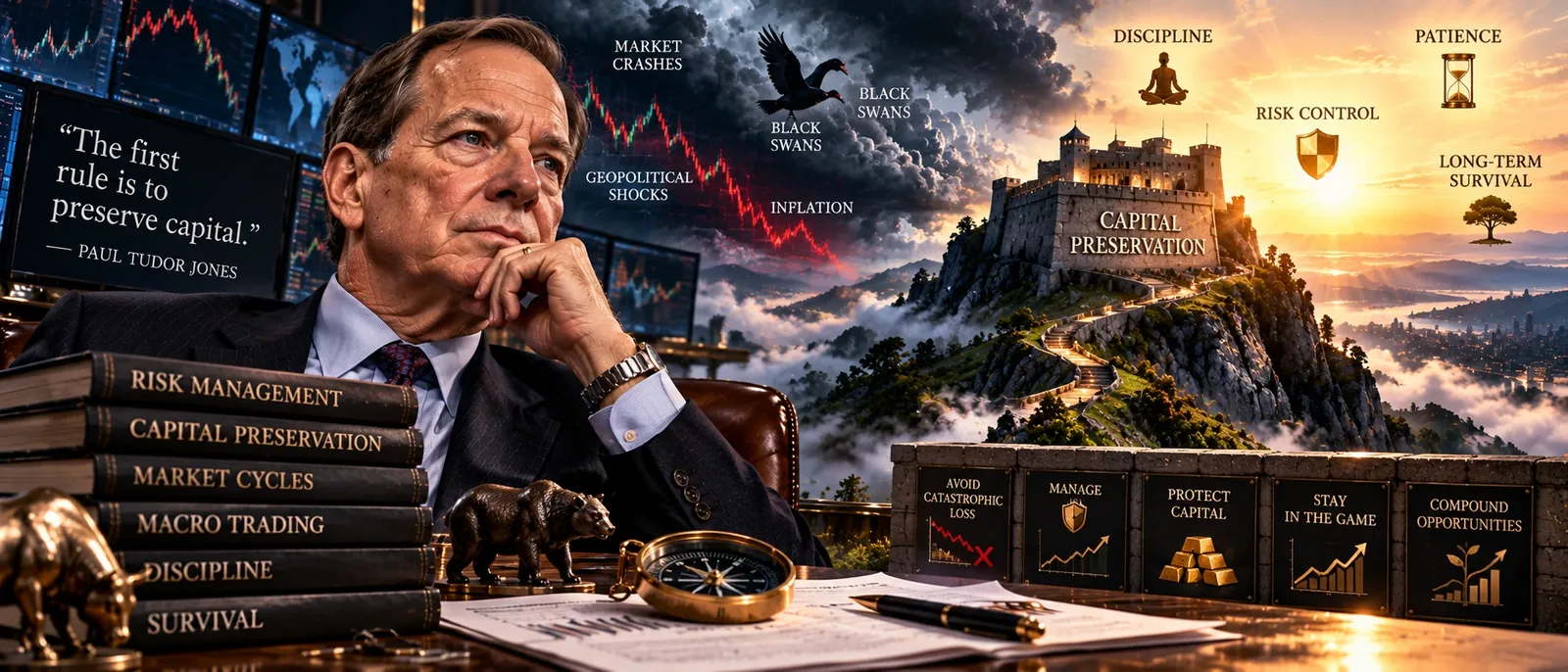 AnalysisEducationPaul Tudor Jones and the Obsession With Capital PreservationPaul Tudor Jones is famous for calling the 1987 crash, when his fund more than doubled while markets collapsed. He would say that is the wrong thing to remember him for. His real skill is defence. He spends his day thinking about how much he can lose, not how much he can make.@Abe2 min read
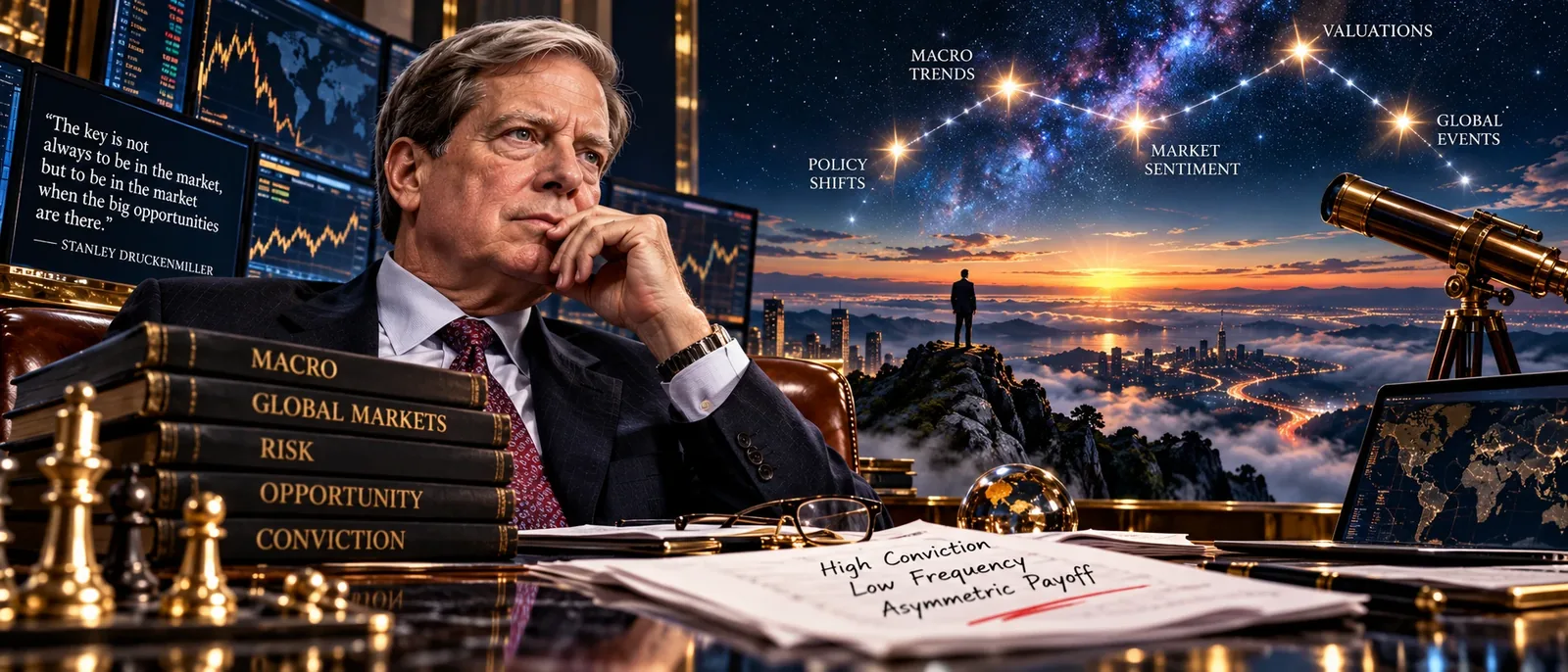 AnalysisEducationStanley Druckenmiller: Bet Big Only When the Stars AlignStanley Druckenmiller ran Duquesne Capital for about three decades, averaged roughly 30% a year and never had a losing year. He did it by breaking a rule most investors treat as sacred. He did not diversify. He concentrated, but only on rare occasions.@Abe2 min read
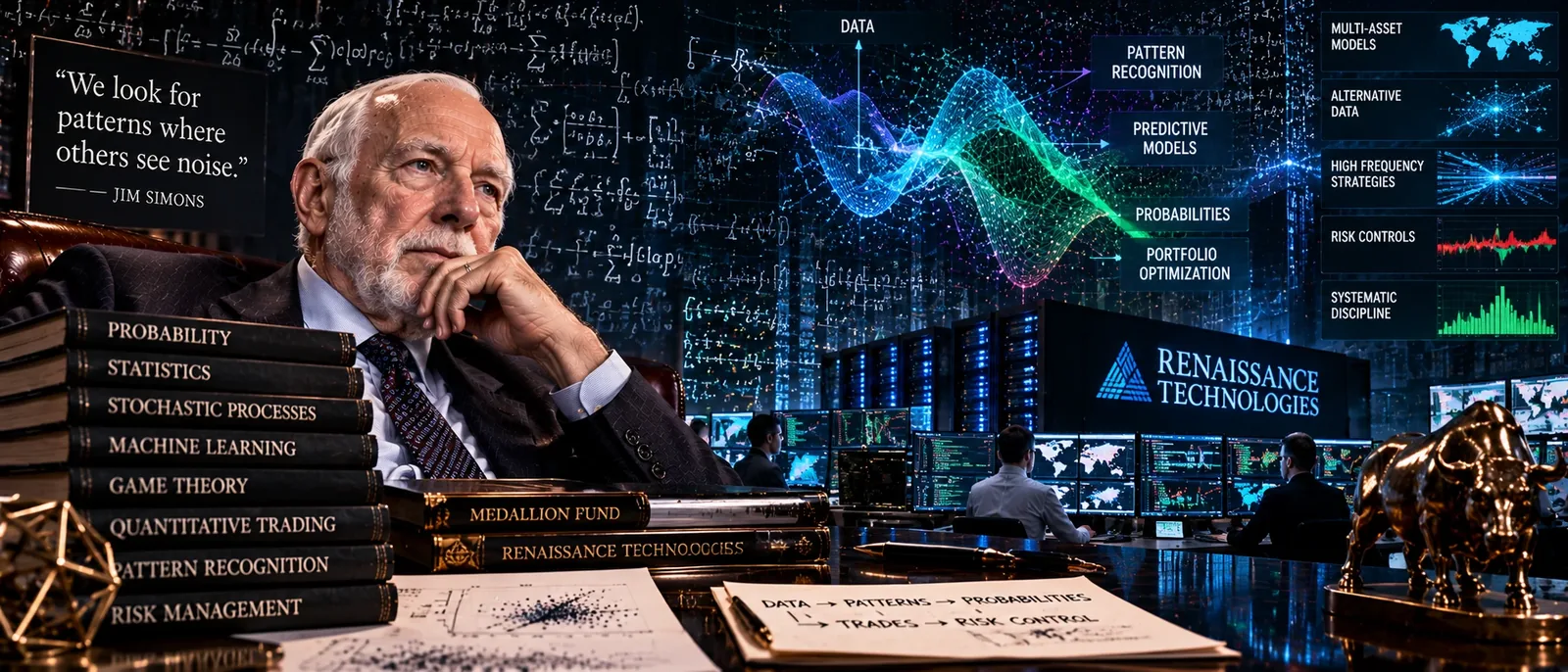 AnalysisEducationJim Simons: When Mathematics Went to Wall StreetJim Simons built the most profitable trading operation in history without hiring anyone from Wall Street. His Medallion Fund averaged about 66% a year before fees from 1988 to 2018, according to Gregory Zuckerman's account of the firm.@Abe2 min read