Part 8 of 15Lessons From the Masters
@AbePublished 2 min read

Fetching the page
Education · Analysis
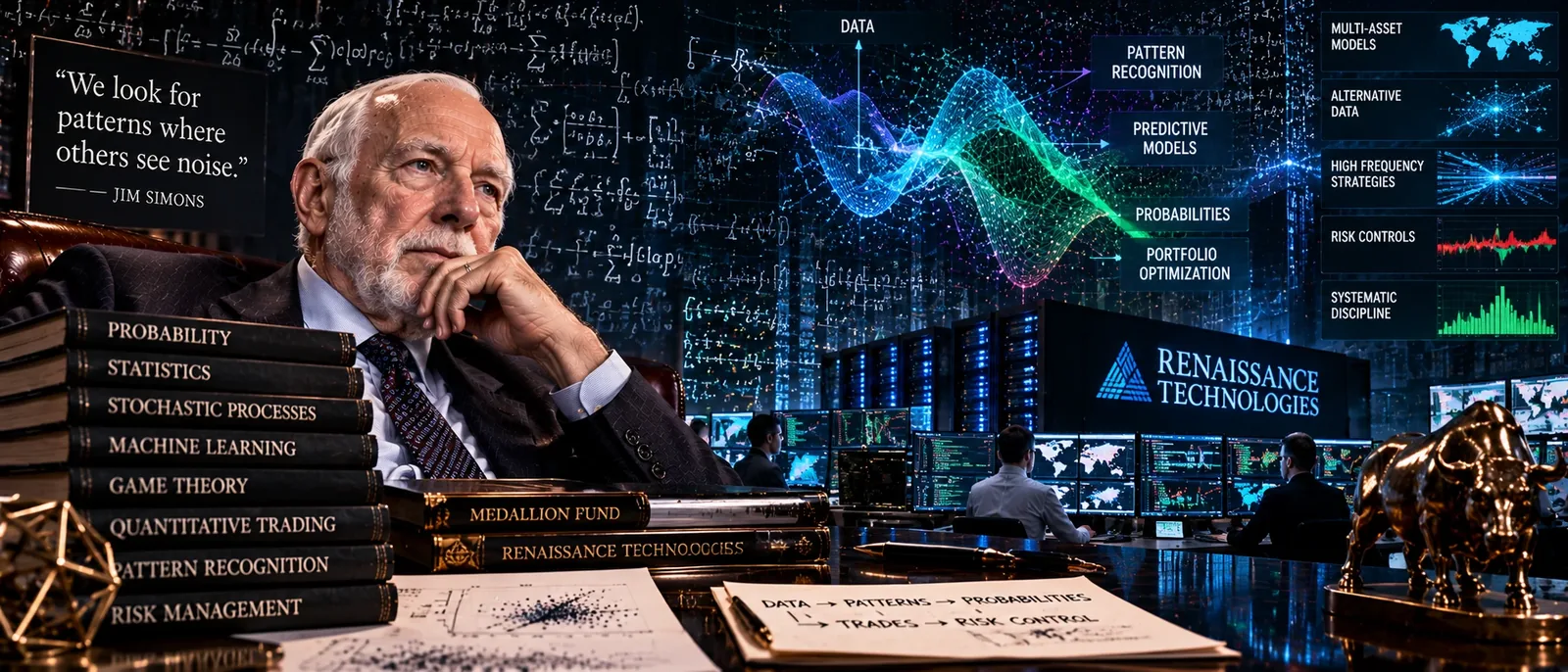
Jim Simons built the most profitable trading operation in history without hiring anyone from Wall Street. His Medallion Fund averaged about 66% a year before fees from 1988 to 2018, according to Gregory Zuckerman's account of the firm.
Part 8 of 15Lessons From the Masters
@AbePublished 2 min read
Jim Simons built the most profitable trading operation in history without hiring anyone from Wall Street. His Medallion Fund averaged about 66% a year before fees from 1988 to 2018, according to Gregory Zuckerman's account of the firm. Simons, who died in 2024, got there by treating markets as a data problem.
Simons was a codebreaker for the US government during the Cold War and then chaired the mathematics department at Stony Brook University. His work with Shiing-Shen Chern produced Chern-Simons theory, which physicists still use. He was already eminent before he placed a trade.
He left academia in 1978 to trade currencies and founded Renaissance Technologies in 1982. His early trading mixed models with intuition, and he found the emotional swings unbearable. He decided the models should make every decision.
Simons recruited mathematicians, physicists, astronomers and speech-recognition experts. Leonard Baum, James Ax and Elwyn Berlekamp shaped the early systems. Peter Brown and Robert Mercer, who arrived from IBM's speech research group, later ran the firm.
His reasoning was simple. He could teach a scientist about markets, but he could not teach a trader to do science.
Renaissance guards its methods closely, but the outline is public:
The models do not need to explain why a pattern exists. If it is statistically sound and persists, it trades.
Medallion stopped accepting outside money in 1993 and has been owned by employees since 2005. Its strategies only work up to a certain size, so the fund pays out profits each year instead of growing.
Renaissance's larger public funds use slower strategies and have produced far more ordinary results. The magic did not scale, and Simons never claimed it would.
Simons's own contribution was management. He chose the people, kept them collaborating, paid them well and shared ownership widely. He also overrode the models on rare occasions, such as the quant crisis of August 2007, when he cut risk.
Part 8 of 15 in the series Lessons From the Masters. Next: Peter Lynch: Finding Investments Hiding in Plain Sight.
Independent educational commentary, not investment advice. References to people and firms do not imply affiliation or endorsement. The picture is an illustration, not a photograph. Past results say nothing about future ones. Trading leveraged products carries a high risk of loss.
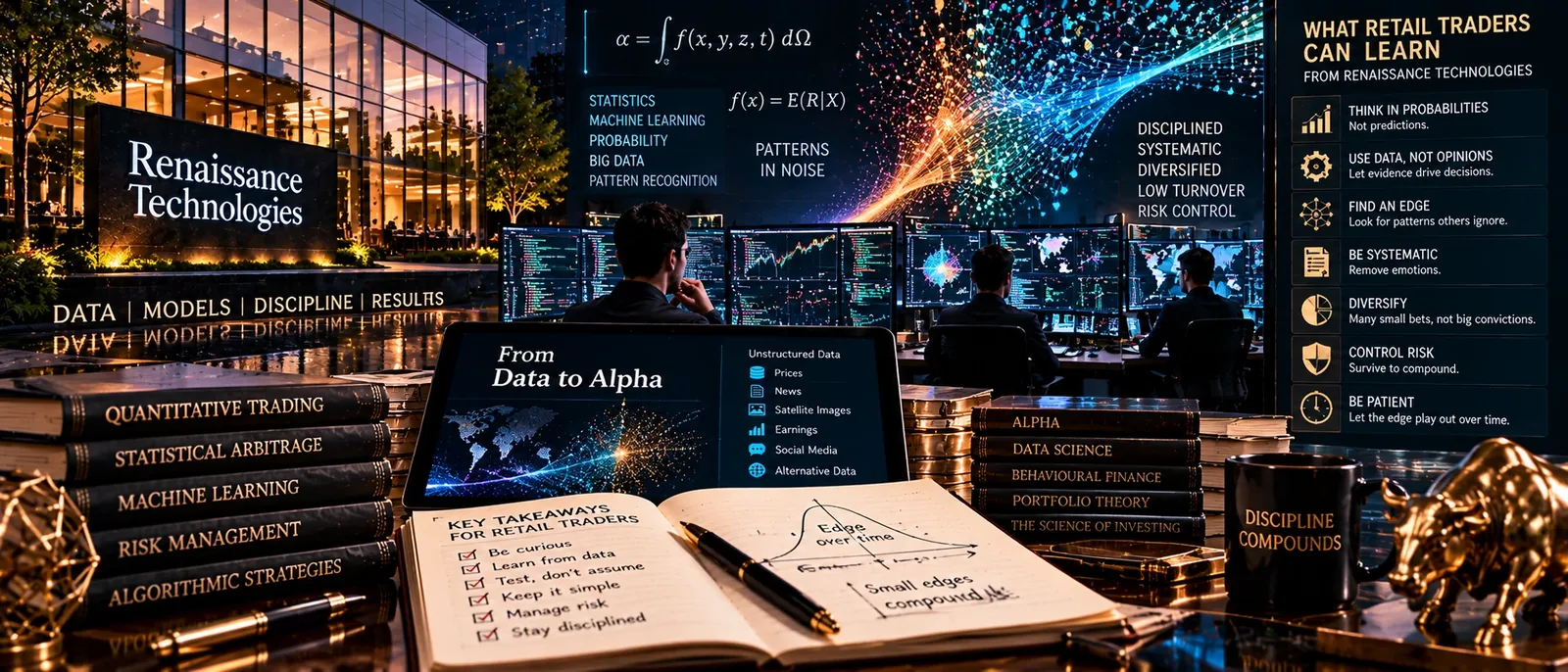 AnalysisEducationWhat Retail Traders Can Learn From Renaissance TechnologiesNo retail trader can copy Renaissance Technologies, and the useful lessons begin with accepting that. The firm's Medallion Fund has hundreds of scientists, proprietary data and execution systems built over decades. What an individual can borrow is the discipline behind them.@Abe3 min read
 AnalysisEducationGeorge Soros and the Art of Being Wrong QuicklyGeorge Soros built one of the great trading records by assuming he was probably mistaken. Where most traders defend their views, Soros hunted for the flaw in his own. His edge was not prediction. It was the speed at which he abandoned a bad idea.@Abe2 min read
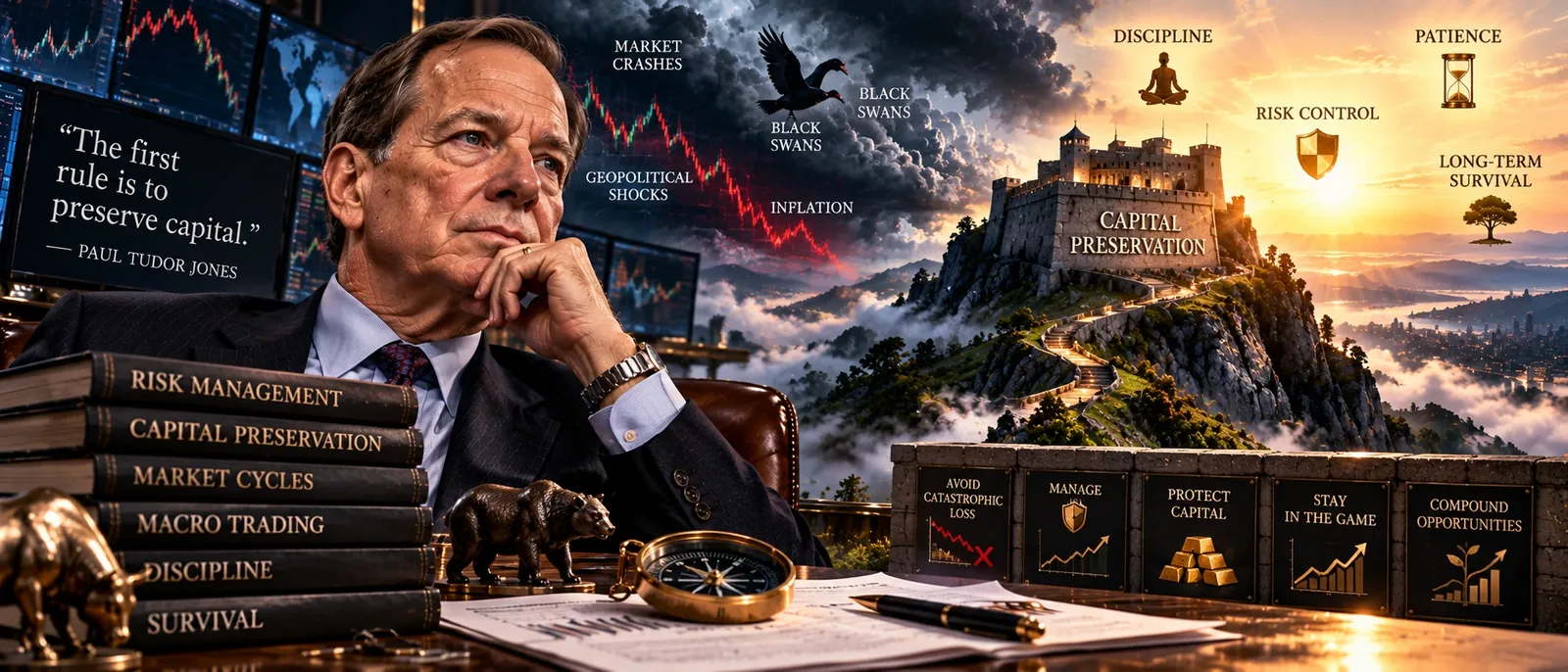 AnalysisEducationPaul Tudor Jones and the Obsession With Capital PreservationPaul Tudor Jones is famous for calling the 1987 crash, when his fund more than doubled while markets collapsed. He would say that is the wrong thing to remember him for. His real skill is defence. He spends his day thinking about how much he can lose, not how much he can make.@Abe2 min read