Part 3 of 15Lessons From the Masters
@AbePublished 2 min read

Fetching the page
Education · Analysis
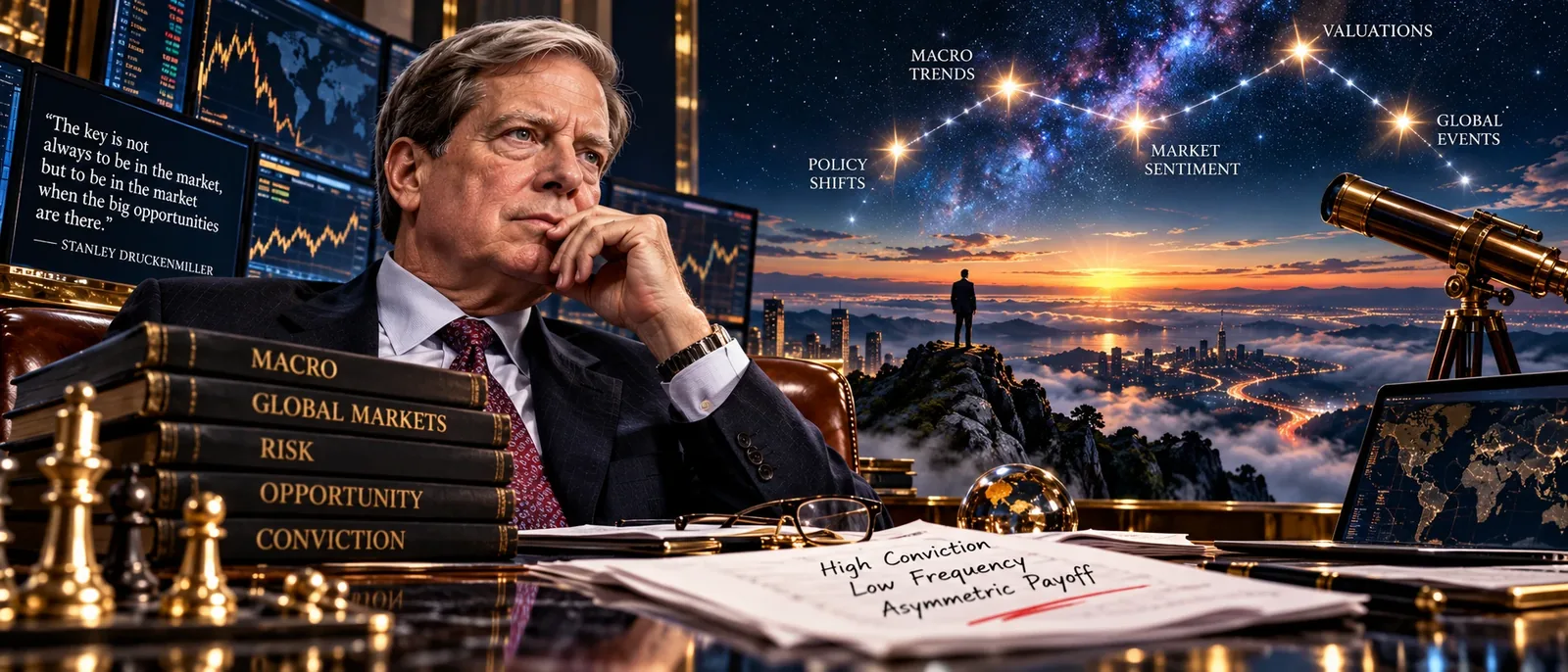
Stanley Druckenmiller ran Duquesne Capital for about three decades, averaged roughly 30% a year and never had a losing year. He did it by breaking a rule most investors treat as sacred. He did not diversify. He concentrated, but only on rare occasions.
Part 3 of 15Lessons From the Masters
@AbePublished 2 min read
Stanley Druckenmiller ran Duquesne Capital for about three decades, averaged roughly 30% a year and never had a losing year. He did it by breaking a rule most investors treat as sacred. He did not diversify. He concentrated, but only on rare occasions.
Druckenmiller argues that the way to build long-term returns is to preserve capital and, a few times a year, swing hard. Most ideas deserve a small position or none. A handful deserve a very large one.
He learned the second half from George Soros, for whom he managed the Quantum Fund from 1988 to 2000. When Druckenmiller proposed a large short against the pound in 1992, Soros told him the position was too small for an idea that good. They went far bigger.
A big bet needs several independent things to point the same way:
When only one or two are present, he stays small. When all four are, he presses.
Druckenmiller says the mistake most investors make is trading on today's news. Prices already contain it. He tries to picture the world 18 to 24 months out and buy what will look obvious then.
He has no loyalty to a view. He trades stocks, bonds, currencies and commodities, and moves to whichever market expresses his idea most cleanly. He has reversed positions within days when the facts changed.
In early 2000 Druckenmiller sold his technology stocks, then watched them keep rising. He bought back in near the top and lost about $3 billion within weeks. He has said he knew better and did it anyway.
The story matters because it shows the limit of the method. Concentration works only with discipline. A big bet driven by envy is just a big loss.
Part 3 of 15 in the series Lessons From the Masters. Next: Ray Dalio and the Machine Behind Risk.
Independent educational commentary, not investment advice. References to people and firms do not imply affiliation or endorsement. The picture is an illustration, not a photograph. Past results say nothing about future ones. Trading leveraged products carries a high risk of loss.
 AnalysisEducationGeorge Soros and the Art of Being Wrong QuicklyGeorge Soros built one of the great trading records by assuming he was probably mistaken. Where most traders defend their views, Soros hunted for the flaw in his own. His edge was not prediction. It was the speed at which he abandoned a bad idea.@Abe2 min read
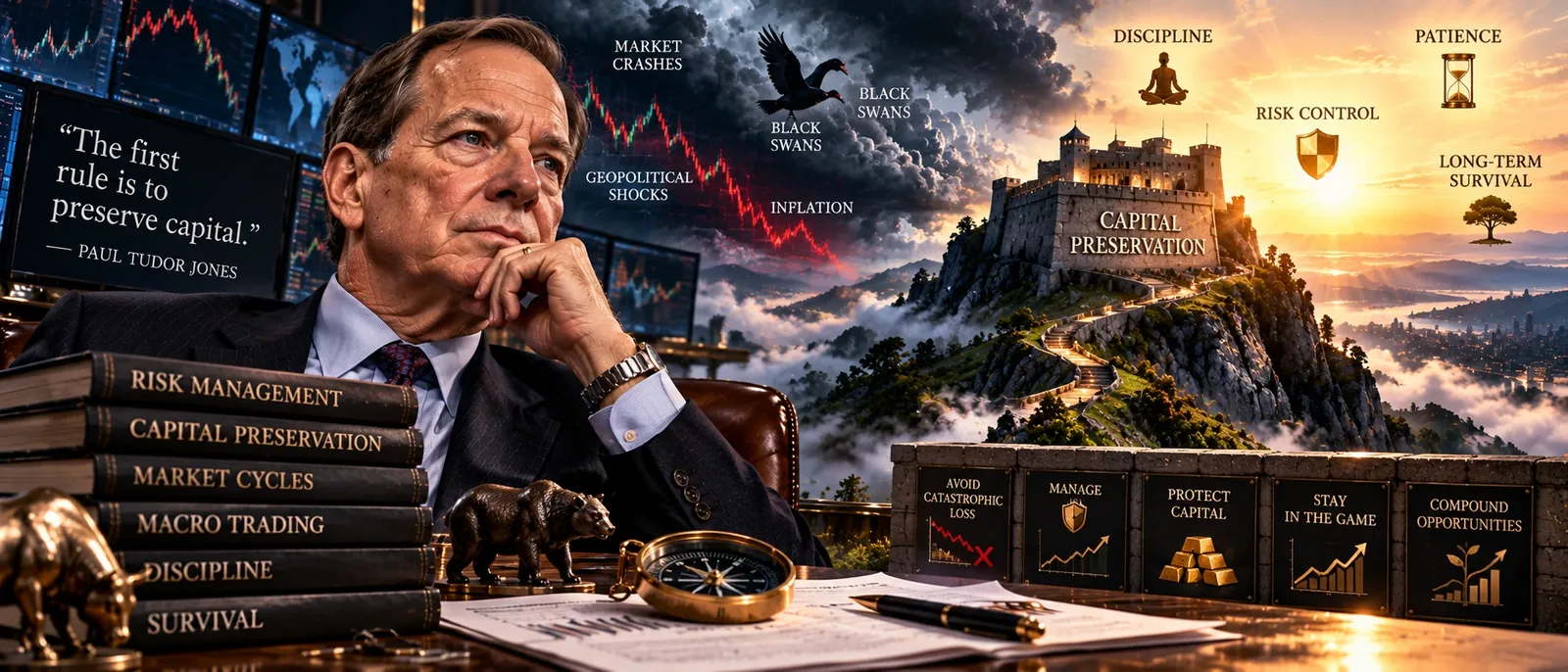 AnalysisEducationPaul Tudor Jones and the Obsession With Capital PreservationPaul Tudor Jones is famous for calling the 1987 crash, when his fund more than doubled while markets collapsed. He would say that is the wrong thing to remember him for. His real skill is defence. He spends his day thinking about how much he can lose, not how much he can make.@Abe2 min read
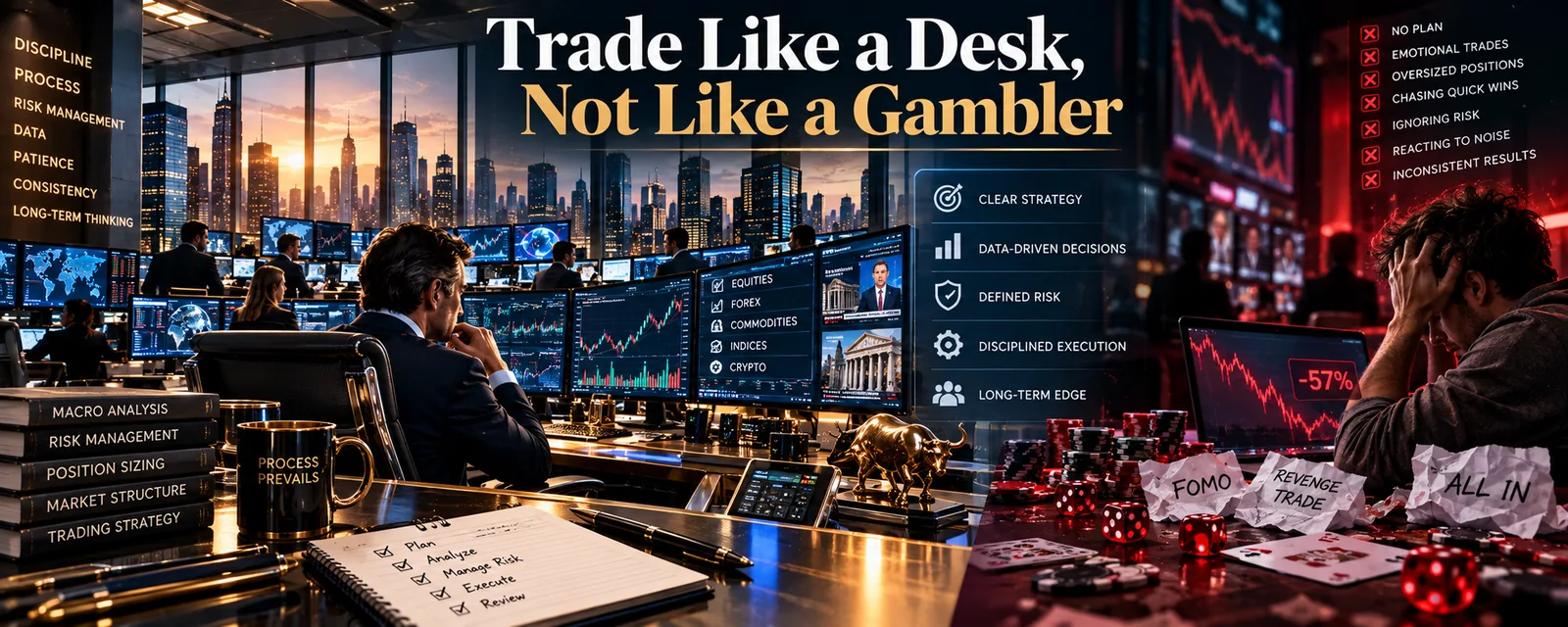 AnalysisEducationTrade Like a Desk, Not Like a GamblerThe same entry can belong to a disciplined trading business or an impulsive bet. The difference sits around the order: a mandate, a repeatable setup, a risk budget and an honest review.@Abe5 min read