Part 10 of 15Lessons From the Masters
@AbePublished 3 min read

Fetching the page
Education · Analysis
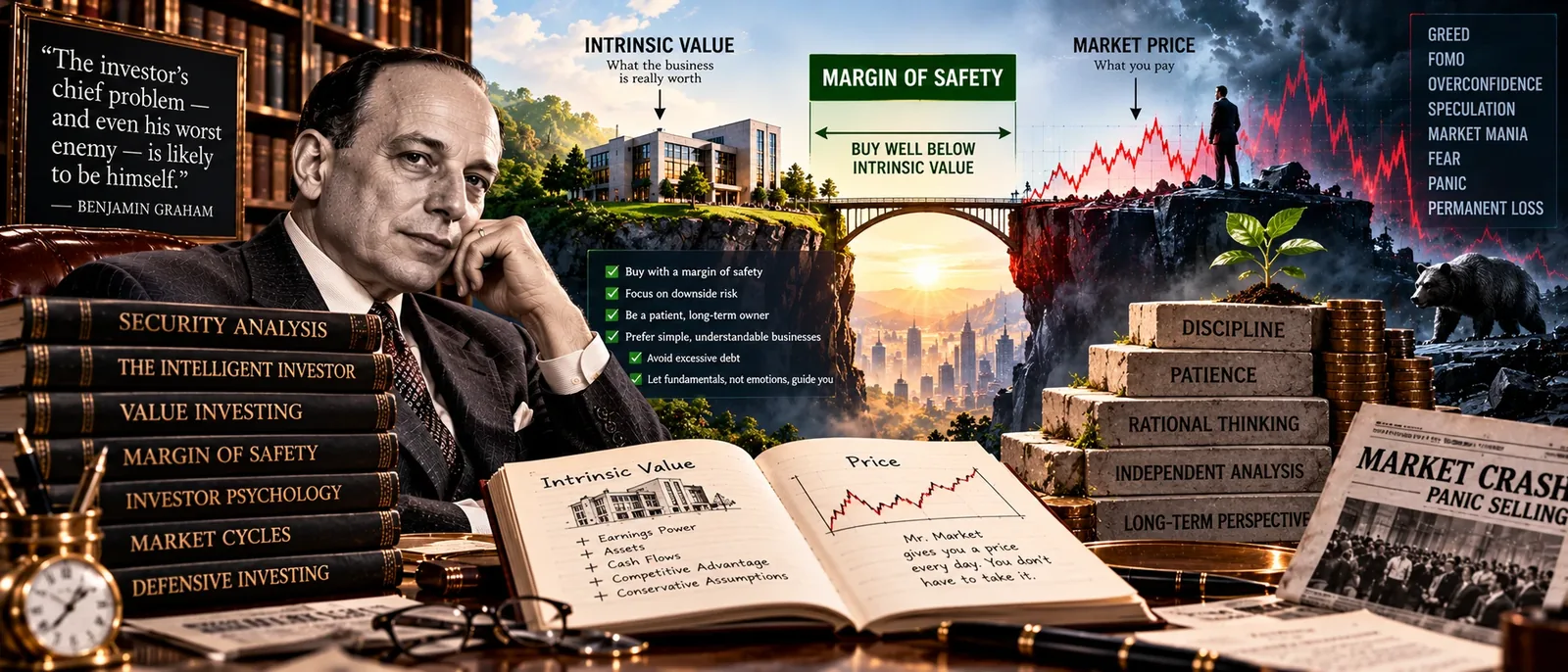
Benjamin Graham reduced sound investing to three words: margin of safety. Buy an asset for much less than it is worth, and the gap protects you from error, bad luck and the unknown. Almost every value investor since, including his student Warren Buffett, has built on that idea.
Part 10 of 15Lessons From the Masters
@AbePublished 3 min read
Benjamin Graham reduced sound investing to three words: margin of safety. Buy an asset for much less than it is worth, and the gap protects you from error, bad luck and the unknown. Almost every value investor since, including his student Warren Buffett, has built on that idea.
Graham was a successful Wall Street manager in the 1920s. Between 1929 and 1932 his fund lost roughly 70%. The experience shaped everything he wrote afterwards.
In 1934 he and David Dodd published Security Analysis, the first rigorous textbook on valuing securities. In 1949 came The Intelligent Investor, written for the general reader. Buffett has called it the best book on investing ever written.
Graham drew a sharp line. An investment, after thorough analysis, promises safety of principal and an adequate return. Anything else is speculation.
The distinction is about method, not the asset. A share can be an investment at one price and a speculation at another.
Engineers build a bridge to carry far more than its expected load. Graham applied the same thinking to stocks. If a business is worth 100 and you pay 60, you can be substantially wrong and still not lose.
The margin does three jobs:
The less certain the valuation, the wider the margin must be.
Graham asked readers to imagine a business partner called Mr. Market. Every day he offers to buy your share or sell you his. Some days he is euphoric and names a high price. Other days he is miserable and names a low one.
You are free to ignore him. His quotes are there to serve you, not to guide you. An investor who lets Mr. Market's mood set his own opinion has turned an advantage into a liability.
Graham's strictest method was to buy companies trading below their net current assets: cash, receivables and inventory minus all liabilities. In effect, the buyer got the factories and the business for nothing. Such bargains were common after the Depression and are rare now.
His one great departure from his own rules was GEICO, a growth company that made his partnership more than all its other investments combined.
Graham did not think everyone should pick stocks. The defensive investor should hold a diversified mix of quality shares and bonds and rebalance. Only the enterprising investor, willing to treat it as a serious job, should attempt more.
Part 10 of 15 in the series Lessons From the Masters. Next: John Templeton: Buying When Everyone Else Is Terrified.
Independent educational commentary, not investment advice. References to people and firms do not imply affiliation or endorsement. The picture is an illustration, not a photograph. Past results say nothing about future ones. Trading leveraged products carries a high risk of loss.
 AnalysisEducationHow Warren Buffett Thinks About Price vs. ValueWarren Buffett's entire career rests on one distinction: price is what you pay, and value is what you get. The line comes from his teacher Benjamin Graham, and Buffett has repeated it for decades. Most investors nod at it and then spend their days watching prices.@Abe2 min read
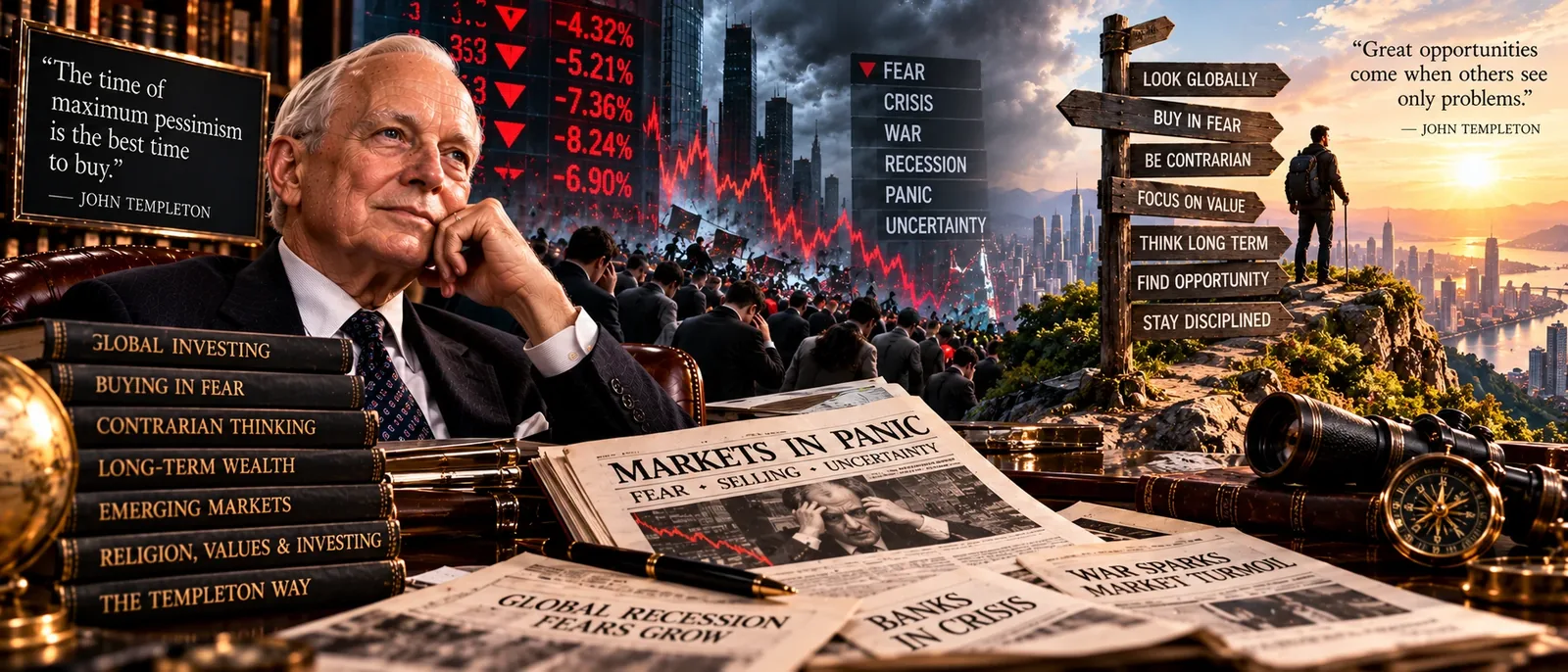 AnalysisEducationJohn Templeton: Buying When Everyone Else Is TerrifiedJohn Templeton made his name by buying at what he called the point of maximum pessimism. When other investors could see only bad news, he saw low prices. He applied the idea for seven decades and across the whole world.@Abe3 min read
 AnalysisEducationGeorge Soros and the Art of Being Wrong QuicklyGeorge Soros built one of the great trading records by assuming he was probably mistaken. Where most traders defend their views, Soros hunted for the flaw in his own. His edge was not prediction. It was the speed at which he abandoned a bad idea.@Abe2 min read