Part 11 of 15Lessons From the Masters
@AbePublished 3 min read

Fetching the page
Education · Analysis
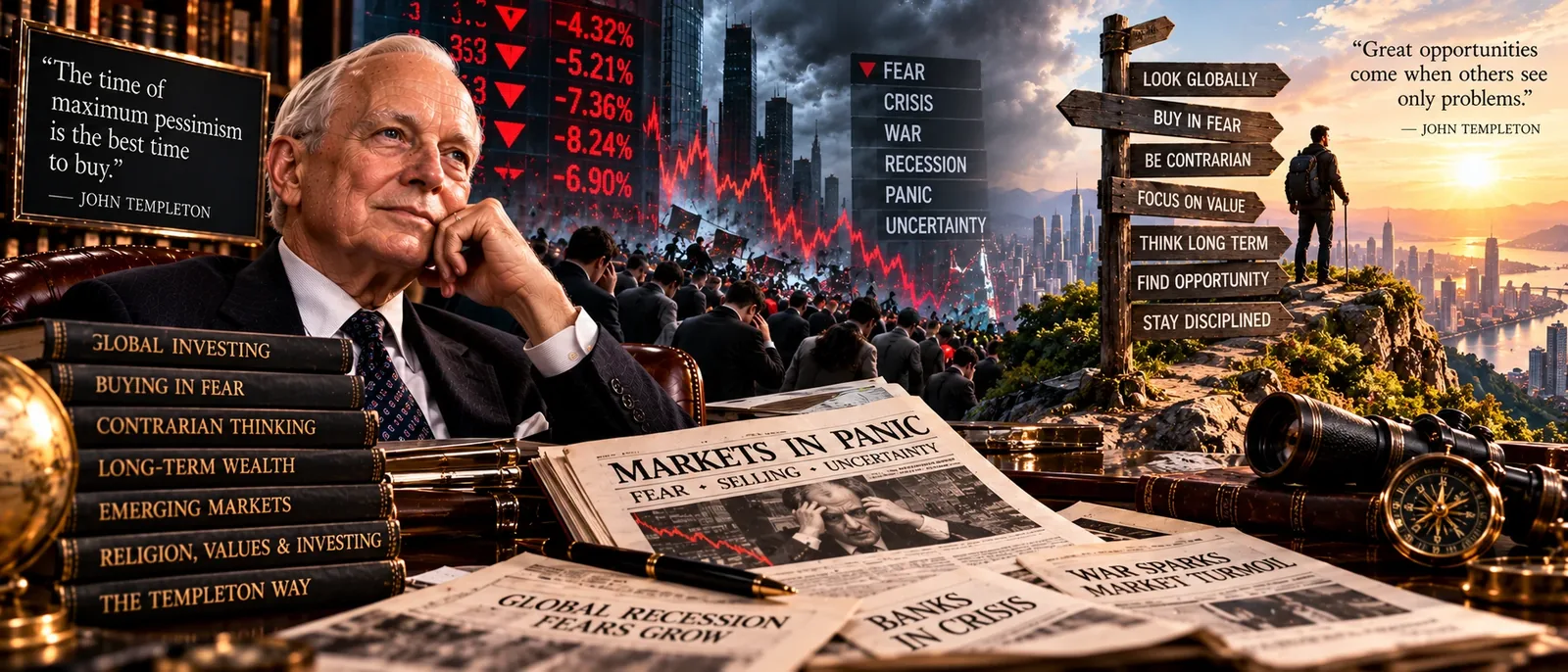
John Templeton made his name by buying at what he called the point of maximum pessimism. When other investors could see only bad news, he saw low prices. He applied the idea for seven decades and across the whole world.
Part 11 of 15Lessons From the Masters
@AbePublished 3 min read
John Templeton made his name by buying at what he called the point of maximum pessimism. When other investors could see only bad news, he saw low prices. He applied the idea for seven decades and across the whole world.
In 1939, as war began in Europe, Templeton borrowed about $10,000. He told his broker to buy 100 shares of every stock on the New York exchanges trading below one dollar. That came to 104 companies, 34 of them in bankruptcy.
His reasoning was that war would revive demand across American industry, and the weakest firms had the most to gain. Four years later he sold the basket for roughly four times his outlay. Only a few of the companies proved worthless.
Two features are worth noting. He bought a wide basket, so no single failure could hurt him. And he acted on a clear thesis, not on cheapness alone.
Templeton described the life of a bull market in four stages. It is born on pessimism, grows on scepticism, matures on optimism and dies on euphoria. The best time to buy is the first stage and the best time to sell is the last.
This is easy to say and painful to do. At the point of maximum pessimism, the reasons to sell are real, widely known and frightening. That is exactly why the price is low.
Templeton launched the Templeton Growth Fund in 1954 and became a pioneer of global investing. American investors at the time rarely looked abroad. He asked a simple question: where in the world are shares cheapest relative to their worth?
In the 1960s the answer was Japan. Japanese companies were growing quickly and traded on very low multiples, and foreign investors distrusted them. Templeton put a large share of his fund there and began selling as the country became fashionable, years before its bubble burst.
The same logic ran in reverse. In early 2000 Templeton, then in his late eighties, bet against a group of technology stocks. He timed the shorts for just before company insiders were free to sell their shares. He reportedly made tens of millions of dollars in months.
Templeton's nerve had practical supports:
Part 11 of 15 in the series Lessons From the Masters. Next: What Retail Traders Can Learn From Renaissance Technologies.
Independent educational commentary, not investment advice. References to people and firms do not imply affiliation or endorsement. The picture is an illustration, not a photograph. Past results say nothing about future ones. Trading leveraged products carries a high risk of loss.
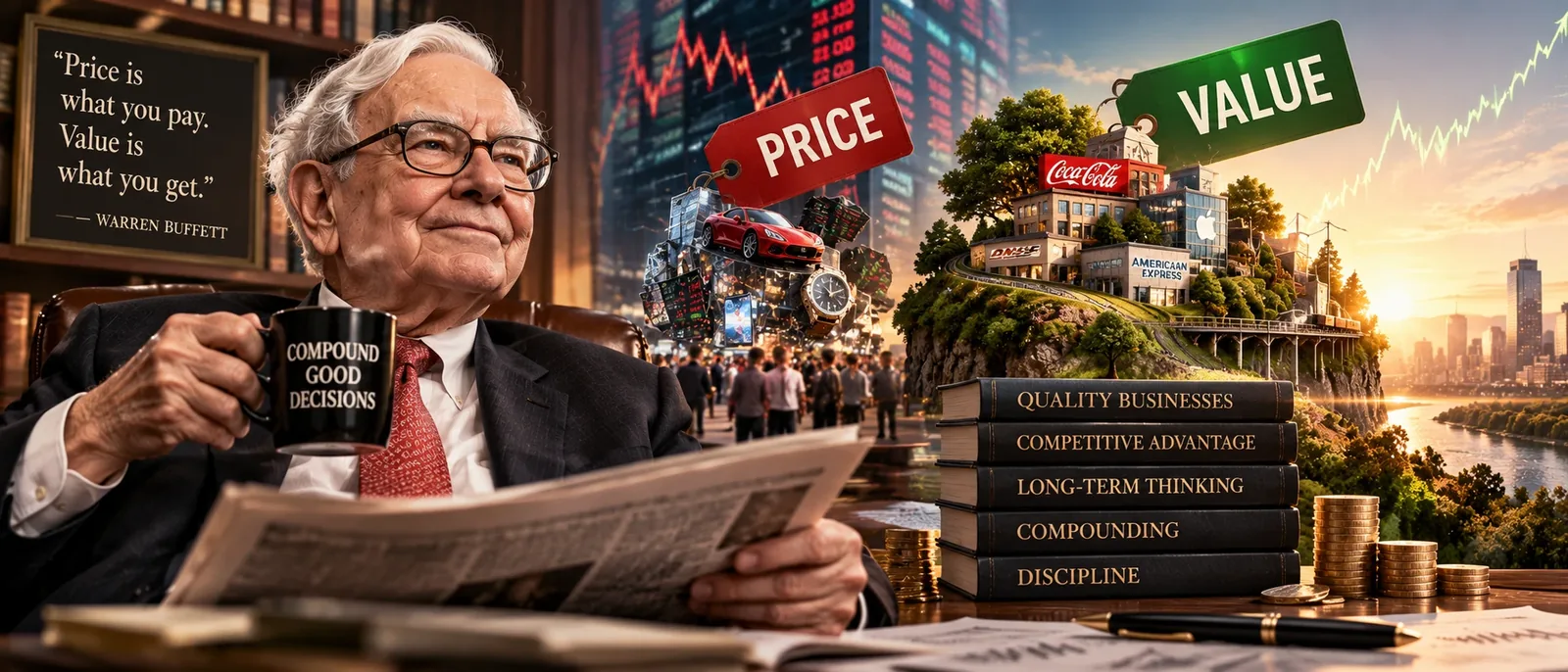 AnalysisEducationHow Warren Buffett Thinks About Price vs. ValueWarren Buffett's entire career rests on one distinction: price is what you pay, and value is what you get. The line comes from his teacher Benjamin Graham, and Buffett has repeated it for decades. Most investors nod at it and then spend their days watching prices.@Abe2 min read
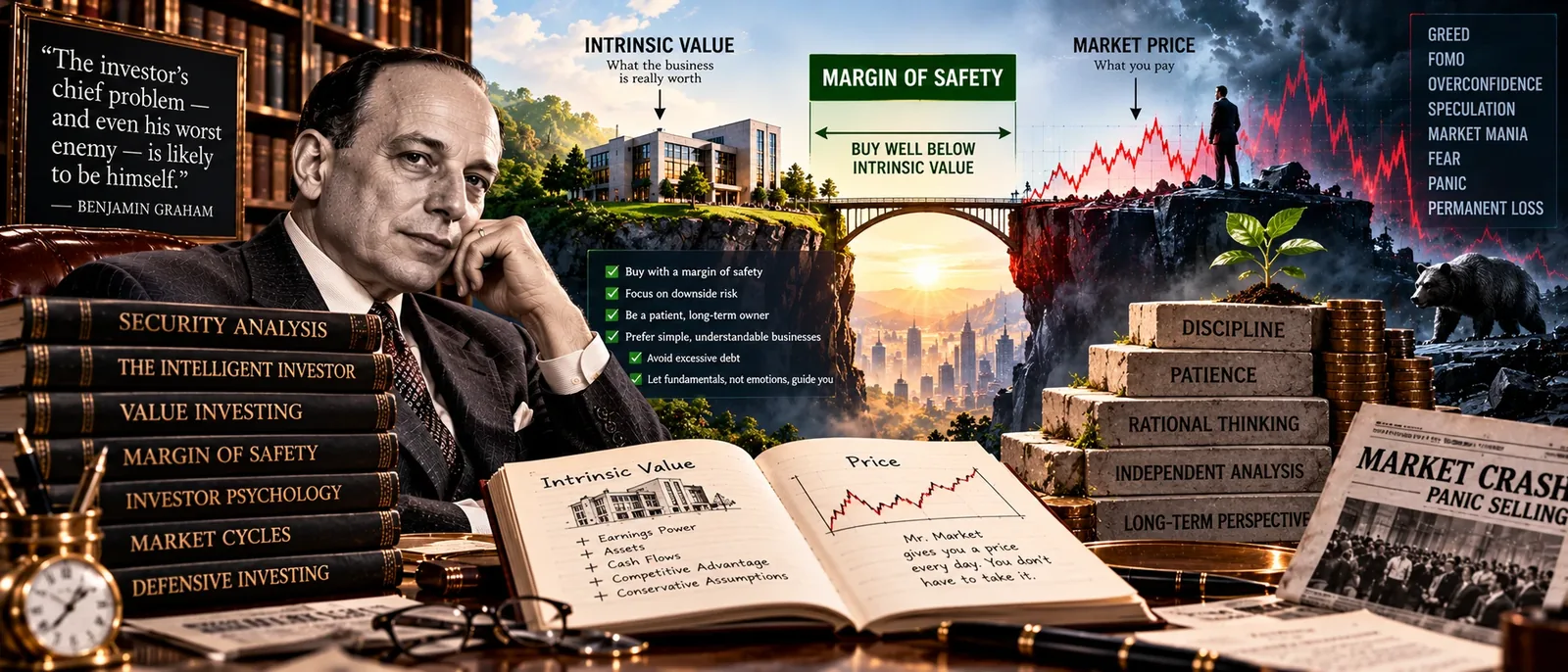 AnalysisEducationBenjamin Graham and the Margin of SafetyBenjamin Graham reduced sound investing to three words: margin of safety. Buy an asset for much less than it is worth, and the gap protects you from error, bad luck and the unknown. Almost every value investor since, including his student Warren Buffett, has built on that idea.@Abe3 min read
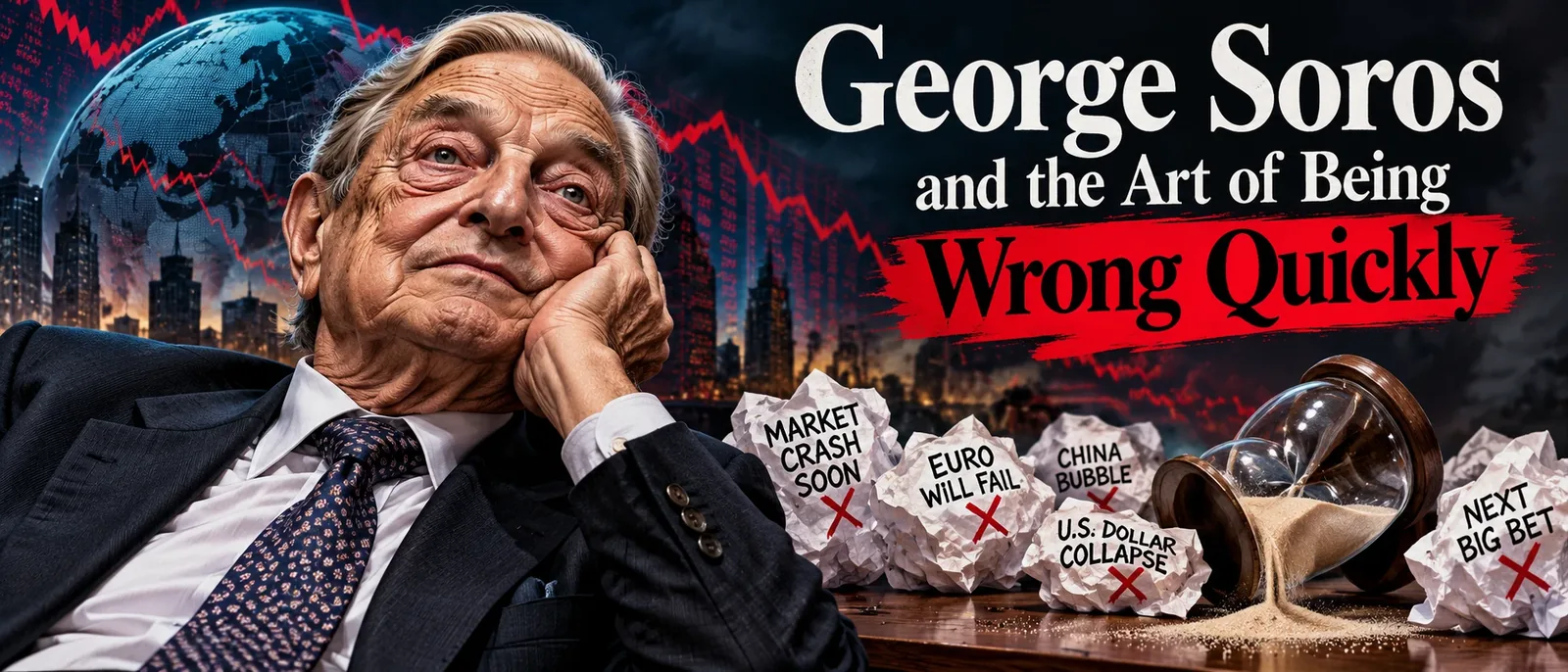 AnalysisEducationGeorge Soros and the Art of Being Wrong QuicklyGeorge Soros built one of the great trading records by assuming he was probably mistaken. Where most traders defend their views, Soros hunted for the flaw in his own. His edge was not prediction. It was the speed at which he abandoned a bad idea.@Abe2 min read