Part 6 of 15Lessons From the Masters
@AbePublished 3 min read

Fetching the page
Education · Analysis
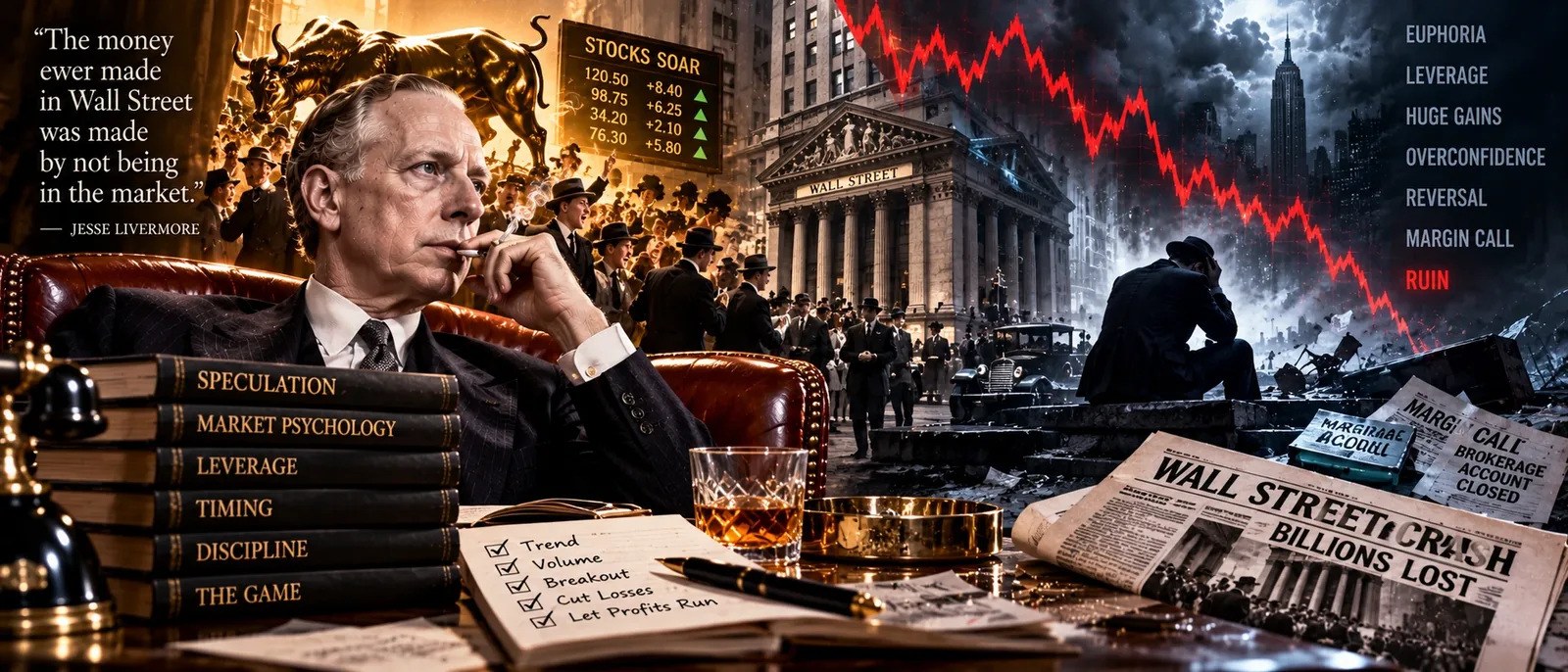
Jesse Livermore made about $100 million shorting the 1929 crash and died broke eleven years later. He is the most quoted trader in history and one of its clearest warnings. His rules were excellent. His problem was that he kept breaking them.
Part 6 of 15Lessons From the Masters
@AbePublished 3 min read
Jesse Livermore made about $100 million shorting the 1929 crash and died broke eleven years later. He is the most quoted trader in history and one of its clearest warnings. His rules were excellent. His problem was that he kept breaking them.
Livermore was born in 1877 and left home as a teenager to post stock quotes on a Boston brokerage chalkboard. He noticed that prices moved in repeating patterns and began betting on them in bucket shops. These were parlours that took wagers on price moves without buying any stock.
He was so consistently right that the bucket shops banned him. He moved to New York and found that real markets, with real execution delays, were harder.
Much of modern trend following is Livermore restated:
In the Panic of 1907 Livermore was heavily short and made around $3 million in a day. In 1929 he saw the same signs of exhaustion on a far larger scale. He built a huge short position through many brokers and came out with roughly $100 million.
Between those triumphs he went bankrupt more than once. In 1908 he took a cotton position on the advice of a well-known speculator, against his own reading of the market, and lost most of his 1907 gains. He was bankrupt again by 1915.
After 1929 the pattern repeated. By 1934 the $100 million was gone and he filed for bankruptcy a final time. The exact causes remain unclear, but heavy leverage and overtrading were constant features of his career.
In 1940, suffering from long-standing depression, Livermore took his own life.
Livermore knew what to do. Reminiscences of a Stock Operator, the 1923 book based on his life, is still read on trading desks. But knowing a rule and following it under pressure are different skills.
He traded with extreme leverage, which meant every error threatened everything. He had no system for limiting total risk, only rules for individual trades. And he kept none of his winnings permanently out of the market's reach.
Part 6 of 15 in the series Lessons From the Masters. Next: Charlie Munger's Mental Models for Investors.
Independent educational commentary, not investment advice. References to people and firms do not imply affiliation or endorsement. The picture is an illustration, not a photograph. Past results say nothing about future ones. Trading leveraged products carries a high risk of loss.
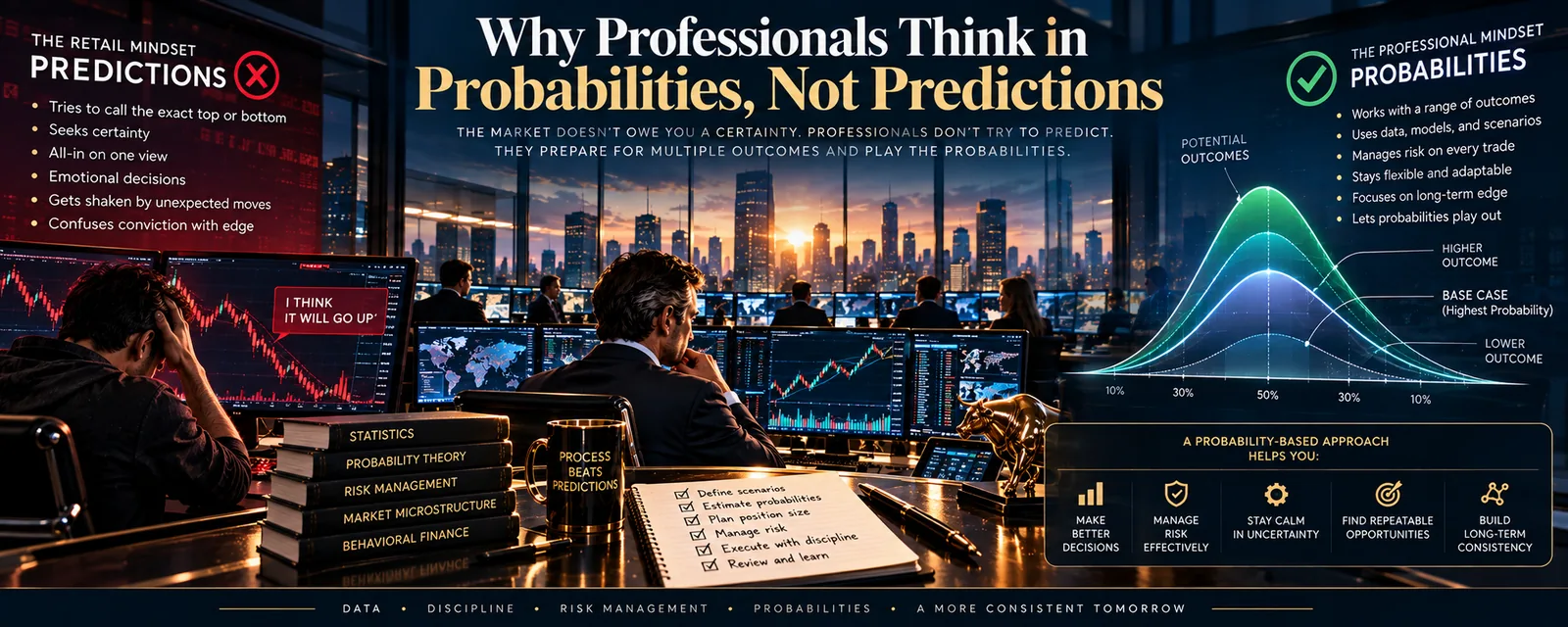 AnalysisEducationWhy Professionals Think in Probabilities, Not PredictionsA trade does not need to win most of the time to have positive expected value. It needs a payoff that compensates for its probability of loss, and position sizing that can withstand an unfavourable run.@Abe6 min read
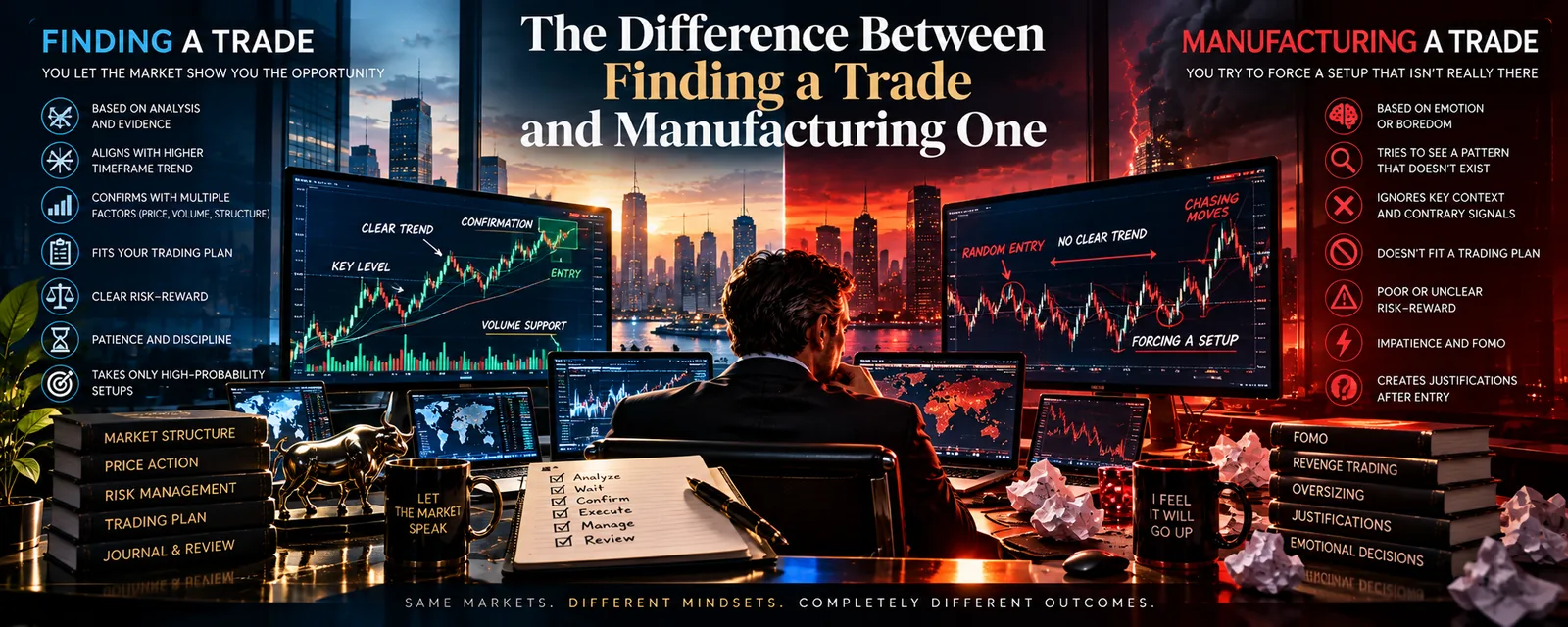 AnalysisEducationThe Difference Between Finding a Trade and Manufacturing OneA valid setup starts with predefined conditions. A forced trade starts with the desire to be in the market, then searches for evidence to justify it. Both can look convincing on the same chart.@Abe5 min read
 AnalysisEducationWhy Big Money Can Afford to Be PatientPatience has a balance sheet. Long-term funding, manageable leverage and money that is not needed for immediate expenses make waiting possible. Without that structure, even a sound thesis can become a forced exit.@Abe5 min read
https://www.gio4x.com/intelligence/blog/jesse-livermore-genius-leverage-and-ruin
Printed from gio4x.com.