Fetching the page
Fetching the page
Daily blog
One Market. One Story. Every Day.Short notes from GIO4X’s desks, written and published by staff. They explain what happened or how something works. They are educational, and they are not advice or a recommendation to trade.
50 posts in Education, format: Analysis, newest first
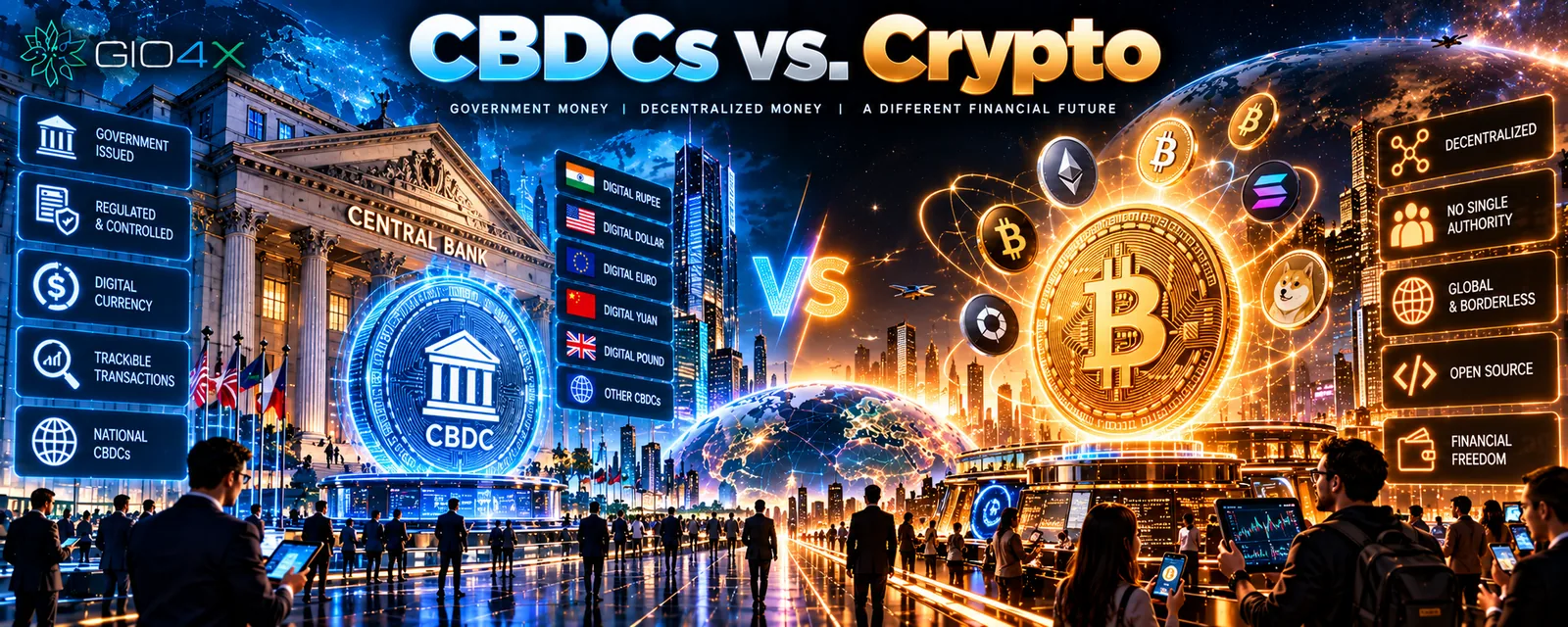
AnalysisEducationCBDCs versus CryptoCBDCs put the central bank in charge of the ledger. Cryptocurrencies such as Bitcoin distribute that role across a network. In 2026, neither has displaced the other—and dollar stablecoins have become a serious competitor to both.@Abe5 min read
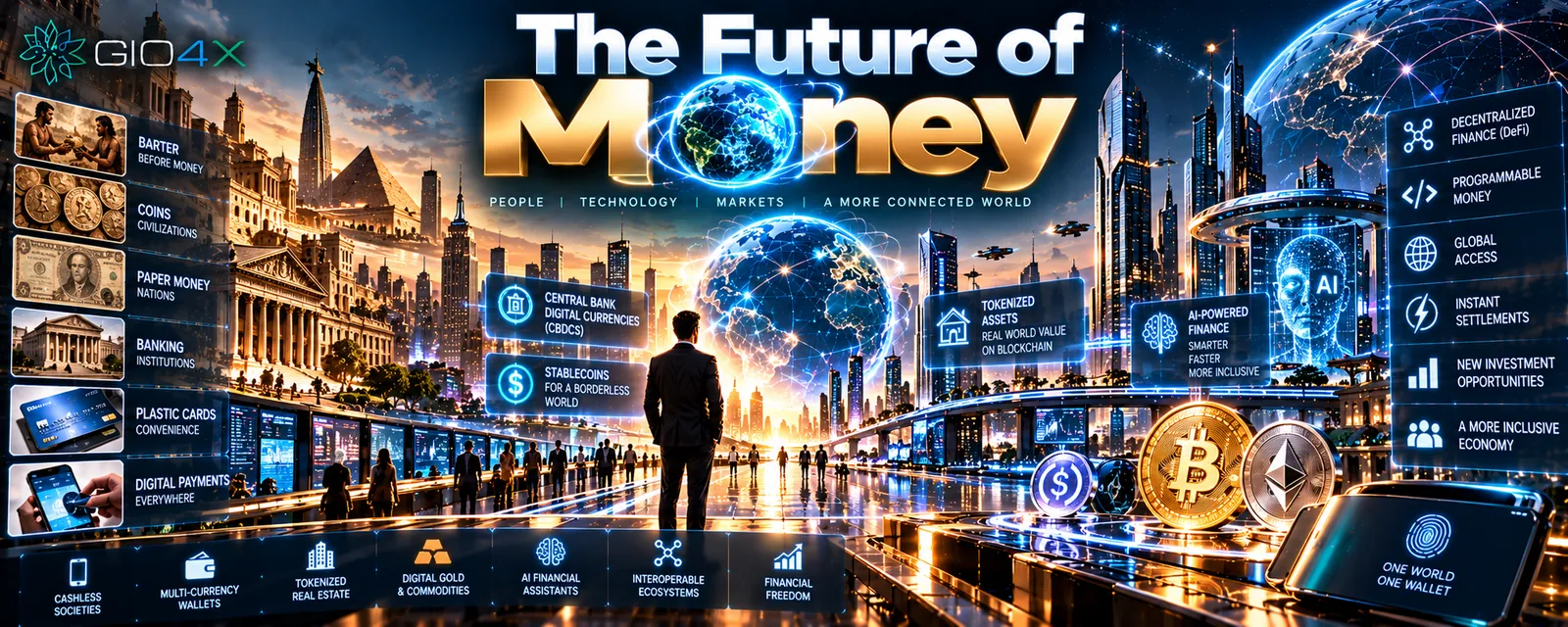
AnalysisEducationThe Future of MoneyThe rupee, dollar and euro are likely to remain familiar. The way they move is being rebuilt. Money is becoming more programmable, more immediate and more available around the clock; the contest is over who operates those payment systems.@Abe5 min read
AnalysisEducationTokenized Real EstateA property token can move in minutes. Finding a buyer for it may still take far longer. Tokenized real estate makes ownership easier to divide and transfer; it does little by itself to make the underlying building liquid.@Abe4 min read
AnalysisEducationTokenized StocksA tokenized stock may be the share itself, a claim on a custodian or a derivative that tracks its price. That distinction matters more than the blockchain. In 2026, tokenization has moved into the plans of major US exchanges, while remaining a tiny part of the equity market.@Abe4 min read
AnalysisEducationCould Markets Trade Around the Clock?US stock markets are moving towards 23-hour weekdays. True 24/7 trading depends on the clearing, payments and support systems catching up. For traders, the practical question is sharper: when does extra access help, and when does it simply invite another bad trade?@Abe4 min read
AnalysisEducationWill Stock Exchanges Ever Close?The trading floor is fading. The exchange’s more valuable functions—listing companies, enforcing rules and producing a trusted reference price—are harder to replace. Exchanges will keep changing shape, even as their buildings lose their original purpose.@Abe4 min read
AnalysisEducationTrading in 2035Picture trading in 2035: software drafts the decisions, markets stay open nearly all the time, and many assets settle in seconds. The human trader still has a role—supervising machines, choosing risk and deciding which opportunities deserve action.@Abe4 min read
AnalysisEducationThe Future of Trading TerminalsThe next trading terminal will begin with a request, not a menu. Charts, order tickets and news feeds will remain, but software will assemble them around what the trader wants to do. The terminal is becoming an assistant you brief.@Abe4 min read
AnalysisEducationQuantum Computing and Financial MarketsQuantum computing is already changing banks’ security priorities. Its effect on profitable trading strategies is likely to arrive later—and be smaller than the headlines imply. Encryption migration is a live project; most investment applications remain experiments.@Abe4 min read
AnalysisEducationWhat Happens When AIs Trade Against Other AIs?Machines have been trading against machines for more than a decade. The result is familiar: tighter spreads, fewer simple opportunities and failures that can unfold at extraordinary speed. Learning systems add a harder question—what happens when those machines adapt to one another?@Abe4 min read
AnalysisEducationAutonomous Trading AgentsA trading bot follows instructions. An autonomous agent chooses how to pursue a goal. The shift from “buy when the averages cross” to “grow this account within a 10 percent drawdown” changes both the software’s capabilities and the oversight it requires.@Abe4 min read
AnalysisEducationCan LLMs Understand Financial Markets?An LLM can read an earnings call brilliantly and still make a poor trade. Large language models are strong at interpreting what people say about markets; forecasting the next price move is a different task. Confusing the two is where much of the disappointment begins.@Abe4 min readPage 4 of 5
Older posts